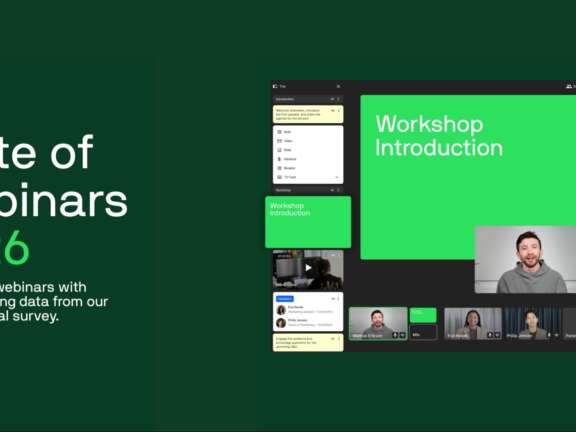
The Webinar-Driven Organisation
In this session, we’ll discover what it takes to be a webinar-driven organisation.
- CEO & Co-Founder of TwenyThree, Thomas Madsen- Mygdal, will give his insights on how webinars and digital events are shifting our perspective on digital.
- What does it take to implement a global webinar setup? Andreas Kinscher working with Demand Generation & Lead Management at SIEMENS will tell you all you need to know.
- Bertrand Carton from Ordrestyring will share what they do with limited resources and unlimited passion to deliver better webinars than their neighbors.
Category
WebinarDays 2021View transcript
James FIRST Thank you. Thank you. Thank you. Thank you. Thank you. Thank you. Thank you. Thank you. Thank you. Thank you. Thank you. Thank you. Thank you. Thank you. Thank you. Thank you. Thank you. Thank you. Thank you. Thank you. Thank you. Thank you. Thank you. Thank you. Thank you. Thank you. Thank you. Thank you. Thank you. Thank you. Thank you. Thank you. Thank you. Thank you. Thank you. Thank you. Thank you. Thank you. Thank you. Thank you. Thank you. Thank you. and all of the children. Thank you. Okay. Thanks for bringing up theBean. This one, a third of the of the domain gen and the and the and the overall brand engagement so webinar is this interesting category that's been around since the end of the 90s uh sort of murking there along for 20 years and then suddenly it exploded very quickly uh also causing a lot of challenges around what is actually a webinar is a video meeting a webinar is a is a virtual event a webinar etc etc but webinar is this interesting uh uh sort of a box to put things in because there there it's and it's a new box right when we do a virtual event or a digital event we we come with old connotations around the formats and structures and the metaphors webinars is this sort of new frontier out there so the interesting thing with webinars is also that it's sort of the original video marketing where video has been very passive very little data driven very little results and webinars have been generating leads and permissions and engagement for more than 20 years it's sort of the original category that way and the interesting thing about webinars is also that some of the greatest brands the last last 20 years have been built on live events and webinars apple with their keynote taking a niche company to be one of the most powerful companies in the world and strongest brands ever tesla with their product launches driving global cultural interest of people watching them from different time zones around the world and creating content around them etc you know really emphasizing the idea of content marketing and people telling their own stories and not spending their money money on advertising but on great product and great storytelling the direct connection that comes from these events so as marketers webinars have sort of been this sort of secret source that people haven't really noticed that actually the greatest brands out there were built on these events running multiple times per year and that's really the gap we've been been trying to close right the digital world has been amazing the last 25 years with abundance we can get anything we want and we can get it anytime we want it's always on in the morning at night whenever we're looking for information insights knowledge it's there right off the interesting things with with thinking about events is that events are the counter to this events are about constraints there's a specific time and there's a specific aspect of when you can get what you do it's orchestration and as we normally say life is a series of events and we as human beings enjoy events right whether it's your birthdays or your celebrations or your weddings or your anniversaries we think about events it's beginning and endings in life of your children starting school your children being done with school it's life starting life ending so ultimately we are as human beings ingrained to think about events so the interesting thing the last 25 years has been the digital event engagement or the digital engagement model has sort of been like this flat always on always abundant and that was not a negative thing it was an amazing paradigm change the last 25 years but now we're really entering this world where we're building orchestration we're building drama we're creating events that happens weekly quarterly monthly monthly where you need to be part of them for the real experience obviously a lot of them are then abundant and always on available on demand afterwards but that's a different story so webinars are really sort of digital events and we're entering the world of digital event marketing and that's really what we've been seeing the last 18 months everyone throwing themselves at we've been seeing marketers that have shifted 40 million Euro event marketing budgets down to zero and then starting from scratch building up a webinar organization webinar Studios and due to the sort of necessity we've seen incredible amount of organizational change adoption and innovation in doing this the challenge now is that what happens afterwards what happens when we go back to normal in some way but not the old normal the new normal and that's what the I wanted to highlight a little bit here further on so webinars are here to stay we are in a massive change of how we we are in a massive change of how we look at digital overall, and we're in a massive organizational challenge of shifting our efforts and finding this new balance when we do get back to running some physical events. A little bit on the numbers on webinars. So every year we run the Stata Webinars annual survey. Last time we did it was in November and December 2020, so just in the middle of the global pandemic. And we'll run it here in a few months again. So just to give you a few of the interesting numbers, 50% of marketers were planning at the end of 2020, that's way into throwing everything into webinars, to still up the investment in webinars and digital events in 2021. We'll see what that number is for next year when we get there. In 70% of companies, the marketing teams are still the only ones that are sort of responsible for doing webinars and really engaging in doing webinars. A massive challenge for everyone. And the marketing teams to enable the rest of the organization and really go deep and wide on webinars as opposed to running it by the old playbook. We've also seen a massive change on the formats of webinars. When we launched 23 webinars back in 2018, there was a huge friction that webinars should be fake and that they should be pre-produced and that you were just basically rolling some videos. But then it doesn't really matter to do a live event if you can't participate, if you can't engage, if you can't ask questions. Obviously, there's a lot of nowadays innovation and using pre-recorded content in addition to being live, etc. A lot of sort of interesting innovation happening there. But also back then, there was a lot of focus on webinars just being audio and slides. People didn't really feel comfortable being on camera. And as it is, it is also sometimes a little bit awkward, right? We all get that idea. But now we've just gotten used to it. So at this point in time, 93% of people consider live video webinars to be what webinars is about, right? So a massive change over just three years from being sort of the other way around that people perceive just running some slides and talking a little bit over them was a webinar. Obviously, due to video meeting maturity and sort of on-camera appearance maturity. So we're seeing this massive change. We want to connect. We want to see each other. We want to look each other into the eyes when we do it. And then lastly, when we ran the numbers last year, only 41% companies had dedicated webinar people or dedicated webinar teams. So, you know, the stats here might be you can interpret it in different ways. But obviously, it's still interesting that even with webinars growing so much in significance, the organizational sort of structures where we're sort of struggling to keep up. Obviously, a lot of people would have with different job titles were doing a lot of webinars due to physical event stopping, etc. But it's still a challenge that webinars is this massive sort of organizational challenge change agents. And you need to set up your organization to be able to do this. We'll come back to that a little bit later. So that was a little bit on the numbers. Then let's talk a little bit about the webinars. Well, first off, it's worth noting that if you consider doing webinars as being doing one webinar a year, or two a year, or five or ten, those days sort of over. Back in 2018 when we did the first state of webinars survey 55% of companies did 10 webinars or less a year. So basically sort of one a month, plus a few months not doing them over the holiday season or the summer season. So that was what webinars were back then, you know, sort of something they ran now and then. What we're seeing now is that most of our customers are running hundreds of webinars. Some of them are even running thousands of webinars per year across their whole organization, right? And that obviously quickly goes up into scale. So just to give you sort of a rundown of a potential webinar program scenario here, right? We do one major product launch a year. We do 10 product updates 10 times per year. We do some fort leader formats where twice a month, where monthly we have some fort leaders we interview. We do a webinar every week for new customers. We run some kind of content format every two weeks with some interesting formats. And we start doing relational webinars with some account managers that also run them quarterly. And suddenly we have a webinar program that's at 1,200 webinars. And here I just took a few of the sort of examples of what people are doing. There are... Ways of even getting to higher numbers. So we need to kill the idea of webinars being sort of a small thing and need to look at it at running at scale. That we are even running the same webinars over and over and over. The same welcoming new customers every week or welcoming potential customers every week with live shopping or a sales demo of your product or an introduction to your company and your products. So we keep running the same content. And then obviously... Hopefully make it better every week and keep on improving to take it to the next level. So that's the first one. People are running tremendous amounts of webinars. And that really also puts a big challenge for us as tool makers and something we're very actively working on building for you when you went to want to have 250 account managers globally run the same webinar. Then a lot of things around templating scripts structures and formats starts being very important and ease of use also tremendously important to be able to run webinars that that doesn't cost a lot of money. That doesn't cost 10 ,000 euro in production but gets closer to sort of the one euro level that we put into this slide here. Then I wanted to highlight an interesting thing which is relational webinars that really sort of challenges the idea of looking at it as digital events and really takes it sort of more from the video meeting to the sort of hybrid aspect. So we're seeing a lot of customers starting to run relational webinars. That is having the people that have the. Relationships in the organization run webinars to their audience to their relationships to their connections. So we're seeing people having 50 account managers doing 50 webinars one each on the same topic for their relationships then perhaps including some scripted scripts and some pre recorded content with a company specialist or videos from the actual product launch that you might be talking about or whatever campaign you're running. So we're seeing these relational. Webinars as being this sort of hybrid between moving from having one to one video meetings to starting to do monthly quarterly. Webinars where you still get that connection with that person you actually have a very strong relationship to potentially your account manager your bank advisor whatever trusted business relationship you might have so this is really a very interesting category and also one we're looking a lot on how we can support that even further and what the requirements are to really. Scale that so think about relational webinars as as as sort of the ultimate running webinars into your organization and really empowering them right obviously as as marketing teams sometimes people are afraid of this because these people are not used to being on camera. But rest assured that these people are very used to being in video meetings and engaging with customers and they already have a lot of have their own relationships right so ultimately we need to get over that last sort of control step there. Another one I wanted. To highlight was nice webinars so we're starting to see sort of very sort of. Sort of a very sharp operated webinars that are very nice especially on the mall sort of sales enablement and also in the existing relationships. So one of our customers recently did a global webinar for major soft drink account they had there they built the machines for for factory and breweries and production facilities so imagine just. Doing one. Webinar for one customer. Albeit be it being a very big customer globally. So having across all the different market teams where they were selling they did one very special webinar just for that customer highlighting the customer cases. Globally and obviously engaging and inviting everyone from that company into a webinar right so we're seeing these niche webinars also a lot of invite only style webinars the equivalent of the of the VIP dinner or the. The. Or the launch meeting with the CEO or whatever you know sort of the the more kind of high end end of the event marketing also being really put it put into webinars. And then obviously lastly we're seeing a lot of programmatic aspects of webinars of people running webinar programs really at scale not just doing a webinar here and there at Hawk so. When you really start you know putting in here. We. Just have. An example of some of the stuff we've seen 10 webinar programs in one coherent webinar strategy that's also where a lot of the numbers that's going through the roof but it's also where we really start running programmatic right we're running the same webinars with the same people with training we improving. When I just doing event marketing at Hawk on and off there just as we've been doing in every other part of the part of our office. So. So some of the formats here obviously the sort of weekly level. There's a lot of. Having fought leaders in your organization get on camera and get on webinars here and there there's a lot of rounds of content marketing and influence the analyst. Into formats there's a lot around supporting individual markets or countries in your global marketing teams and then I was a lot of numbers starts going a lot through the roof so we need to think about programs and being programmatic to be really delivering the experiences and the touch points that will make the difference ultimately. So. And we still see a lot of at heart goals and let's let's be honest about that I think even a 23 sometimes we end up running at hawk webinars. But obviously we're all striving to get it into this flow. Of really having in in programs and you know when you get into videos type playing slides a lot of it just get a lot of easier when you actually run in in a program. So that was a little bit on the on the webinars obviously we're also seeing a lot of innovation on the. The. scene setting. So obviously during the global pandemic, a lot of it was from our homes. So obviously a lot of innovation there on getting the right setup at home and the right sort of message you want to have based on what scene setting you do. We see obviously in the office, building studios everywhere, in factories, at your customers. So you actually run webinars from your customers' locations, at trade events, a lot of focus on how you start running sort of webinars in different contexts, not just at home or not just in the webinar studio in the office. One of the best examples we've seen recently was a big company producing hardware that actually from their demo sort of factory floor have built the webinar studios that are able to show the actual products live on the factory floor, actually really sort of demoing it, right? A great example could also be in service industries where you actually go and visit the customers where you're using the services of the products. So a lot of innovation on getting sort of webinars away from just being the at-home camera or the studio you now build in the office, but really looking at all the other areas where webinar easily can be run from because all it needs is an internet connection and a few cameras, and then you can start doing some pretty amazing stuff. And obviously also the trade fair aspect that we're seeing when you start doing physical events, you're seeing a lot of marketers are looking at the physical events also as sort of a recording base for running a lot of webinars because your customers, your influencers, your analysts are at that trade fair. So it's very easy to actually produce a lot of content. So perhaps you're not doing the trade fair to be there, you're doing being there to create content kind of the other way around. Good. Then there's also friction. So as any big change comes, there's always friction. I just wanted to highlight the two sort of friction points we're currently seeing. Number one is it's really sort of, you could say, sort of a consequence of a massive success that webinars went from being this fringe activity to being sort of what the event teams in the company are doing, right? So also even some friction there on the job titles. Are you a webinar program manager or are you a global digital event manager? And there actually potentially is a difference there. So we're seeing a lot of sort of digital events. And event marketers really come from event thinking, from a project thinking. They have a couple of projects a year. Perhaps they do two big events a year. And that's great because they're big and they require a lot of resources. Webinar program managers come from program thinking. They come from scale. They come from faster, smaller, leaner things that run at scale. And we see a lot of friction there on suddenly webinar program managers being hired into companies but then suddenly they only do a few. Projects a year. And that perhaps really wasn't what they were trying to do. Or the other way around. So even there is some friction here on how do we mix these two things together? Because obviously it's not either or. They both need to be there. We need to do these big one-off projects ad hoc now and then because they're significant and important. But we also need to get the programs in and running there as webinars. So that's one friction. We're seeing that we'll keep an eye out for that one and think about even the consequences of your job titles in the organization. Could be here where webinars probably is the more kind of open job title that opens up for doing sort of even more far-reaching stuff as opposed to running digital events that are sort of the same format, the same structure as you did before, just running them online. So there's some interesting kind of friction going on here. The other one is really on the tooling and obviously something we're keeping a keen interest on at 23. So we're seeing a lot of friction around this. This idea of, especially with the digital event thinking, of building kind of unique experiences almost like as Zuckerberg would say metaverses of 3D worlds you're running around in for that big annual event versus actually spending a lot of time and effort on video production and storytelling and investing in that. So some of these things looks a little bit like this, that you have this visual metaphor of being at a trade fair. Or in the physical office of the building and you're investing in people doing, designing these 3D renderings and building these like unique user interfaces just for one event, right? All built on a very kind of physical metaphor. Obviously digital has its own fabric. It has its own structure. And we definitely see that there's some friction here once again on the tooling and what's going on, right? It's very different thinking. Perhaps not necessarily sort of right or wrong. But definitely one of them being something you do once a year and webinars being something you do a thousand times a year with the same user interface, much more video based, much more engaging. So watch out for that one because I think a lot of people are getting a little bit lost on this one. We're seeing a lot of friction also internally in the companies on people that want to do something that looks fancy and shiny. But you probably only need to do that once a year and not keep on doing it continuously. Okay. So that was the friction. Then lastly, just wanted to give a little bit of an update on the webinar people, on the people that are producing these things. So as we all know, when the world changes, you need new rules and it's the roles that are part of changing the world. And when things are changing a lot, you need the change agents, not just the roles. You actually need people that are creating change, right, in those roles. And when they really change, then eventually we get to a point where we orchestrate the teams around it. So it's not just the individual changes. It's the change agent. But listen up, the individual change agent can get very far even in a very big global company. So there's also kind of an element of letting the change agents run free for a little bit of time. So in digital marketing and in the sort of digital space, we've always had these change roles. In the 90s, we had the webmaster and the seros. We had the head of digital. In the 10s, we had the social media manager. And now we have the webinar program manager as sort of the core change agent. This job title is about 15 years old. It's commonly described to the one being running the webinar programs. As any change agent, it's a person combining video production, storytelling, organizational enablement into one and being able to really drive a lot of things forward. Right. So we see a lot of webinar program managers out there and we think we need to see a lot more of them to really succeed at scale with digital events. Obviously, working, with your video marketers, which is other sort of change agent we're seeing more not on the events side, but more on the video side and obviously the internal video producer that build these internal organizational capabilities for the basic production. And then now and then hires in even more great production people to do unique things or one of events. Right. So we have these great free sort of the free musketeers. change here and if you have these three in place then you're already pretty far on being able to do tremendous amount of things every week right because keep remembering we're trying to get these organizations set up to be able to do this every week almost every day and not just doing it once a year or every six months right and obviously the challenge then being that we're seeing these sort of change agents loop into to teams webinar teams video marketing teams video production teams obviously sometimes orchestrated being under one leadership or being one team at large with these specialities inside so that's that's really important when you get to organizational enablement also something you'll hear us talk a lot about in a month or two we for a very long time have been building a product called 23 personal to do video enablement of your whole organization so that you can get everyone in your company to share videos record videos and orchestrated in in all new innovative ways so so really the organizational era of the webinar is is really here then lastly i just wanted to end on sort of the interesting thing that i think the last few months talking with a lot of people has been sort of the key inside so we are facing a tremendous sort of budget gap of budget challenge that a lot of companies even here now planning their 2022 activities are sitting actively discussing here the next couple of months even if they don't really know what's going on in the world so you had that 40 million euro event budget that you sort of almost slashed to zero and and turned it into having a few people you might have hired a few people more for your organization to able to run webinars and digital events right but now we have this interesting gap the 38 million euro gap as we call it here of how do we go back to normal what is it we do and how do we orchestrate it going forward how do we combine the two paradigms together when things do settle a little bit down to normal right are we gonna take that massive and are we just gonna slash the marketing budget and save the money the cfo's perspective are we gonna do a 50 50 split on webinars versus physical event marketing um are we just gonna keep it as it is um that's really sort of the friction and the gap we're seeing in the conversations that you're actually driving out there if you're doing webinars obviously your game your challenge here is to fight for resources to create this interesting connection with your customers and keep driving it forward right but there's a lot of forces in play here and there's also going to be a lot of sort of romantic feelings of uh of going back to normal uh even though perhaps normal isn't that interesting any longer because we did realize that we could connect and as well on camera if we did it a lot of different times and we did it in a lot of different situations running a lot of webinar programs to do it so to finish off um to succeed in this new era of webinars and and digital events you really need to have a webinar driven organization and be having a webinar driven organizations means two things one you need to be enabling your whole organizations also as a marketing team not just running it yourself but getting deep deep into your organization spotting the four leaders spotting the country teams that should be doing their own webinars and then helping them quote or or controlling them but really working with them to do great webinars at scale and then lastly you need to build a webinar organization where you have enough of these capabilities in-house and then mix it with external skills and and consultancy for when do you do really unique things right but we as marketers are really interested in the the base level programs and run it internally because so much of this is about uh organizational change so that was a few thoughts on the webinar driven organization uh can't wait for the q a in the end and hope that you will learn a lot the next few days i'm sure i will whether it's being on camera or it's webinar strategies etc so have a really nice webinar days thank you well thank you for that thomas and i hope you all find this uh interesting i took a lot of notes there's always uh some good thing take takeaways uh for in royal unibrew we've actually just building our own webinar studio uh in within the next couple of weeks so i could see that we really need to to level up our game one thing is the studio but again how do you actually use it and i think this is about the niche and the individuals and really going from big events to a of webinars directly out to our customers. So we will take some of that with us, Thomas. Remember to send in all of your questions and comments in the comment box, and we will gather them all when we go to the panel debate at the end of this session. Also, remember to send in your reactions and claps here at Thomas, or maybe a little heart if you really liked what you were hearing. As well, I can see that there's a little talk around what type of webinars you are running at your company. So you can follow that on the chat. Now it's time for our next speakers of today. It is Andreas from Seedens, a company that managed to implement webinar programs on a global scale in a huge organization to become truly webinar driven with amazing results too. A journey in integrating webinars on a global scale that many other big enterprises can hopefully be inspired by. So with no further. We do please take it away, Andreas. Yes, hello to all of you and thanks for the invitation here. So yeah, my name is Andreas and I'm quite sure you all you don't know me yet. If this is now good or bad, I don't know. But I hope that the one or another has already received an email from Siemens or was contacted by a Siemens sales guy. So and what I am doing in this company is that I'm taking care that this digital potential customer finds its way to the responsible sales rep where they can get into touch. So and more or less, I am my role is described as we are responsible for demand generation and lead management. And there also the webinars came into this journey, let's say. And I was one of two colleagues, let's say, who implemented this on the Siemens side. Yeah. And this I want to show you today. So first of all, I have to change. My slide. I hope it works. Yes. So first of all, to all of you who don't know Siemens yet or only some some couple of things. So as you see, we have we are really a huge organization with nearly nearly three hundred thousand employees worldwide. I think the other numbers are not so so important for this year, but only to give you a kind of picture how how big, let's say, it is to be able to make this webinar topic inside this big organization. And so this slide I wanted to show you, that's the reason, let's say, why we say webinars are important. So we let's say as as a whole organization, not organization as the whole world, let's say that were the different industrial revolutions. So everything started with the electrification. Then we had the automation and now we are fully in the digitalization. So you all know, let's say these passwords like IOT or smart home devices. And currently everything is connected with everything. And that for sure also affects the communication. So that means we have to be also here more digital than in the past. And more or less the reason is or that's the thing that the real world and the digital world are now, let's say, coming closer and closer together. I want to show you also this year, let's say what was our situation in 2020. So. was really the strong demand on the ability to connect to the customers digitally not uh let's say for sure 0.6 the covet 19 was was also a big driver for this for sure but i would say not only um and we had let's say various contracts with different webinar providers in different countries so and that was always a pity as these solutions were always not connected to our marketing automation platform and that means you are you cannot be really as in order to be gdpr compliant and to be able to invite your customers to to other webinars later on you must have the consent from them and with the silo solution that was not really possible so we we had to do something i would say and also for sure we also had a lack of knowledge in executing of webinars in the whole organization so we needed to do something so we decided on okay we we need to go here and create or let's say we must build something in the whole organization where everybody can do webinars so and especially to the regions not only to headquarters and that's let's say on the next slide i show you let's say we we made a kind of overview about our requirements so what do we want from a webinar platform um what what are our main points let's say and on the right side you see the importance more or less what we decided on which is what we want to have and the most important thing was really this connection to the marketing automation system in an automated way so that means um that automatically all the registrations to a webinar as well later on the engagement after the webinar this is automatically written to our marketing automation systems and we can do evaluations on this so and the next point was about the invitation and participation management so we wanted to have that these transactional emails so like um thanks for registering or after the event thank you for participation or sorry we missed you mails so that they are automatically sent and nobody has to set them up manually so and very important for sure it's easy to use so it must be easy to use for the host for sure for the speakers but especially for the participants as these are our customers and they should not install a separate app or anything like that in order to see our content then important was for us that we have also the analytics on the platform itself so that we see how good the webinar was performing afterwards um we wanted to have them all on demand later on so that automatically after a webinar was live the on-demand version is available for everybody and also in the way that the people have to register and we know the context who is watching this um then for sure the reliability and quality so no doubt times should appear that's clear and the high broadcast quality was also important for sure um we also needed that all these transactional emails are customized so that our corporate design can be is used here um and also for the registration page that everybody has the feeling he is now on a siemens on a siemens page um nevertheless where he was um for sure a good service is also important um that we have the same support by the provider um whether it's on on chat or uh by manuals whatever so that was also one one point and for sure we also would like to have some features like q and a possibility um so that also the content is um in the in the local language of the users so that was the list more or less where we then um compared lots of webinar providers and at the end of the day we came to 23 um and here let's say on this slide here you see what what are the features let's say what we like so much so first of all which is not here on this slide it's that it's really easy to use um and let's say with our contract we have now limitless workspaces so that means um we have we are on about 50 workspaces for 50 regions and in this these uh workspaces are always customized in that way that you have always the right footer from the legal entity over there inside and for sure all the emails are also in the local language then important was for us a limitless audience and we can invite as many people as we would like and this is also now um the case um and so we can also do larger events events than a single webinars and this i will show you later what we did here and also these limitless editors so these are the people on the platform from 23 who are really um doing the webinar as a kind of host not the speakers though these are the people in the organization who are really the ones who are taking care that the webinar is is organized and that's what we're doing here and that's what we're and the last thing is the service and support which is also running really well let's say with the chat functionality with the phone support and let's say all we for sure we have also some new requirements on the webinar platform and there we are let's say in a in a continuous contact and trying let's say to get these features also um programmed and implemented so what did we do or what did we have to do so at the beginning we um first of all had to check all these internal processes let's say like IT compliance like cyber security data protection and that we were doing then um the workspaces had to be set up um we had yeah this corporate design in the in the emails um we had the training and then the integration the marketing platform and then we were able to go live more or less and here I want to show you only yeah a rough rough time schedule how we were doing this so um I think the dates are not very important it's about only to give you this picture about that we started let's say in July last year and after around about two months um we had the first webinar registration already online um we made it in two waves as we have too many countries um on on board let's say so that that's why we made a split into two different waves so and um the whole setup more or less was created after two and a half months to three months as you can see here and then yeah globally each each region was able to to do webinars and for us that was the most important thing um to enable everybody and yeah that everybody has the chance and I think one important thing is that um nobody let's say we are paying this centrally these webinars so that everybody who wants to do a webinar can do this for free let's say from their perspective in the business and so um um the people are really accepting this this platform let's say so how does it look like when you um come to to let's say how does it look like the invitation process how and to the webinar so first of all we do some invitation process that means you we will we do this via email invitation we also do this on social media platforms and also search engine advertisement and there you always find a link let's say to the Siemens webpage and there we have our our registration form which is directly connected to the platform and when when you register here you automatically receive now from the system of 23 the confirmation mail um and then in this mail is the link where you can then when the webinar runs live directly jump into so it's really for the quest for the customers it's really very easy I would say um so what have we achieved now until now so one one and a half years later I would say or one and a quarter years later. So it was really accepted very well by the organization. So more than 1000 webinars we have executed so far globally. We have more than 500 people in the organizations who are able, let's say, to set up a webinar and organize it. We are now fully GDPR compliant and can invite people who attended a webinar later to the next webinar. And what we have done, we did some multi-day events with webinars. I will show this later on. They are the marketing automation platform integration. We did, let's say, and we have the possibility to score on the engaged on the engagement and also push leads to the CRM system and to sales. And what we also have created, we made a learning SharePoint internally and a teams group so that everybody is linked together and can ask questions about how we can do something or if something runs wrong or whatever. So what I wanted to show you here is how this whole process more or less works. So we have on the one hand this webinar platform 23, and this is integrated to our marketing automation platform. So that means automatically each night the engagement of all the webinars of the day is transferred to this platform. And let's say we know exactly who has attended live, who has attended on demand. How long was he attending? Then if he has asked questions or if he was answering a poll or things like that. So that's that's all it say that in a huge file, I can say in the marketing automation platform and then we can do a scoring on this. We can define together with the business. What are the criteria when a sales sales rep should follow up on a contact? So you can ask in polls, for example. So do you want to do you want to call back? That's a very direct way, I would say. But you can also do it more passive that you say, OK, a person who has attended 50% of the time of a webinar and has at least asked one question. So that's the criteria that we define them as a marketing qualified lead. And then we push them over directly to the CRM system. And we can also do this automatically in that way that it runs to the right country. So if, for example, a contact from Italy was asking a question and then automatically he runs to a queue and then he can then follow up with the CRM system in Italy. And they are the right sales rep can then follow up with this person. So that was very important for us that this process is possible, let's say. And what I also wanted to show you as a last slide, I think, is how we did these multiple webinar events. So one of them was called Greenwich Summit. We also did other ones. So first of all, you need a kind of linking platform. So. So. So. So. So or a whole day event. And as you don't want to do this with one big, big webinar, you can divide it into different webinars more or less, but you need a kind of linking platform. So in our case, it was a platform called Expo IP, which only has the possibility to to show, let's say, a kind of virtual trade show showroom. So but you have no possibility there that you have a broadcast of the video or whatever, things like that. And that's why we said, OK, We combine this together with lots of webinars. And let's say for this GridEdge Summit here, we did it in that way that we also had a studio because we were broadcasting in two languages at the same time. And that was the reason why we needed that studio because there was a simultaneous translator. And so we had two streams at the same time. If you want to do it only in one language, then you don't need a studio, really. You can easily combine, let's say, all these different webinars and you make the link to the platform. And then let's say everybody can jump in after the registration to the different sessions. And that was really a good method, I would say, of combination of tools, how we can do, let's say, really a big one-day event or two-day event. So this I can really recommend to do so. And, yeah, I think from my point or from my perspective, I'm more or less fine. I think I've gone through what I wanted to show you. So I want to say definitely thank you to the whole team of 23 for this really good collaboration so far. And, yeah, thank you all for watching. Great. Well, thank you very much, Andreas. And send some reactions to Andreas so we can see that you liked his inspiring keynote here. So, again, and I can follow what Andreas is saying, why I spent a lot of time on great content. If you don't have the right platform. So a really good showcase here about why that is important and how to use the platform in an inspiring way. So, Andreas, we will see you when we get to the panel debate. And remember, if any of you have any questions or comments for Andreas and his keynote here, just put it in the question box that is just atop of the chat and we will gather it all together at the panel debate here at the end. Now, next up, we have the head of marketing. And we are starting at the company Autostyring, who has more than 10 years experience with some of the best SaaS startups here in Denmark and over 15 years working with brands and communications. Let's face it, in a world of webinars, the only way to stand out is to be outstanding. And here you can hear about what Autostyring does with limited resources and unlimited passion to deliver better webinars than their neighbors. Give it up for Bertrand. Bertrand, from Autostyring, a company that incorporated webinars into their entire company culture in just one year. Take it away, Bertrand. Thank you very much, Anders. Hi, my name is Bertrand. And yeah, I'm the head of marketing at Autostyring. We are a small Danish company helping craftsmen being digital. So we have a... We build the tools that help them. We enter the number of hours that they work, help them enter or create quotes and send invoices to their customers. We're a very Danish company, but we're starting to be more and more international. We're entering the Swedish market and we're also in the Norwegian market. And our plan is to go further into the south of Europe. And today I want to talk to you about... How we've been dealing with the last 18 months of using webinars in the organization and why we decided to do that. So I'm going to show... Oh, are you showing my slides? Yes. And I'm going to give you three of our learnings. And that's... Yeah, that we got along the way on how to... I just want to make sure that my slides are being shown correctly. Can you... Because I don't see them on my screen. Yeah? Is this good? It's very good. Okay, good, good. All right. Yeah, yeah. All right. Let's get to it. Like I said, so Autostyring is a company helping... Craftsmen. And craftsmen, in my head, were not very digital to begin with. So when I joined Autostyring in December 2019, I had never thought that I would be doing webinars for our audience, whether it was new potential customers or existing customers. Because also I was told that we had never at Autostyring before, done webinars. I had never done webinars myself. And we were doing a lot of physical events. That's where we met people face-to -face and making demos for potential new customers. So we have a tradition at Autostyring of really going all in for physical events. So I was planning at the beginning of 2020, yeah, all the events we were supposed to do. And the first event was the 13th of March. Needless to say, it got canceled. Two days before. And all of a sudden, we had to rethink how we were going to engage with the audience. So it was a very interesting time. And luckily, at that time, we already started to work with a video marketing platform and a webinar platform, which is 23. So we were planning on testing. But we didn't really have time to test because on the 17th of March, we were supposed to onboard new customers in a physical location, more than 25 different customers who signed up and paid for it. So we had to quickly switch and do an online onboarding. And we thought that the webinar tool that we had could do the trick. So that's just to give you a bit of context of who we are. And the challenge that we were facing at that time. Today, I can tell you that we've already hosted 100 plus webinars. So it actually is possible to talk to any kind of audience. So what we did at the beginning was to test which kind of webinar we wanted to do. Whether it was a sales webinar to try to get new leads or a partner webinar where we try to invite some of our partners so they can showcase their solution and how they integrate with our solution. But also like the onboarding, trying to present all the students our solution to people who just signed up and to become customers. And we had different results. I think sales webinars, trying to use webinars only to collect or to try to get new marketing leads, demand a lot of efforts. And we've seen it with Siemens presentation. It's a large process that involves a lot of different resources in order to invite and reach out to a new community. And well, I mean, in our case, what we had to present at this time was a lot of different things. And so it was just, you know, come and see how you can use all this. Luckily, because everybody was kind of working from home also at the beginning, our audience, we managed to get a bit of some decent level of attendees. But the engagement was not great and the return on investment was not really good. And what we found out is that our audience of customers actually were actually very keen on hearing from us in trying to be better at using our product and solution. We were getting a lot of feedback, a lot of interest, a lot of engagement, a lot of questions from our existing customers when we did webinars. So instead of trying to focus on only generating leads, we decided that maybe webinars for us at least was a great way to talk to our audience and get them to become even more ambassadors of our brand. And that way, that we make them refer all the string to potential new customers. So webinars for us has not been about a lead generation marketing activity directly. It we use it mostly as a communication channel for our audience, but it's not the only case we use webinars for. We, yeah, two weeks after the Corona crisis started, then we decided to use the webinar platform to do Monday morning meetings internally. That way, instead of having a saturated Zoom call or Slack call with 30 different webcams and sound and tech problems, we decided to centralize the communication information so that every team lead works. So we had a lot of conversations with the people who were responsible for presenting what was going on at the company. And for those who couldn't be a speaker live, we had them to record a small video so that we could play during the Monday morning webinar. And we've done that for 20, 25 weeks until it was possible again to do this in person. So yeah, webinars is, is, is for me as a marketing executive, I always thought the market webinar was, it was a very biased way to try to get people to know about your product or your solution. Even by trying to invite external stakeholders and speakers, the end goal was always to try to make them to consider your product. And I had reservation, especially because of, of our target audience. But I really learned along the way that by producing decent quality webinars, our audience will actually, existing customers will stay engaged. We've done, like I said, around 100 webinars and each time we've been trying to do it better and better. And, and better. The last accomplishment that, that, that we've done was in, in, in June, where we hosted not webinars days, but webinar week. We had 12 webinars on a span of five days, covering different subjects on our product and our partners. And of course, for that event, we tried to really go all in. We, we, we did a promotion on our social media, we of course sent a newsletter and we created a full brand experience around webinar week, create a specific landing page where people could read about each session, created very nice thumbnails for every webinar, because we believe that if people understand the world they get into, they have a, a lot, a larger interest in, in participating. So we really wanted to make the experience, Chris, crystal clear. I think I have an example that we can, we can show a teaser video that we just made in order to, to promote this webinar week. Maybe. Yeah. Okay. Do we have that? No, no, unfortunately we don't have it. Sorry, Patrin. All right. Well, so we did a, we did a webinar, a teaser for, for this, for this webinar week where you can see the, the, the picture on the bottom left. So we try to always, whenever we do an activity like that, always think 360, how can we best talk about this webinar? And webinar is not necessarily a text heavy format. It's a very visual format. So we really try to concentrate on, on, on the key essence and, and the, of, of the promotion of the webinar. Along the way, I have learned a lot about how, how to do webinars. And I think a lot of the things that Thomas and, and Alice have, have said earlier are, are, are very true. So I'm going to repeat some of these things, but also try to give a little, a little bit more of our own yeah, tick. So the first learning that I think we can all agree, is to get a room I'm sitting right now. Oh, I'm sitting, I'm standing right now in our webinar studio. We moved to new offices, just two weeks before the Corona crisis started. So this was always a plan that we will have a room to record videos and eventually do webinars. The advantage is that we have a plug and play setup, basically where we have two cameras like this Sony camera, we have a Black Magic. I don't know if you can see it. Black magic, which is great to have multiple camera angles and very nice screen sharing capabilities. We have a lot of lights. You can see I just took this picture 10 minutes before the start of the webinar. So it's really, really important to have a place where you can actually feel safe. Because webinar, as we talked about, is a very, I mean, going live in front of a camera is not an easy thing, not for me, not for anybody. And it takes a lot of guts to come here and do it. So I think we created a very nice setup. And we use this setup a lot, like I said, not just for webinars, but we also started to do small, small episodes that we record, whether it's guides or video newsletters that we send to our customers. Yeah, so that's the first learning I wanted to tell you. The second one, I don't know if we have, yeah, I've sent earlier some videos, but if they're not installed, then I'll just move it. What we did was we created a, we created a jingle video that we play before every webinar in order to set the scene, set the mood, have a high speed, high tempo music, and really try to create a professional setup to this webinar. And that's my second point that I want to talk about. It's about not half as it. You have to whole as doing webinar. That's what I want. That's what we believe in. Webinars have been around for the last 18 months, and I think there's a lot of Zoom or webinar fatigue. So how do you stand out in order to make sure that your audience actually want to stay during the webinar? Well, there's different things you can do. We think that it makes a lot of sense to invest time and money in making sure that everything you do is consistent. Everything you do is professional. And not just homemade. So that's why you need to spend a little bit of time making amazing thumbnails. You need to spend time writing the right text. Make sure that everything is super easy to find on your website. And here we have our webinars page on our website. This is something that we built directly within 23. Very easy. It looks like it belongs to our to our to our web page. It's actually a 23 page. So it's just very easy for anybody to find whether it's on demand videos or upcoming webinars. You also need to have, like I said, a TV like experience. And that's the thing about doing a jingle. You want to make sure that people when they when they tune in, then they look at a person that is presentable, that is happy and they can talk directly to the camera like I'm trying to do right now. And not necessarily somebody who looks down to his webcam from his computer because, yeah, we've seen a lot of it. I think it's time to move on and to try to step up, step up the game. And it doesn't have to be that complicated. Of course, it takes it takes it takes consistency to do it right. And be fearless in experiencing. Don't be afraid to to to try things out. Like I mean, like we did with the webinar week, for instance, is something that we did. It's something that none of us have tried before. And we started to really do a lot of live event webinars where instead of having just one person, we were just talking, having a guest speaker that would be next to me and trying to make it more like a more interesting discussion. And so always try to find new new formats and and and and and make it as interesting as possible for for your audience. And of course, be flawless in execution. We really spend a lot of time on every aspect of the communication part of the promotion part of the the webinar. And whether it's the the newsletter we sent or whether it's the confirmation email that they receive when they when they sign up. And also the. How do you say the waiting room before the webinar starts or the post webinar experience? Here we always play a video automatically that I shared, but I don't think we'll be able to see it where one of my colleague Christina is saying thank you for watching the webinar. We hope you had lots out of it. And please remember to follow us on our social media accounts so that you will always be updated on what's going on. So we always try to think full circle in the in the in in in the overall webinar experience. The webinar itself. And the other thing that I would say is that the webinar itself is not as important as what what is all around it. And that's my third point now. And yeah, the invite video won't have able to see it. My third point is that your team is everything. You can do a webinar where there's a webinar program or series by yourself. Always very hard. And in order to make webinars interesting. You need to surround yourself by a team. Of experts that can speak in front of the front of the camera and also are not afraid to pushing their own boundaries. They're really expose themselves by coming here and doing demos and showing how it's done. So my job is to really put them in the best disposition and to make them shine as much as possible because it's really about them. It's not about it's not about our product necessarily. might come for the product. But you're staying for the people who are communicating to engaging with you. And that's what I think is amazing with the auto sharing. We're so lucky that over 50% of all our employees have actually been already in front of the camera for a webinar. And 75% have already been on the video. So we're really pushing that hard. And we set the example for others who might join later. So that's whenever they start. Well, they can see that it's a natural thing for us to do. It's a natural part of the process, whether to talk to new customers or existing ones. I'm not saying that it's mandatory, but it really gives confidence when you can see that your colleagues are so engaged in trying to make the best possible webinar and try to make it human and friendly and enjoyable. It's about having a good time, like going to events, physical events. You go there because you're interested in the subject. But what you remember is the people you talk to. So webinars is actually working the same way. You will remember mostly the people that have been able to communicate with you, engage with you. Rather maybe than the slides, the slides you will get later. It's not that's what's the most important. Those were the three learnings. And to show a little bit how we manage to make auto sharing. A webinar driven organization won't show the slides. I would just conclude with there were two things. So the aftermath, we can say that webinars have changed all the string forever. Just for the reason I explained before. Everything we do, whether it's a launch of a new product or whether it's all hands meeting. We always think webinar first. Actually, we've been doing it so well and so often that our mother ship office in Sweden has asked us to host the last two all hands meetings through our webinar platform. And we're very proud to be able to set the standard and to show our colleagues all around Scandinavia how to do it, how to do it professionally. And actually, we have managed. We did the last one yesterday. For the first one, we decided to record a video of our presentation while all the others were showing the slides. And it has inspired them so much that at the all hands meeting yesterday, everybody had prepared a video of low to medium to high quality. And because we really felt that they really felt that our video we did was very honest and gave a lot of information. And we're really showing the best essence of our company. So we're very proud that we can inspire people within our group. It also has changed the way we communicate with our customers. We now know that people will tune in and that there was something that we were afraid of. Will people sign up to webinar? Will they understand where to click? They actually do. And that's amazing. So. Like I said, whenever we have something to announce, we always think webinar first. And it also has changed the way we communicated internally, as I said, with the all hands meeting. Last note, I want to give a big love to the 23. This is not a sponsored webinar, by the way. But without 23's tool and support, we wouldn't be where we are today. I personally really love. The tools. And they know that, you know, we really use videos in everything we do. So it's amazing to be able to produce something so good with very limited resources and to really try to be to stand out in front of the competition. Because basically what we want is to be best in class and have all our competitors to imitate us, but never be able to replicate what we do. So I want to thank you, 23, for the great tool that you provided and all the great support over the past few months. Really appreciate it. That was all for me. Thanks for watching. Looking forward to the panel. Well, thank you very much, Bertrand. And as you said, you're not off the hook yet. Because we will have you here for the panel debate. And that is also why you're back, Thomas. And I think also we can get Andreas as well back. Now, this has been three quite interesting, in my opinion, cases and speakers around this webinar driven organization. Just before we start up the panel debate, I think for all of you sitting at home or the studios, we could see you are sitting very different places. Type in the chat. If there was breaking news for you, you know, a wow information you just got, what was it? Let's hear about it in the chat while we have the panel debate. Thomas, how was it for you? There was some parts for 23, but how was it for you to hear the two stories and experiences about this, how you implement webinars in the organization? Yeah, I think first of all, thanks, Andreas and Bertrand, for sharing your stories. your stories. I think you're very inspiring in many ways. I think also, I mean, sort of paradoxically, obviously us building tools, we didn't talk that much about tools. And the people actually doing great marketing didn't talk a lot about the tools, right? But I think that was definitely a key takeaway that I think tools are such a key part of enabling your organization and creating this kind of webinar-driven organization, right? Both as sort of enabling you with very few resources to do tremendous, amazing stuff, but also at Andreas' example, sort of really running at very big scale, getting a lot of different teams to run webinars and also starting to go deep on your marketing automation integration and your attribution, lead scoring, and all the sort of the tracking and all the serum aspects of it. So I think tooling obviously is very important, right? And as a clever person, one said, first we create the tools, then the tools creates us, sort of any designer, kind of a basic philosophy of the world that, I mean, we codify, we build the tools and obviously the values and perspectives we put into them shape afterwards us as marketers, as human beings. So it's super inspiring to see also, for us, it's also just kind of very driving to be able to do tremendous, beautiful webinars just sitting in your browser, right? Just as even today, we're producing everything, with 23, just with a few cameras and a little bit of gear and light here and there, but nothing that anyone couldn't do. Yeah. And also just a reminder to all of you, you've sent in questions and comments during the presentations. You can still do it. It's in the question box that's just atop of the chat. You just put in all your questions and comments and we will follow up on them. And actually one of them that came in was from Sene, who has asked for the panel, what do you expect will be the most used type of webinars in the years to come? We can start with Andreas. What types is it? I would say it's a good question. We have different kinds of webinars so far. So more, let's say, product related webinars. We have also webinars which are organized or let's say, requested by sales really to do a promotion. Honestly, I cannot say which type of webinar will be the one. Which will be the most successful or things like that. But I think it's definitely a good way always to do it in that way. So. Yeah. What are your take on that Bertrand? Well, I think, I mean, live events like this one, where there's possibly to have a panel discussions, are I think more interesting when you see it, when you look at what podcasts are achieving right now. And the success is having people are very interested in learning and not necessarily about learning about product capabilities only, but really learning experience from people. So I think having able to have genuine conversations through other live events and panel discussions will be something that we will see probably more and more. What do you think, Thomas? Yeah. Yeah. I think, I mean, I think a lot of these kind of channel or relational webinars are real challenges for the marketing team. But I think that's really where we also start going deep on sort of enabling the organization. And so it's almost like more enablement than most marketing teams potentially have done before. So I think that's kind of that's the scale angle. Then I think, I mean, back to creating amazing, unique webinars, right? Where we are now in a world where there is a webinar, but there's webinars every day. You're getting invitations every day back and forth to all kinds of from all your collaborators, suppliers, customers. So I definitely think that the idea of creating unique concepts, unique experiences, unique settings where you're broadcasting from, you know, sort of will start becoming kind of also a big differentiator in terms of doing it. And I don't think necessarily it's about money. I think it's more about creativity. Of the amazing locations you can get to. I think we had we've had customers doing webinars on stages of theaters and, you know, all kinds of interesting locations or do them a box pop style on the streets, talking to people and doing. I mean, a lot of different formats you can do. We get out of sitting at home, right? And as we continuously sort of start doing that, then a lot of creativity will open up. And of course, seems it looked like a huge setup you have with a lot of people. How do you see that the webinars will be developing in your countries for the next few years and also here, you know, post COVID-19? I would expect the webinars will still rise currently. For sure, we are also now focusing or let's say we are going back to trade shows again as long as we are allowed to, more or less. Yeah. But as we see, I think the future will bring that there will come more and more a kind of hybrid events. So a part of it is physically and a part of it is more digital. And currently we are also preparing events now in, let's say, in two different ways. So there will be in the future more of this physical part, but also the digital part. And people do not forcibly have to jump into a plane and fly around the globe only to be there. So I think that's that's the big change, which will, which will be. I would say. What what do you think about that, Bertrand? I think we're also limited by the technology. Basically, when we do webinars today, we're still very much plugged in through electricity and lights and mic and so on. I think in the future we'll be able to do more and more webinars outside and in random places and be able to do that. So we'll be able to to plug and play wherever you wherever you are to do or to do professional webinars. I think the time of, you know, like I said earlier, Zoom like webinars is to be over. So it's about how can we how can we start to to to take this webinar room somewhere else and always surprise the audience just like you do with physical events? It's always nice to find a new location. And. So we need to take this journey with the viewers and try to offer them something even more unique about a webinar. And I think by taking the plugs off and being able to go other places, that will make webinars even more and more exciting in the future. But then as you develop your webinars, how do you see it contribute to the business growth in the future? Bertrand? How do I see them? Sorry, can you repeat the question? How will it contribute to the business growth going forward? Well, like I said, I mean, of course, you will always be able to connect and get more users to come to your brand by educating them through webinars. So I think... Webinars does not need to be only a marketing activity, but really a channel that you can use to make people learn about your product services. And yeah, that's how I think that webinars will contribute to grow. It's not necessarily by the number of leads that you get, but it's by the reach that you will be able to have. And the ability to get these people to talk about, to talk to their connections about your brand and your services. Well, Thomas, you have a lot of customers in 23. Do you know how they are working on, you know, as we're talking about contributing to the business growth with the different webinars? I definitely think it's as Bertrand says, like people, most of the customers have figured out kind of one or two aspects of sort of the, of the sort of customer journey, right? Some are good at creating leads and new potential customers. Some are very good at engaging with existing. Some are dipping a little bit into partner channels or sort of other channel aspects. So I definitely think we, everyone are trying to put it all together at scale. Some of them, some are doing very kind of, you know, channel education of retail employees on their products and are doing very good at that. Big brands, et cetera. So I think really the challenge is to put it together, right? And then at the same time be able to measure it because I think that at the end of the day is the attribution aspects of, of a webinars and the amazing engagement they create people sitting spending an hour an hour and a half together with your brand or a whole day as opposed to visiting that website for three and a half minutes. And being able to, as sort of marketers being able to highlight that that data and also to be able to compare to physical events right then that's back to what i highlighted also a little bit at this kind of budget gap that we're now going to start seeing right how do you value 500 people joining a full day on a webinar versus doing a unique invite only event for 100 people right it's not either or it's not how do you compare the two together and that's where i think business-wise we're going to start seeing some interesting decisions and also potentially some some people getting a little bit kind of lost getting back and then needing to readjust a little bit i think it'll be a time of a little bit of trial and error to to find the new balance right often it's with trial and error you find the best ideas right that's how the world works right and obviously a lot of data a lot of strategy and a lot of clever thinking but but also just doing it and trying it out and and and finding your way so marketing sales new leads keeping keeping , customers close because they feel engaged that is how you can really show this on on the business growth in the future yeah and i mean back down all the way down to your crm system that you're able to attribute the amount of leads generated the amount of in get brand engagement as the overall percentage of the of the marketing spend etc and and that's obviously where we see video and and webinars being for a lot of our customers video is 40 to 50 percent of of the time is really engaged um yeah and that will after 50 minutes pretty muchathers what there will be i think we'll need even more on example in the�her the platform a that we're having out here now. So it's definitely a kind of try and error currently. And there's a transition going on definitely more to digital. But I think also the physical events, they will also be there. And so there will be also different formats. But the future will bring, let's say, what will be the most successful kind of event type. But webinars, I think, are a very good option, I would say. So, yeah, fine. Good. Okay, well, Bertrand, Andreas and Thomas, thank you very much for sharing with us all today about the webinar-driven organization. It's been quite interesting. And I can also see in the chat there has been some breaking news for people and some wow. So thank you all for sharing on that. And thank you all for being here. Bye to Andreas and Bertrand and Thomas. Thank you. This was the first session of these three days of webinar days. And we have a really exciting session coming up later today where the theme is the marketeers. Let me just find it here so I can remember it. The marketeers guide to run a successful webinar. We have five speakers lined up for you when we return. And it is the marketing expert and advisor, Michael Barber. It is Patrick Praman from Implement Consulting Group. Louis Spearman from the company Feed Ignite. Geoffrey Brown from GoDaddy. And Jeremy Stinson from 2020. So this will be a really exciting session as well. And we will start at 3 o'clock here at the Central European Time. That is 2 o'clock in the UK and 9 a.m. East in the East Coast US. That we will be kicking off this marketeers guide to run successful webinars. If you have some great key takeaways, share them with us on the chat so we can see what was it really for you. That was a key takeaway on this session. And then hopefully you will all return when we are back with the next session. Marketeers guide to run a successful webinars. Take care. So far, we'll be back. Thank you.


