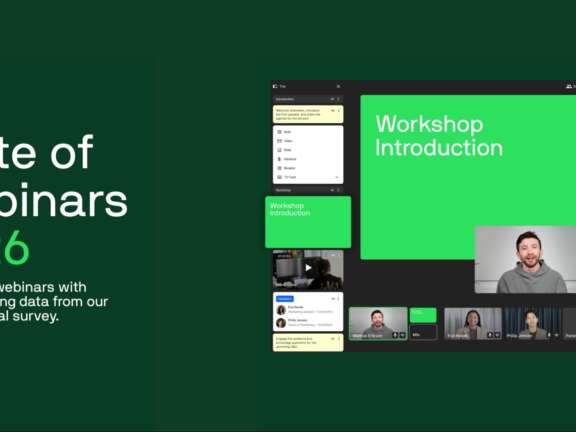
Digital events as content marketing
Digital events have the potential to be the ultimate form of content marketing. But how do you promote them? And how do you leverage them to attract, engage, and retain your audience?
- Lee Odden, CEO at B2B agency 'TopRank Marketing', will be sharing tips and tricks on working with influencers and other partners to promote your digital events.
- Named by IBM as one of the seven people shaping modern marketing, best-selling author Ann Handley will give her perspective on the webinar as content marketing.
Category
WebinarDays 2021View transcript
Good evening, good afternoon and good morning everyone. My name is Jakob Bartholdy and I am really excited to welcome you back to WebinarDays 2021. Welcome to our very, very last session of three days of action-packed, knowledge-sharing, hands-on, actionable insights. So, I am going to be your host for the next about an hour and a half. I'm really looking forward to this. This is the final session on the final day, so you've tuned in at the very, very right time because we do have an action-packed evening for you. We are going out with a bang. This has been three days of live content. Three sessions each day. More than, I think, 35 speakers. So, loads and loads and loads of excellent content. This is the third and the final day and this is the final session. So, if you're tuning in for the first time now, good for you. You made it. So, we've seen an explosion in webinars over the last two years caused by many things, the state of the world, but also the whole idea of becoming more visual. Being that video is the... human face in a digital world. So, we thought, why not gather all the brightest and best minds within webinars and video and put them all into an excellent three-day program of knowledge sharing. So, drawing a global community to share knowledge, learn and become even better at also what we're doing tonight, that is webinars. As mentioned, my name is Jakob Atoldi, in English, if you will. I have the pleasure of ending the three-day journey. I will be your guide through the last experts we have on board today. What I'm not enjoying sitting here in my chair, I actually got to sit down, which is very nice. I am the country manager for Denmark here at 23, working with our big enterprise customers on a strategic level, ensuring that they get the maximum value out of video and out of webinars. Right. As mentioned, this has been three actions. Three action-packed days, loads and loads and loads of content. We have had an amazing keynote yesterday from Academy Award-winning director Thomas Vinterberg. We sat here, saw him live in the studio. It was broadcasted across the world. We've had actors telling us how to make love to the camera to become better presenters. We've had comedians helping us on how to engage and become even better hosts. We've had big global enterprises. Diving into the nitty-gritty of how an enterprise setup actually is, the challenges, the integrations, the GDPR. Today, we've dived into gear. We've dived into how to set up your own webinar studio. There is an insane amount of excellent, excellent talks for you to enjoy. Now, if you've just tuned in now, and this is your very first Webinar Days talk today, you will, of course, be absolutely gutted. Because you've missed all this. But don't be afraid. We have sorted it out for you. Now, you can see everything here on demand. Everything is on demand. You can go back, revisit these excellent talks you've seen. You can share them with colleagues. You can dive in to all the details that has been shared. So do dive into that. You can actually do that right here in the panel. Don't. Don't. Stay. Because we do have an excellent live show for you that you can then enjoy on the other side, of course, of that. So the day today has been day three. We've started the day out having a look on how companies bring webinars into the digital world. A quick lunch. And then back after lunch, we dove into the gear setup. What do you actually need to run a webinar? What kind of gear? What are the pitfalls? And how do you actually get going? And tonight, we are ending it with two excellent speakers. Actually, three speakers even. And an amazing panel discussion that I'm really looking forward to. So the topic for tonight, where we're ending, is digital events as content marketing. So this is going to be absolutely great. But before we get started, a lot of you have been here before. I'm looking at the chat. I can see you're typing in. So a lot of you guys have been here before. That is excellent. Welcome back to everyone new here. Welcome to you as well. So if you're new, I'm going to lean a little bit more forward in your seat. And I will actually just give you a quick guided tour of what we're doing here. Now, what you're seeing here is, of course, the actual webinar. This is where all the good knowledge, all the jokes, all the knowledge sharing is coming from. Luckily, not from me, but from someone way smarter than that. And that is excellent. We want you to enjoy all that. But we also want you to engage. We want you to participate. That's what makes a great webinar. So if you can see down here, I think I'm pointing at, is the chat. So please dive into the chat. Share where you are watching from. I know we are not just across several time zones. We are doing globally tonight. So please put in down here where you're watching from. And even as an extra little where are you actually watching from? Not just the country, but are you watching it from home? Are you in the office? Are you catching this just before you're going to bed? Put that in the chat down here. So loads of that. We also have questions. Of course, excellent speakers here tonight. So this is the chat. This is really an extraordinary opportunity for you guys to ask some of the leading experts in the world on their opinion on, well, anything you basically can think of. That, you do a bit further up here, is the question box. So if you throw in your questions there, we'll make sure to scoop them up and use them for the panel discussion later on. So start punching them in as soon as possible. We'll have all the speakers in a panel discussion. At the end, we'll pick out all the questions that we have time for. So, excellent. So again, welcome wherever you are. We've had three sessions here. We started out where I'm sitting in Denmark with a morning coffee. Then it became afternoon here. So it was an afternoon tea. And now, of course, it's evening time. So it is a cheeky after hours be here as well. So whatever your beverage is, welcome to Webinar Day Live. Welcome to Webinar Days 2021. Excellent. I can see the chat is starting up. I'm watching the screen over here. We have the Netherlands. Welcome, I know, in the last session as well. We were all the way to the States. We were also a bit further away. So we have plenty of time zones here. So I hope you all enjoy it where you're sitting. We have Malmo, Sweden, coming in as well. Welcome on board. So lots of people from around the world. So this is going to be great. So without any further ado, I do think we should look into getting started on today's final, final session that we're having. So we have two slash three speakers for you. But we have two where we're going to start to really, really, really almost content marketing royalty, if you'd say so. So we have Lee Odden who's joining us. And then after that, we have Anne Handley who's joining us for a fireside chat. But we are going to start out with Lee Odden. Now, just a quick introduction to Lee. Lee Odden is the CEO of Top Rank Marketing, a B2B marketing agency providing content, influence, and search marketing solution for enterprise B2B brands. Cited by the Wall Street Journal, The Economist, and Forbes for his marketing expertise. He's been a B2B influencer since 2003 and has given more than 250, so this would be in the 270s maybe, presentations in more than 18 countries on best practices B2B marketing. Lee also published the State of B2B Influencer Marketing Report and is the host of the Inside B2B Influence podcast. So I'm really looking forward to this presentation. So, Lee, the virtual floor is yours. Great. Thanks, Jacob. Thank you for sticking it out. I'm sure you've experienced lots of really exciting and informative content over the last few days. So let's get to it. As Jacob said, I work with Top Rank Marketing. It's a B2B marketing agency. Works with an incredible portfolio of clients powered by an incredible group of very, very talented marketers. So let's get to it. I think we all know that webinars work, right? That's why we're all here. 84% of B2B professionals are watching them on a weekly basis and 83% find them to be effective. 53% say they plan on using webinars in 2021. In fact, I suspect that numbers now, as we are in the third quarter, entering the fourth quarter, even higher. So what's the problem? Well, webinars are kind of like a party, right? And successful parties require people. They require the right people. So how are marketers most often starting their webinar parties, right? They're sending out an email to their list. They're promoting through social channels on Twitter and LinkedIn and Facebook, maybe Instagram too. Maybe they're going to some of their partners and co-marketing to promote the webinar. They're running ads on search, running ads on social channels. They post information about the webinar on their website. Or on their blog. And maybe they even do clever little tactics like have everybody in their company add a link to their signature on their email with a link to the webinar that's being promoted at the moment. So the thing is, it's not enough. Only a third of webinar registrants actually attend webinars. And that's because typical promotion equals typical results. And now is an opportunity for us to do that. And now is an opportunity for us to make our webinars or our webinar parties even more powerful. And we're going to do that by optimizing webinar promotion or virtual event promotion by leveraging influence and leveraging influencers. So certainly there are people that you know that are influential in your industry. There are people that you don't know that are driving conversations around what's relevant and what's interesting in your industry. But beyond those individuals, what we're really interested in is their connection to their networks. Right? The hundreds of thousands of people that could see your message, that could be influenced to attend your webinar, to know about your brand, and take whatever else action you're looking to achieve. And this is because inspired content creation inspires promotion. What I mean by that is not only is it important to have a brand. It's important for us to identify who's influential in your industry. But we can find clever ways to incorporate those influencers in our events. Now, the low-hanging fruit there is that we'd include them as speakers. But it's more than that. We can invite people who have expertise in your industry to collaborate on content that is relevant to the topic of your webinar. Because their investment in time and energy and co -creating content with you to serve their audience, to serve you, to create. you to serve their audience, to serve your audience is a surefire way to inspire promotion of that content to their audience. So let's talk about three ways that you can promote events with influencers. I've broken this down into three sort of timeline sections before, during, and after the event. So before the webinar, you want to create credibility for the webinar topic, for the webinar itself, and create credibility for your brand amongst people who could influence those to attend your webinar. Inspire promotion through content collaboration with these people. So how can you do that? One of the easiest things you could do is publish a list of the most influential people about the topic of your webinar and make sure that your speakers on the webinar are included in that list. Reach out to those folks that are on the list and let them know that you've recognized them. Now, they've got to be legitimate experts in the field. And when you reach out to them and let them know that you're recognizing them in this way, of course, you have a call to action on the list for people to go attend a webinar on the very same topic that these folks are influential about. In many cases, this is something that they will be motivated to help you promote. Of course, you can do other things like run Twitter chats as previews to topics with speakers. You can interview speakers, recorded video, live stream video. You could publish that content in a variety of formats, that interview content. You could do things like something we've done for many years, and that is to co-create an event ebook or infographic with people who are going to be speakers on the webinar or the virtual event. And I'll explain a little more about what that is. But basically, the topic of the webinar is something that you're anticipating, and you're anticipating people will be hungry for more information about. So why not create a comprehensive, credible resource by collaborating with the people who will help you speak or help you promote the webinar and make it a takeaway that people that attend the conference can have? Or you can even publish it beforehand, as is indicated here, as a way to get them to become familiar with the webinar and why they should attend. You can make it easy for your speakers. You can make it easy for your speakers to promote by pre-writing social shares and creating different media assets as standard static graphics, promo videos, that sort of thing. And you can do clever things like use the event calendar. First of all, most conferences, most events don't even use an event calendar with their speakers. They just leave it up to the speaker to do this. But if you send an event invite, a calendar invite to your speakers for the webinar, this is a step in the right direction. Now you can update that event. You can even include pre-written social shares in that calendar invite. And this is going to create a notification for the influencer, for the speaker. A lot of speakers are very busy. If like me, I get 200 emails a day easy. But when I see an update to a calendar invite, I pay attention. Now during the event, you can invite speakers and outside influencers who are not speaking to drive the live of your webinar. So you can do things like create incentives, create recognition opportunities to drive sort of positive reinforcement of the behavior you want them to exhibit by publishing a daily leaderboard for social engagement if you have a multi-day webinar event like this one. You can also do things like offer external subject matter experts, people who are influential around the topic of the webinar, free passes in exchange for covering the webinar. So what do you want them to do? Do things like live tweet. Do things like do a live tweet. The presentations, live blog, the presentations, right? Right. Blog posts about the presentations they view. Live stream their reactions, not the event content, the event content itself, but their reactions. And invite them to post daily wrap-ups of what they saw that day on platforms that allow more robust posts like LinkedIn or Facebook, or if you want, even in stories like on Instagram or Facebook stories. Now, after the event. We want to get some extra hang time, right? We all know that you can get a substantial number of viewers of your event content with recorded content and, you know, props to 23 for, of course, making this content available as recorded content after the fact. So things you can do to get that extra hang time include publishing an event wrap-up blog post. You could curate top. So that's something that brand can do. You could curate the top social content that has been published. You could create a blog post that has been published by people who are speaking or even the influencers that you've engaged to be a part of the event and publish that as content. When you tag them in this kind of content, of course, that can show up as a notification for them, and they're going to want to help you promote it. That ebook I talked about that deep dive into the topic of the webinar that has been co-created with those experts who are speaking at the webinar. You can repurpose that now into component parts into things like blog posts, infographics, or even social content. And then you can create a think about creating incentives for the speakers or external influencers to share links to that recorded presentation content. Now, sometimes this can be an affiliate type of thing where they're rewarded financially or some other way. But it's something to consider. So what does this look like in action? What is event promotion with influencers specifically look like in action? So as you can see, here's a graphic called how to break free. A boring B2B. This is a theme that was part of a conference I was involved with. So I'll disclose that this particular example is actually how I leveraged an event to promote. This is something that the event itself could have done and quite frankly, should have done to draw attention by leveraging its speakers. So the aesthetic on top is pretty cool. You've got a, you know, a grizzly bear with lasers coming out of his eyes. But when we have been able to get the expert contributions from other people speaking at the same event around how to break free of boring B2B marketing, that's where the magic happened. So the situation was, you know, the need to stand out at a highly competitive B2B conference. And the approach here was, well, how about if we enlist the other people that are also part of the conference who have credibility, who have audiences that are paying attention to what they have to say, who will follow them if they want to. And we'll take the Com topic as a were invited to participate as well as people speaking at the event and of course get visibility in front of prospective customers. So not only was there an interactive infographic as part of this campaign, but there's also promo graphics like this. So as a result of incorporating the other speakers in the event who were influential, this became the top, this had the top social presence at the conference with thousands of social impressions via the speakers and their followers. 100% of the influencers or speakers shared at least one time. There were thousands of content views and referral traffic to the event. So if you're interested in looking at what does this interactive infographic look like, you can go ahead and check out that URL at the bottom of the screen. Come on now. So influence as a part of the B2B marketing content mix. Has certainly arrived, especially on the campaign level. Things like, you know, with this software company, 5.4 million views of a single influencer ebook asset. Another one where one ebook generated 22% of sales pipeline for the year, or this one where there was 2 million in sales pipeline. I don't know how to go back. All right. Well, anyway, the bottom line is if it works for campaigns, why doesn't it work for events as well? So this starts by creating relationships with influencers, because obviously you've got to have people who are influential. You've got to have people that have an audience that they will promote to in order for this to work. So you want to use software to identify and engage with influencers and speakers that you might want to work with in future webinars. And then you can do things to develop relationships with them, follow them, interact with them. You know, that list tactic I mentioned before, you can publish a list of the top people on the topic you want to be relevant for to your audience. That's a great way to get on the radar of the people included on the list. And then a follow-up by, asking them to do something easy, something simple where they contribute a quote or something, and then elevate the relationship to work with them to either co-promote, co-market your webinars, or actually be a speaker on your webinars. Now at our agency, we have a five-step process that we follow for virtually all these types of content collaboration campaigns with influencers, whether it's promoting an event or something else. But I'll leave you with three takeaways. Think about how you can create credibility, not just for your webinar, but with the speakers, because so few events that host speakers do anything for the speakers, right? It's always about what the speaker could do for the event. So if you can create credibility with the speakers and their networks before the webinar by giving them recognition, this is going to do a lot for inspiring promotion. There's an expression, people will work for a living, but they'll die for recognition. And this is true for speakers and influencers alike. Also think about how you might promote up to and during the actual webinar and certainly make it easy for them to share by giving them things to share that they can get scheduled through co-schedule or buffer or whatever social sharing software that they might be using so they can schedule this in advance. And then capture extra visibility for your event by curating, repurposing, and even incentivizing shares to your recorded content. Thanks. I know that was a lot, very fast paced. If you have any questions, feel free to contact me directly. My contact information is on the screen as well as a link to a survey we're conducting right now. If you've had any involvement in influencer marketing in any way, we would love to know your insights. So feel free to go ahead and check out that URL, take that survey, and we hope to use the insights to help elevate the practice in the field of marketing. Thank you so much, Lee. Super, super interesting. One of my absolute takeaways from this is that I am going to insist that for our next webinar, we are going to use a grizzly bear with eyes for lasers. That was really cool. I definitely like that. So we should have had this presentation pre-webinar days. That would have been the centerpiece of our whole campaign. So thank you so much. And you guys, give a big round of applause for Lee. Thank you. Again, in the bottom down here, you have reactions. We can clap, throw some hearts, give some love all the way to Lee. That was really, really good stuff. Excellent. So Lee, I'm going to put you on hold for a little bit, but we are going to bring you back for the panel discussion here in the end. So everyone watching, just to recap, if anyone's forgotten, please up here somewhere, I would assume it is, punch in all the questions you have. This is, as mentioned before, a unique opportunity for you to ask the experts directly on this and get some tangible advice that you can use for your own business. Right. Again, onwards with the program. The next speaker, speakers, I've been looking forward to very, very much. It's going to be a fire chat with a fire, not fire chat, fireside chat without any fire, but I promise you it'll be, it'll be good anyway. So we are almost at the end of our official program. This is the last official speaker we have for the three-day event that we've had. Again, we'll gather everyone in the panel debate and in the end. So do remember to stick around. Our next speaker is, as mentioned in the beginning, the closest you have to content marketing royalty. Anne Handley is a Wall Street Journal bestselling author who speaks worldwide about how businesses can escape marketing mediocrity to, you know, ignite tangible results. IBM named her one of the seven people shaping modern marketing. She is the chief content officer of Marketing Pros, a LinkedIn influencer, a keynote speaker, mom, dog, person, and a writer. And I know she has more than 400,000 followers on Twitter, more than 400,000 followers on LinkedIn. So when Anne speaks, we listen. So to sit down with Anne, we have our very own CEO and co-founder, Thomas Messon. So Thomas and Anne, please take it away. Hi there, everyone. And welcome to the last session of Webinar Days. Anne, so good to have you back again. It's so wonderful to be here. I'm delighted, especially following Lee, an absolute rock star in this space. Always amazing tangible takeaways. So yeah, and I'm so excited to chat with you today. Me too. Great. And I guess two makes a tradition almost, right? Yeah, I think it is a tradition for me as a lifestyle, right? So, yeah. Great. So, I mean, the next 15 minutes or so, I figured we really just wanted to kind of cover a little bit kind of the state of the union, the state of webinars. I remember last year we spoke about the origins of webinar and the word and it was this kind of buzzing vibe. When the world was just turned a little bit upside down or at least half a year since. And now we're one year later, 12 months later on here. So, so I just wanted to start a little bit kind of, you know, I mean, I think, you know, at 23, we've been powering more than 10,000 webinars with with 23 webinars. So, I mean, just crazy things going on. A lot of innovation, a lot of learnings, a lot of use cases, a lot of adoption. What have you seen, Anne, the last 12 months on webinars? Where's your head on webinars just now? Yeah, yeah. I mean, 10,000, that's amazing. Congrats. That's like, you know, I mean, Jacob described me as content marketing royalty, but obviously you are webinar royalty. So let's just call it. I'm just going to call it right here. So super interesting, actually. So just last week, I got updated data from the annual content marketing survey that Marketing Profs, my company, does with the Content Marketing Institute. And so just yesterday, because in anticipation of our fireside chat here today, I wanted to look at, you know, kind of what's going on with webinars. So this one thing for me to say, I mean, webinars have had a year, haven't they? But I think it's even more powerful if we can wrap some data around that. So that's what I did. So, you know, me with my slides. Here we go. Here we go. Just. I had to bring it back. I had to. It's amazing. So when we think about the state of webinars, it went back to 2019, right? So this is pre-COVID 2019. Fifty seven percent of marketers we surveyed at the time said that they were using webinars in their content marketing mix. It was the eighth most popular. So it was number eight on the list of content tactics that marketers are using. Fast forward two years. Twenty twenty one. Brand new data that you are all getting a sneak peek at. I haven't talked about this anywhere. It hasn't been published anywhere yet. It's actually not coming out till next month. But just for you today. Look. So same question. Same question. What are you using in your marketing mix? Sixty four percent of marketers are using webinars as part of their marketing mix. So along with all the other things that they're doing, you know, producing videos and infographics and blog posts and all that kind of stuff. Right. So. Sixty four percent. I actually thought that might be a little bit higher, but. Yeah. But this is the really interesting part. And this is like, is this general or is this people that were into sort of content marketing? Is there a bias here in the survey against people that actually are doing a lot of content marketing or is this very cool? So it's so it's it's in the sense that are you doing any kind of content marketing is what we asked. So it's not just if people aren't using content marketing, then they're they're not their their data is not useful to the survey. But if you are. If you are doing anything, if you wrote a single social post last year, you're doing content marketing. So so that's the qualifier right there. Anyway, this is the this is the data that I thought was most relevant is that it's jumped to number three. And that's right after blog posts as well as short video. Right. So number three. So it went from number eight to number three. So interesting bit of data. Two more just quick pieces of data that I want to share in part because I have slides. I'm going to go with it. So we're going to do this. So we asked marketers, what are you seeing as the top performer in all the content assets that you're producing? So amongst all the things you're doing, what's number one, what's really driving results? And guess what? Guess what got the trophy? Oh, what is it? Yeah, it's webinars. So number one, webinars. And then the final bit of data that I thought was most relevant to this conversation here today and most interesting to this audience is that we asked marketers, what is in a post pandemic world, in a world where 100% of us are vaccinated, please, in a world where the pandemic is done, we're over COVID, Delta is crushed. In a situation like that, what happens? Are your virtual programs going to remain and or will they be hybrid events? We found that 74% say that. Even when in-person events are 100% back, even in a post pandemic world, that 74% of us expect our virtual programs to stay. And that's relevant because we're all investing in virtual programs as well. Right. So when we say that we're producing them, I think it's not just about that we're producing them and calling it a day. No, instead, we're investing in the technology. We're looking at how do we use them more effectively. We're buying Sharpies so that we can make slides. You know? We're doing all this stuff. So I think we're seeing lots of innovation in this space. When I look at these numbers all together, that's what I see. I see a whole lot of innovation going on in webinars in 2021 heading into 2022. Amazing. And thank you so much for even hearing the little Easter egg of sharing that data for the very first time. Very exciting. And definitely, yeah, I guess it is the narrative of this category. And from this sort of hidden gem of, I guess, B2B marketing, a lot of technology marketing, where it sort of resided for many years as this sort of hidden. I remember the Adobe, Marketo, who is now an Adobe company, about seven years ago published that webinars was their third largest contributor to their overall marketing efforts. And the budget was zero. And so it's always been there, I guess. What have you seen on the adoption here? Because I guess, I mean, even over the last few days at Webinar Days, we've had people showcasing all their new studios that they had built in the companies. We had a session of a company that had taken a $50 million event marketing budget and slashed it to zero. And who are now struggling to figure out, okay, what is the new normal afterwards? Where are you on that? And on seeing all this kind of adoption and what people are struggling with and what people are succeeding with. Yeah. So, I mean, I guess I think of it a little bit differently. I mean, I have seen what you just described. You know, we do see people building out these incredible studio spaces and hosting these incredible online events and really making it a different kind of experience. And I do think that what companies are doing. And even individual webinars, too. They're looking at them with an eye toward experience. What's the experience of the attendee like? And number one is experience. And they're also looking at conversations. Because, you know, how do we actually initiate a conversation here? Like, I'm looking at the chat on the side over here, like going on while you and I are talking. And this is so unique to a webinar format, right? That you can actually have this kind of interaction. And so, this is part of the overall experience of the attendee. So, I think thinking about experiences and thinking about conversations, bringing them into the webinar format is really key. And so, as much as I love these studios that are being built and I applaud the budgets that are going into that. And I wish I had one-tenth of that. I think the most important things to remember is even if you do not have a massive budget, there's a whole lot of innovation that you can do. Just by some very, you know, simple things. Like thinking about the experience that you're providing. And then bringing in that conversation as much as you can. In terms of, you know, just some other things that I'm seeing. I mean, one of the things that I also think is really significant in the evolution of virtual programs is that marketers and businesses are seeing virtual programs not as, you know, sort of one-off or over here as part of the marketing mix. But as a unique opportunity to really speak to the audience. Yeah. Right. Um, that's actually what talk is now the world is. And we've! I mean, that's really, um, Colorful. Some companies and some of the smartest, most innovative companies are really thinking about that more holistically and not just, you know, leaving it at that. It's like, oh, that was a fantastic webinar. It's great to talk to you in your living room and call it a day. No, instead what they're thinking about is how do we extend that across, you know, many different things. So I'll give you a really specific example. One of the things that we've done at Marketing Profs is that we've taken our annual B2B forum and we've wrapped it with our membership programs. We've wrapped it with community. And so rather than just having that one day or two days, actually, of the Marketing Profs B2B forum, instead it's a year-long learning opportunity. So we've sort of wrapped it with a membership that brings in, you know, community through our regular programs, through our Facebook group. You know, just trying to elevate the notion of a virtual event. It's just not, it doesn't start on one day and ends on the next. Instead it becomes a year-long. It's a year-long learning opportunity and, more importantly, brings in that community that I think we all are lacking and we're all starving for at the end of 2021. That's a really good point. And also on the whole kind of connection, last night I interviewed the 2021 Academy Award Oscar winner Thomas Vinderberg, film director of the movie Another Round. And he basically had been doing an Oscar campaign and sitting receiving. Some of the biggest awards of his lifetime in his living room. But he shared, you know, how it was kind of a different experience of then, you know, doing it with his, you know, close connections in his little COVID bubble. Right. But then it being also a very meaningful experience in other ways compared to standing on the big stage, receiving these awards and sitting campaigning from his office for an Oscar and doing interviews back to back in weird time zones. Yeah. But also even that he might have thought that it was. A leveler for his film, which didn't have the big budgets that the other had for Oscar campaigns. Perhaps it was a leveler. So there's always this kind of interesting to it. Okay. And I mean, very fast. I have two very fast ones for you. Okay. The very best webinar you've been part of the last 12 months all have seen. The very single best webinar and why it was good. Oh, wow. You know, I like the ones that, well, I'm sorry, you said fast. Okay. I like the ones that are, that aren't afraid to show the seams a little bit, you know, because I think one of the benefits of this is that it's live. Like at any point, anything can happen here. Like my dog could go off right now or, you know, my video could go black. Please, please, please, please. No. But, you know, something like that. Like, I love that sort of that feeling that anything can happen. And the if it does happen, the organizers who are, you know, sort of embrace that and aren't afraid to sort of show that a little bit, because I think that makes us all more human. So that was one. The second thing, the second event that I went to, which is completely different than any business kind of webinar or any business event was that. So I bought some wine from a company in Napa. They sent me the case of wine and then they invited me to a private wine tasting with me and just a handful of other people who had bought wine from them recently. And so I thought that was a really interesting use of what was essentially a webinar. I mean, yes, it was a wine tasting, but they were also as a result of that. Talking about why their process was different and and how they are different as a company. They were telling their story to me. No, I had already bought. So what are they trying to sell me? Right. Essentially, they're they're nurturing their my loyalty to them. And I love this company now and I will absolutely buy from them again. And I trust them to give me recommendations when I'm looking for something. And so I think that's a really innovative use of webinars and thinking beyond the lead, thinking beyond just building awareness and building leads. But actually using it to further the relationship, the relationship down the road. I love that. Love that. Yes. So even even almost like becoming a core part of the product, right. Being the soft side of the of the hard experience of the wine, the part of what you're buying or even that's an amazing example of sort of a service delivery. OK, next one. Webinar program. So I think next week, Monday night, tune in if you're on here together with the content marketing. Institute, we're hosting the twenty twenty one content marketing awards together. And obviously there there's a lot of awards for programs and for initiatives, et cetera. So it's just kind of from a more sort of systemic programmatic standpoint. What is the best webinar program you've seen the last year that that really sort of that really kind of shook you or really, you know, sort of captured your imagination as being something that was something to aspire to or something that was, you know, something that you were really interested in? Or kind of something we should look to as the future of a webinar or virtual program. Interesting. So webinar program like platform or what? Yeah, more like a serious or an initiative or I guess I mean, we obviously a lot of customers that are trying to go from being ad hoc to start running programs. The weekly demo for new potential customers, the weekly for existing customers, the the quarterly, the like your example there of, you know, the the. The. Monthly batch of new customers being invited, you know, starting to be more systemic and more structured and more program based as opposed to to firing in all in all directions. Ad hoc, as I guess also during COVID was the life was very much the story of the first few months. Yeah, right. Well, I do like the idea of an invite only, I think, an area of exclusivity, because if there's one thing that webinars are known for, right, it's it's it's we've we've indexed too far. Right. Or too much, I think, on trying to get as many people as our webinars as we can, you know, really using them as new generation and brand awareness opportunities, as opposed to really thinking about, again, the customer experience and how do we actually serve that that customer long term and inspire long term trust and loyalty. And so I like programs that are more on the latter end of that. I guess I'll share a marketing process example, because I think it's it's an example of something. That you can do if you've got even without a lot of technology. So we host a series six times a year at Marketing Profs and it's called B2B Backstage. It's an hour and a half as opposed to like a typical 45 or hour long webinar. And the idea is that we have a marketing luminary show up and you get a sense of like maybe they're debuting new stuff or maybe they have some some things that they want to workshop. It's very much. Intended to be something that feels like fresh and new, even if you know the speaker already. And now that I'm looking at Lee's face, I feel like we should get Lee on that on that program. But all that to say so. But as part of that. So, yes, it's a regular series and it happens six times a year and it's only for our paying members. So it has a sort of more intimate community aspect to it. But one of the things that we just started doing this year, which worked out really, really well, it was just an experiment, which is another thing that I think is really important to do just in marketing. Generally, but especially in webinars, try some stuff, right? Have some fun. See if it works. If it doesn't, you can ditch it. But one of the things we did is we gave everybody a login to a Google Doc and then we had them all take notes together collectively. And so that was another way, I think, to extend the experience. And I didn't know how that was going to go because it was like, I don't know, are people going to like are they actually going to do it? Number one, are they actually going to share their their takeaways and experiences or it's just going to be like crickets there, like silence? Or is it just like they're going to write dumb stuff? Like, I don't know. I never knew it's going to happen. But it turned out that from this one hour and a half session, we had like, I don't know, like 14 pages of notes or something like that where people share experiences. So it was like a real time, like, you know, data collection and insights collection. Then we gave it to an editor at Marketing Cross and they kind of cleaned it up and made it more accessible in the sense of added subheads and group things together that belong together. And we. Co-created essentially, you know, the audience co-created a really useful takeaway. Now, there's a million things you could do with that. Ultimately, you could do with it from a marketing standpoint or even from a from a content delivery standpoint. We didn't do that. But I think just as an example, I think of the kind of innovation and the kind of just easy things that you can do easy in a way, but just really just a smart, a smart thing to do. And I can say that because it wasn't my idea. Otherwise, it sounds like I'm just like flattered. Yeah. I love that idea. I remember back many, many years ago, there was this like piece of software on the Mac where you could take collective notes if you're on the same Wi-Fi. And it was back, you know, just when conferences started being like that, there was Wi-Fi and you were sitting on your laptop and a lot of people starting doing this kind of collective note taking back back then. But this is an amazing idea of sort of creating a shared result. So a lot for sharing that one. And I think that's amazing. And also, yeah, I think good point on the. The niche webinars, I think. What was it recently we heard about one of our customers that big kind of manufacturing company builds machines and one of their customers was a very big soft drink brain global brain with a with a red logo. That and then they actually just globally had one webinar just for that one customer. Right. Sharing all the stories from around the world of how they were using supporting them and using their machinery and what have not. Right. So that that's kind of the very definition of. And then the other thing is that they're building a webinar for a niche webinar, right, just for a single global customer where they where they build a webinar for that. So I think this whole kind of webinar journey of going from from mass communication to really seeing it in channels and close circles and exclusivity, etc. That's a very interesting avenue for everyone to explore. Great. Last questions. And then then we'll get to get Lee on board and put you the two of you on fire together, which I'm sure will happen. Thanks. I mean, you know, a lot of people are very new to this world of webinars and you can even I think webinars probably just now, just as I guess social was 10 years ago, is probably the main driver of companies getting into content marketing. Right. Also getting a little bit into things that are more unscripted, a little bit more authentic, a little bit more real. Right. More low budget, authentic, putting their people on front in front of camera, getting their stories out there, sort of turning the wheel. We had we had a day. dinner last night around this Thomas Vinterberg interview and one of them from a very large European bank shared that he was starting to look for talent within the company to tell the stories instead of hiring people from outside to be actors in their movies or represent the company. So, it seems Webinar is really kind of a big driver just now for the overall sort of content marketing paradigm. What would be the single piece of advice you would give because there are so many people that have arrived the last 12 to 18 months in this world and are just kind of dipping their feet and some of them are doing tremendous, amazing, innovative things right off the bat. But from sort of you having this like huge history in content marketing and all the mistakes you've seen and the fads and the trends that didn't pan out, what is the sort of single piece of advice you think that this sort of new world of Webinars should throw away from all the lessons learned the last decades in content marketing? Yeah, so I think, I mean a couple of things. I think the community aspect we already talked about, so I won't go into that, but I think it's critical. If you are going to pre-record anything, make sure that you always have a live component. I just can't stress that enough. But I've already talked about that, so I won't go into it, but I think the most important thing to remember as a Webinar host, if you are a marketer looking to host Webinars, but also if you're a marketer creating any kind of content whatsoever is to find the story, like find the human at the center of your story. So what does that mean in a content marketing context? It means find the customer, tell the customer's story, make sure the customer is the hero of your story and not your product or service. Or find an example of somebody that you're working with. Your product or service helped, you know, that may or may not be your customer, but tell those stories. I think the more that you can make your Webinars and your content more broadly story driven, that you can wrap it around a story, the more it will resonate and the more successful your content marketing program overall will be. That's something that I think in Webinars we have a unique opportunity to do that because again of this element where it's me speaking to you directly, I don't think we're leveraging that enough. I think to the degree that anybody here wants to elevate their game, just find the story, find the human at the center of the story and amplify that person. Amazing. Thank you so much, Anne, for catching up on everything Webinars here 12 months after we did it the first time. And hey, two makes a tradition. So see you next year. When we're fully in the lifestyle. We'll do it once again. Yeah. Definitely. Also with Lee now, let's discuss about, I think this discussion around the new normal and I think what we're seeing with people kind of figuring out the $50 million event marketing budget, how that gets mixed together. So over to Jacob to lead us through putting everything on fire here. Excellent. Thank you so much. And as always, always a pleasure and really, really good insights as well. I mean, let's get the crowd going. As well, hit those those hearts and hands and a few light bulbs there as well for me. That's for sure. So let's get the let's get all you guys in in the same room and let's have a let's have a proper digital webinar discussion here. So I'm actually going to kind of lean on something what you said and about about the fact of being human. And this was something that that Thomas Vinderberg also dove into yesterday, the authenticity, and the story. Telling in all of these different parts. And the kind of the always that little bit of risk when you're doing a webinar, you know, something can go wrong. The session we had before the session, literally the last speaker into the taxi when we started the webinar was driving home and literally got in the door and his laptop didn't work. And we almost closed it down. And then he was there. So we got an extra half an hour of webinar. But it was great. I mean, it was intense. It was the story arc was was was really good. And you know, we couldn't have planned that. It did give a bit of a bit of sweat. But but it all went went well in the end. So I think where I want to get to is is do you see a what do you call it maybe a sweet spot in terms of where because we've had a lot of sessions on gear, we've seen some really, really great professional studios at some of our customers. But is there kind of maybe would maybe we'll call it tipping point in terms of can it become to enterprise can it become too clean? So you lose this? Yeah. Well, yeah, I mean, we we've even all we've all got to do is let people know that, And the third thing we were trying to inventory I'm sure many of you here today. And the difference between the events that feel like they have a pulse, that feel alive, and the ones that don't, that feel a little dead and feel a little overproduced, are the ones that have controlled every single little thing. And by that, I mean, you know, there's no chat in the side, right? They don't have that community aspect. Because what if somebody says something that we can't, you know, that we need to delete? Or what if somebody says something uncomfortable? So they don't have that. Or, and then they pre-record everything. So literally, you know, you're sitting down, you're watching things that have been pre-recorded, you know, forever. And so I think there is a point where unless you allow for a little bit of room, and I don't mean like just, you know, having everything live and, you know, having it all held together with, you know, with duct tape and hoping for the best. I mean, I'm talking about, you know, controlling for the things that you want to control for, but at the same time, leaving a little bit of room in there. Because having a sort of element of live theater, I do think adds, gives your event a pulse, gives your webinar a pulse. And so I do think that's a critical component of it. And yeah, produce it to the point that if you've got a studio, heck yeah, like use it. But I don't think that should stop you from doing webinars either. Cool. Excellent. Thank you, Anne. I mean, I'm going to throw this to you as well, Lee. I mean, I'm even steal one of Thomas's question and say, you know, what's the best webinar you've been to? Was that also the authentic feel, the, I don't know, I'll probably use the word danger, but where you definitely felt it was humans behind the camera? Well, you know, since part of the theme of my presentation was about partying, I would say there's a happy hour that Adobe hosts for its influencer group, and it's kind of a webinar in that, you know, it's hosted through a video platform and there is a presentation of sorts, but it's also meant to be accompanied by spirits, libations or whatever it is that you happen to drink. And so there's an informal aspect to it. And, you know, Anne is talking about the value and the power of, you know, the human story. You know, this is a scenario where we have a massive global brand, Adobe, and they are presenting some information and then they open it up to the people that are part of the, the event, if you will. And people are sharing updates about what's going on in their life. And, you know, to some degree it's almost like a counseling session, you know, so there's tears flowing sometimes, but there's also celebrations and it's, it's, it's an incredible thing that they do and they do it once a month. So I would say that's probably one of the most powerful webinar like type of experience, experiences that I've had. So it's like real true, true emotion that, that, you know, you get, you get your feelings involved as well. I'm actually also, I'm going to look at you, Thomas, and actually ask you your own question saying, you know, what's the, not necessarily maybe the best webinar, but what's the webinar you remember? What triggered you in that? Yeah, I think, I think it would share the sort of context and the relationship aspect, right? And, and I think both to, to lean and point, I think that's, that's what we're looking for. I mean, it's even wild to think back back when we launched 23 webinars in 2018, it was kind of a huge friction that we made it to be live only and video based. And back then everyone wanted to do like slides and audio, and then they wanted to do playback. We even heard about one of the largest tech companies in the world that had an 10 person team sitting, putting videos together from around the world. And doping them in different languages. And then putting all these like pre recorded webinars out there. And it's like, well, then you're making videos and you're not being web. And so I think we're really looking for that kind of the authenticity around it. Right. And so I think, but I think some of the strongest things are also kind of relationship. I mean, what, what we're sort of seeing in the category of relationship webinars, right? Where, where it might be an account manager in a company that has a hundred customers. It might be a bank advisor or, you know, any time of sort of a high value relationship combining, you know, hosting that connection, you know, but also using pre-recorded materials from some experts or whatever. So, so they don't need to read up on everything. Right. But obviously not like, not like doing 30 seconds in the beginning and the end, and then running 30 minutes of pre-recorded stuff, but like kind of creating an experience. Right. And I think that's where we start seeing kind of a lot of innovation, right? That, that, you know, if my bank advisor invited me to a webinar, you know, I would, I would join, right? She still hasn't done it, but I'm suggesting it to her, but, but, you know, this idea of sort of creating like a little bit like Lee spoke about these kind of sort of invite only pretty limited experiences, but that sort of replaces the need for a one-to-one meeting and still keeps that kind of human connection going on, on a sort of quarterly or biannual basis or whatever it might be. Right. So I think, so I think we, people are still trying to figure this stuff out, right? How do they lose the control and let their people free, but also use some existing content that they can verify is cleared and compliant and all the, all the stuff it needs to be. Excellent. Thank you, Thomas. And, and on this, I think what we call uncertainty aspect, I know what, what we get asked a lot here as well from our customers is, you know, what's, what's the future looking like? So what's going to happen? We've gone from this absolute lockdown, where, you know, no questions asked. This is a digital event. You can't do anything else. And to now actually starting to open up. I mean, what we did yesterday with, with Thomas Vindaberg, which was a hybrid event, which, you know, this was our first event with guests in, in house for more than, I mean, almost two years. So it's starting to open up, but we can't even us, you know, the tool makers, as you say, Thomas of Webinar Products don't really know how, how this is going to end up. So I think my, my question here is what, what does the future look like? You had some, some stats on it. And in terms of, of this hybrid event, is it going to be all events going forward are going to be hybrid? Are they going to be, I mean, once, hopefully she said, you know, we're all vaccinated, then there's going to come this pushback saying, no matter what it is, it needs to be, you know, face to face. We can't do it anymore. Or is it, you know, is it going to be this, this mix going forward as, as a permanent thing? I'm going to, I'm going to throw that to you. And for starters, So, I mean, I don't know, first of all, but based on, on the, the recent data that I, I shared, just a few minutes ago, you know, where we asked marketers, you know, how many of you are, you know, so the world is, is open again, like, let's fast forward. Everybody's vaccinated. COVID is done. You know, what happens now? And 74% of marketers said that, you know, they're, they're not that they're, programs. So in other words, they're not going to decrease investment in them. So sometimes agents, this is this, You know, I, I would love to check with you on that question. Because, I suppose, Because such a throughout our conversation with you guys, I mean, it seems, you know i see that as as a very positive activity like does that mean that we won't be meeting in person again no of course not we are inherently social creatures we we need that face-to-face time but i think as much as we talked a minute ago too about how virtual programs are not just live programs that you shoved into a virtual platform right they're different animals and so i think that's one of the things that we've really internalized over the past 15 months that they are different and they can live separately used to be that a virtual program was kind of a substitute for an in-person program in other words and i don't think that's the case anymore i think that live programs have a place in marketing they have a place in our world and i think virtual programs have a place in our world and yes there will be a number of people who will do that hybrid option um according to the data i'm trying to remember i didn't actually pull that number but i think it was like 40 percent were thinking that they're live events would have some sort of virtual component to it so it would be a hybrid event don't quote me on that because i'm it's i'm struggling with memory right now um but i think it was so it was somewhere around 40 so you know that says to me that at least for the short term at least for the next 12 months which is what we asked about um that you know hybrid will be will be part of it i mean i would i would like to see it here to stay for uh for our marketing process is hosting an in-person event in 2022 in the next 12 months and i think that's a really important in october and that will be a hybrid event so that's what i'm planning to do short term will that also be true in 2023 i don't know there's kind of too many unknowns but at least for 2022 i think hybrid is is definitely an option it's definitely going to be interesting to see what happens i'm going to play that ball to you as well lee saying do you what do you think do you think the same that it's it's here to stay it just needs to kind of find this level i think that you know has proven that customer expectations or audience expectations have evolved and they expect a hybrid experience. I believe that is going to be the case. I know there are a lot of, you know, there's a lot of uncertainty, as you know, and mentioned, you know, it's like, I don't know. And I think we're really figuring out exactly in the marketing mix or company communications mix, where do virtual events best play and where does a hybrid event best play? And maybe even where does real world only play, but I doubt we'll see much of that. So we're going to figure that stuff out. In terms of marrying these types of experiences with the expectations of our buyers and what we're trying to get across as marketers, I think we're still figuring out a lot of that. You know, I play in influencer marketing space and I can tell you that, you know, a lot of the webinars is how to informational, that sort of thing. Right. And, you know, in the consumer space, and I don't work in the consumer space, but a lot of consumer influencers, their bread and butter content is how to and tutorial type of content. And they're just publishing that to YouTube. It's like a webinar, but they're just doing it as recorded. And I think if, you know, if platforms maybe like 23s or others start to become more popular, where you can produce how to content B2B or B2C, you can produce that kind of content, have an audience that you can invite and that they can participate in that sort of thing. I think there will be a pretty big jump in what we call, you know, webinar content. I really do. But I don't think that people will call them webinars. I think, you know, they'll call them just how to they'll just call them video content, video experiences. So obviously, I'm not 100 percent sure about one way or the other, but I do think there's the expectations of consumers are going to drive the activities of brands and how they choose content and engage with their their audiences and communities. Excellent. Thank you, Lee. And it does sound like there's still there's good room for for the 23 platform as well. That's always good news when we're talking about the future. So speaking of engagement, I think we're going to we're going to open up the floor for some questions from from our audience. And just to remind you guys as well, it's up here. You can punch in all your questions and we'll see if we can we can get around motion. So I'm actually going to dove into a few questions. I'm just looking down at the question. So this is from Saab. This is actually for you, Lee. But I think we can maybe go around with it afterwards. When do you start promoting a webinar? What's what's the sweet spot? Well, there's some research that shows that most people sign up within eight days of a webinar actually happening. But I think the promotion's got to start as soon as you've committed to the fact that you're going to do a webinar. I. Why you're doing a webinar, you're trying to create an experience for people around a particular topic. So rather than thinking of the webinar as the end goal, I think you think of webinars as a component in an overall content ecosystem. Right? And so there there's no reason not to make mention and promote the webinar as soon as you have that date as part of your content ecosystem. So, you know, like in my case, you know, I've got a research report that I'm working on right now. There's a companion podcast. and video show that goes along with that. The Anne was gracious enough to be on not too long ago. And right along with that is a webinar, right? Well, we'll be a webinar on a regular cadence of some kind. So the time to start promoting that webinar is immediately. There we go. As fast as possible. Thanks for that, Lee. Right. Just looking through the questions here. I have one here. There's no recipient for it. But I think maybe we'll start with you on this one, Anne. Do you find that webinars resonate more strongly with a certain age group? That's actually an interesting question. Certain age group. You know, I don't think that toddlers really have the attention span for a webinar. I mean, this is just my own research. So, you know, but in my own experience, toddlers are just a terrible fit for webinars. They're just... It's bad. Now, let me think about that. I don't know. I don't think so. I can't. I mean, honestly, I don't really... I've never thought about that. But I... Yeah. I mean, I don't... I can't imagine. No, because I'm thinking through just people in my life and the... What I never expect them to sit down and watch a webinar. Yeah. No, I don't think so. I mean, short answer. No. I would say no. I mean, I guess as a father of teenagers, I mean, you can argue that having 45 to 60 minutes of attention span could be a constructive thing in a webinar. Yeah, I know. Compared to the visual pace that they're normally operating on on Instagram. Right. Well, yeah, I was just thinking about... So, my daughter just got a job in marketing, actually. So, she graduated from college. And she's... She's doing her first marketing job right now. And so, she's been going to webinars because she's at the very beginning of her career, right? And so, she's just out of school. She's very much soaking up, you know, sort of the vernacular, the language, the point of view of B2B tech marketing, which is the world that she's in right now. And so, we have some sort of fun conversations about, you know, this is what they did on this webinar that, you know, that I thought was kind of fun. And so, things like that. So, you know, she would be like my control group for the 20... I don't really have a control group for, like, say, the plus 80 groups. But I don't know. I think webinars on iPads are, like, the way to go, man. So, you know, I don't know. But, yeah, I think, you know, at least in the world that we're in right now for many marketers, for many businesses, for many professionals. And, you know, on both the consumer side as well as, you know, as the B2B side. You know, this is kind of what we... This is kind of what we have. And so, I think that we've... We've adapted and we've adopted the ability to learn from webinars and to participate in them. So, we'll go with basically everyone. But we'll put on the package a, you know, not toddler safe. Yeah. Just to be sure. That sounds... Yeah. Not safer under age three. I wouldn't suggest that. Exactly. Keep away from small children. I agree. I agree. Excellent. Thank you, Anne. All right. Let's see here. We've got a lot of questions coming in. So, we keep it coming, guys. It's really good. Right. This one could actually be interesting as well. I think maybe we will start with you here, Lee. Do you have... The question is, do you have any statistics in which industries digital events perform the best? And in which industries do you see a big future potential? Pharma. No. No. When I was actually looking at some stats, I did see pharma pop up. I have no context, no detail. So, yeah. I'm sure that's going to be a great question for Thomas, who's in the webinar business or video platform business. But, you know, I know in the B2B space that there's been a substantial increase in digital content consumption. In fact, so much. So, that you hear the expressions like digital first being thrown around in the B2B space, meaning that there's, you know, you don't have field marketing, you don't have outside sales or real world experiential events to, you know, find and nurture prospects with. You only have digital now. And webinars and video content, all digital have really played a big role there in all industries, really. So, any industry where there's, you know, content transmission, you know, content engagement, content experiences create value for... And the customer is a ripe industry for webinar content. Excellent. Thank you, Liam. Yeah, I think... Pass the ball to you, Thomas. Yeah, no, I would add that I think, I mean, I guess pharma is probably good to add there, Lee. I mean, I think we see manufacturing kind of, you know, creating machinery, as I highlighted the story earlier, right? So, I think the paradox, I guess, is that you see a lot of industries that probably were the least digitalized. That went from, you know, basically being probably, I guess, 10 years, 15 years behind where kind of the, whatever, the technology world, other fields that already had become extremely digitalized, right? Most of these companies done little content marketing. They never had done webinars before. And they actually had massive budgets for field marketing, for event marketing, for, you know, attending 100 trade fairs around the world, you know, going in with building big machinery, building exhibitions. So, this is the one Tudo high level. out with the LIG, the does and Model line. And it does Tyler. I think this is this idea, I'm not saying they should be, but, I think the давайте los cargos pas dos명이 They're a generation. dun trade fair exhibition setups to basically be webinar recording studios to kind of use the proximity of a lot of people influencers analysts customers in one place and then you know they're you know really going down in size on their exhibition stands and just making them sort of recording uh you know tv studios or recording studio including doing live webinars but also recording content right so i think yeah i guess i guess there's really some industries that um that really matured extremely fast uh the last 18 months uh that are probably some of those that you wouldn't normally really sort of think think about yeah i have so i have kind of a funny example that um that i could share that that sort of speaks to this but um so last october i adopted a new puppy right he's a pandemic puppy and i had to figure out how do i actually train this puppy you know normally with a new dog i would i would take him or her to like puppy kindergarten or i take them to training classes um and at least in my area all of those schools were were closed down right they weren't accepting anybody to come into their building because it was october and you know we're heading into winter and they were just like not holding classes so as a result of that so i contacted this this one dog training center animal training center and they they sent me to a landing page which offered me almost like a webinar environment and so i could take a class a training class with an instructor where we're all in our in our homes like training our dogs individually so it wasn't exactly a webinar it was more of a training opportunity but you know it was all recorded and you could access it afterwards and all that kind of stuff so it was a little bit of a hybrid program like that so fast forward to spring so i'm not sure if i'm going to be able to tell you that since you'll never meet him but all that to say we did that program it lasted i don't know six or eight weeks something like that it was you know a good program not probably not as great for for us in terms of of training as being there in person but you know it was pretty good so fast forward to the spring things start to open up again at least in greater boston where i live they started holding in-person classes again but they took that that webinar mindset i guess is one way to think about it they took that and they thought what can we do with that we proved that we could do it number one right so there was a lot of of maturation that they at this dog training facility went through to be able to produce those kinds of webinars now they've turned it into um into a book club for people who love dogs and like want to want to read about dog research and dog information and want to know more about their i get that um to transform that into another connection point with their own audience. So I think there's a bigger lesson there that so many of us can learn from, even if we're not in the dog training business, which most of us are not. Excellent. Thank you, guys. We are kind of running out a little bit of time, sadly, but I have one last, I don't know if it's a question, but one last ask of you guys whilst we have you all together here in this virtual room. And again, thank you for all the questions that's come in. But we've done these webinar days now. It's been three days, a lot of sessions. Just looking down at my cards here. We've had Academy Award winning directors. We've had actors. We've had comedians. We've had consultants on the change management bit of webinars, webinar program managers talking about how to implement strategies, global enterprises on how to get this into, into massive organization and making it work. Gear sessions on what kind of camera, what kind of microphones, all this. So there's just so many aspects of webinars we've been through. It's been really, really cool. But as the final question of tonight and then almost the final question of Webinar Days 2020, if each of you were to boil it down and this is not going to be easy, but boil it down into two, let's call it skills, two of the most important things you need to master going forward when doing webinars. What is that? And I'm going to put you on the spot first, Anne. Me. Okay. I think you need to have empathy. You need to think about what does my audience really need from me and how can I deliver that incredibly well? So maybe empathy isn't a hard skill, but I think it's a critical skill that every marketer and every business needs to have if you're going to use webinars or any kind of content to attract it. So empathy being number one. Number two, I think you have to have a certain fearlessness about you. And I think especially when you're first starting out. But not only then, because I think you always have to innovate and push yourself and figure out what can we do next to truly engage the audience that we want to engage with. You've got to be okay with taking some risks. And if you're not going to get into their lives, what can you provide that only you can provide and that they will truly love and rely on, number one? And number two, just be a little bit fearless. Take some risks. Control what you can, but also always be innovating and pushing yourself slightly out of your comfort zone. Excellent. Empathy and fearlessness. Excellent. Over to you, Lee. You know, as soon as Anne said empathy, I'm like, come on. I was going to say empathy. But, you know, great minds maybe. So besides empathy, no, I do have two. Storytelling. I think, you know, there's an expression, facts tell, stories sell. And, you know, there's just nothing more enjoyable to do and nothing more enjoyable to be on the receiving end of when it comes to information transfer, and that is storytelling. So think about what Anne already mentioned in her answer to other questions. You know, you get it with everything with Anne. She just does it all. She already talked about the value of storytelling. That's one of the things you need to focus on, being able to figure out what story you're trying to tell. The other thing I think you should focus on is experience. You have to think about what experience are you actually trying to create. And that's going to take some empathy. But, you know, if you think about not just, you know, the production and all the technical things, but you actually think about what is that like on the other end, and think about it in terms of experience, I think you're going to be a lot more successful. Excellent. So, you've got the short end of the straw, Thomas. You're the last one. So all the good ones were taken. Yeah, all the good ones were taken already. Yeah, okay. So let me add to it. I think my number one would be location. We're all now used to all these webinars being, you know, in a studio or in the office like I'm sitting here or at homes, et cetera. But we're soon going to be in a world where webinars are going to be in the same place. And I think webinars can be taking place in a lot of different locations. You know, at a customer, you know, visiting a customer for 45 minutes might be interviewing them might be a very interesting webinar. Or doing something on the street, interviewing people on the streets. Who knows? I mean, I think we're going to see an explosion in formats when we stop being constrained to the physicality of our homes or our offices, right? So I think that's the – and that probably then requires some fearlessness and some experience design and a lot of stuff to make that work. I think the last one for me would be just kind of basic framing. Because the minute you get out of the kind of fixed one camera, you know, both Ann and Lee have amazing, you know, set-ups that they're appearing from. And then you're coming out of that box you're currently in. Then suddenly a lot of this sort of more filmmaking and cinematographic sort of aspects starts taking into field where I'm sure you can create some amazing experiences. And all the gear is so cheap nowadays that having four cameras and doing all kinds of wacky stuff is not the limiter, right? Which is incredible, this explosion and democratization of the access to create. Yeah. Excellent. Thank you very much. So that was two from everyone. That was six very concrete and tangible things that we can take back and work with. Thank you so much for your time. Ann, Lee, Thomas, again, taking time out of your busy schedules to come here and share with us, inspire, and hopefully, you know, mold the next generation of webinar makers around the world. So thank you very, very much, you guys. Please give a round of applause out in the chat for everyone. So I'm going to end the chat for everyone who's participated in our session today. And with that said, I will leave you guys and let you go about your business. So everyone, thank you so much for joining us. Thank you. This has been an absolute pleasure. This actually concludes the Webinar Days 2021. Now I've been or had the pleasure of hosting you guys today. It's been so much fun. It's been intense. It's been nerve wracking, but everything worked in the end. It's been proper storytelling. It has really, really been good, good, good fun. So before I wrap up, again, thank you all for joining. Thank you for participating, for engaging, for asking questions, for being active in the chat, for throwing those hearts and light bulbs and thumbs up around as well. It's really, really cool. And it's so nice to actually feel you guys on the other side of the lens. And as mentioned before, everything you've seen, more than 30 speakers. There's just so much content. I can't even go through it. You can see it all on demand. See it at your leisure whenever you need. Go back to the sessions you saw. Go back to the sessions you were inspired from. Share them with colleagues, with friends. It's all there for your viewing pleasure. So it's up here. You can see it. It's all on demand. You'll get emails around this as well on how to get access. So it is definitely not a one-off. It's there for you to have a look at. And with that said, this concludes the Webinar Days 2020. Thank you so much for joining. It's been an absolute pleasure. But before we sign off, before you press the button up here and see all the recorded sessions, we have one last thing for you, as I think Steve Jobs would say. And I would like to introduce... the Head of Events here at 23, Christian Gröning. Hello, everyone, and thank you, Jacob, for the intro. So, yeah, I have the pleasure here to finally wrap up this amazing three days of Webinar Days. I had the pleasure three days ago to open the show here. I'm from our hub in Copenhagen. And we have just been through so much amazing stuff for the past three days, three daily webinar sessions across time zones. We have had more than 30 speakers from all around the world tuning in from living rooms, home offices, professional studios, everywhere, and they are enlightening us on everything related. To webinars and the future of digital events. So we have been covering 360 degrees of webinars, digital events, everything from building webinar studios, having the essential gear, getting the marketeer's guide to do successful webinars, the future of the role as the webinar program manager, how to become a webinar-driven organization, how to use storytelling in digital events, and building the content around it from Oscar winners. It's been amazing. We have learned how webinars connect businesses to the market and also connects everyone in the organizations, how webinars connect marketing teams across global functions and locations. So it's just been amazing. And thank you all to the speakers. Thank you to the participants tuning in in the last three days. So I think on behalf of the entire 23 team, and also huge thanks to the 23 team for making this happen. I just want to say many, many things. One last thing, and we just heard from Lee Arden and Anne Handley in this very inspirational session we just had on content marketing, when the question came to, to Lee that when is the right time to promote a webinar, and Lee said, ASAP. So whenever you have a date, when you have the date, promote it. And that's what I'm going to do right now. Because save the date, December 7th to 8th, we will do video marketing days. So we will inspire video marketeers, companies, influencers, basically everyone who wants to do business with video and the effects of video, how to use video as a content marketing tool, have the best production gear, tips and tricks, integrating video into your marketing stack and much more. We will present world-class speakers, and we look much forward to see you there. We will of course make sure that you will get a personal invitation to join the event in December. Thank you very much for webinar days 2021. It's been a pleasure. See you soon.


