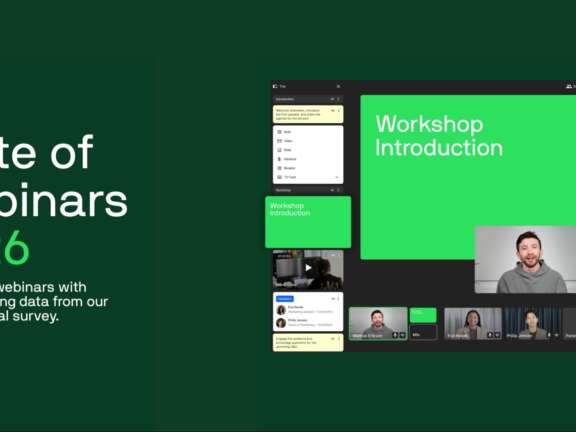
Scaling Your Video Marketing Strategy Using Webinars
This breakfast seminar centers around an important question: Did you know that 73% of marketing and sales leaders say webinars are one of the best ways to generate quality leads?
That’s why we invited industry experts to our TwentyThree Breakfast Seminar: Scaling Your Video Marketing Strategy Using Webinars to discuss the best practices, insights, and cases on how you can properly set-up and start using webinars to scale your video marketing strategy.
Speakers:
Petros Vaxevanakis, Product Marketing Manager, Peakon: Scaling Customer Engagement
Casper Noreen Frid, Video Marketing Strategist, TwentyThree: How to Win with Webinars.
View transcript
Good morning everybody. Thank you so much for joining our breakfast seminar today. This is our fourth breakfast seminar this year. We've been basically all over the world both with breakfast seminars and video marketing meetups. But we're super excited to basically share some good insights on video marketing and in particular webinars. We have a great line up today. I'll get back into that in a second. My name is Christopher and I'll be your host today. We're going to hear from some great speakers today from Pecon, Universal Robots, and our own Casper here from TwentyThree. The show is about to get started, so let's just go at it. First and foremost, we're going to hear from Andrew from Universal Robots, then Hetkos from Pecon. I'm glad I have a brother. And then we'll have a small coffee break and then we're going to hear from Casper here from TwentyThree. And then there'll be a little networking opportunity afterwards. So let's give a warm welcome. Good morning. So I'm going to talk to you about robots. I'm the least marketeering person that's talking today, I think. I'm more of an engineering person, so I'm going to focus more on what we've presented with the webinars and how we built them rather than the big how and why questions and tell you a bit about that. So I'm part of the UR Global Confidence Centre. We're a technical team under the sales part of the company, so we kind of do all of the technical stuff that's not in the R&D department. Well, I assume UR is more well known amongst non-robot people in Denmark than it is in the rest of the world. I know at least within TwentyThree we're a nice case study. But we're a Danish company. We're headquartered in Odense. I'm actually based in our office in Singapore. I get to come through here fairly often. And I've been doing technical communications this year, so I've been actually living in Asia for about ten years and learning to speak slowly and clearly to the people around me, which has kind of helped me with doing this webinar stuff this year. So I'll give you a little bit of background about our company, what we build, what we do, why we're using webinars and how we're doing it. And hopefully this is going to take twenty minutes or less. We'll see. Okay, so I've cut down our sort of history timeline to fit on one slide here. It was considerably larger than this, but this is basically our major product releases. We started in 2005. Three guys span out of SDU, the University of Southern Denmark in Odense. Sat in a dark room for three years building their first robot, which was released in 2008. And we've then added more products in the following years there. And up until 2015, we're a privately owned Danish company. We're now part of the Teradyne Group, who are based in Boston. They do a lot of kind of electronics testing. They're one of the biggest companies for that, and so our products kind of merge together quite well. And just this year we have launched a new generation of our product. And I'll tell you a bit more about what they are and what they do in a second. So we have a pretty big global presence now, expanded out of Denmark over the last ten years. So we have not necessarily our own offices, but we have partners in all of these different countries. And then we have offices in all of these locations, so clustered in North America, in Europe, and then around Asia. So I'm currently based in this one down here. So it's a bit of a flight, but this is nice and close to my home over here, so it's a short hop. Much easier to go from here to here than it is from here to here. And in the last month or so, we've installed our 27,000th robot. And we've been able to do that for a while now. So we've got a lot of robots. So if you compare this to some of the more traditional industrial robot companies, this is still a reasonably small number. But we've got, in our type of robot, in our particular collaborative robot area, we have got more robots installed than all of the competition put together. So we've got a bit of a head start on that, and we intend to keep it that way. We've got about 20 countries, 23 of them in total. Over 30, possibly close to 40 nationalities in the company now, so it's a pretty multicultural environment to work in. 600-plus employees, that's grown very sharply in the last couple of years since we've joined the Teradyne group. And we have that 60% market share. So the majority of collaborative robots that are out there working in factories around the world were built by us in Denmark. And what are we building? It's one of these, this arm that you can see here. It is a robot for industrial purposes, but we like to think they're a bit more friendly than your traditional robots. So generally, you might imagine that a robot cell looks like this absolutely giant metal monster that's caged off from the rest of its colleagues in the factory, when in fact our robots more often than not work like this, directly alongside people, much smaller, less powerful robot that can collaborate with people. So you can do work, you can do jobs together with people, and that kind of opens up a whole new range of what you can do with a robot. And we want it to kind of be used as a tool, so not a separate area of the factory that is a no-go for humans. It's something that the workers use to increase their efficiency. This slide shows differences between what we call kind of the titles in this very much. We consider ours to be industrial as well. We'll make traditional industrial robots and collaborative industrial robots. And the main thing here is this difficult setup. Everyone considers robots to be hard to use. You need to have a degree in robotics or engineering in order to get started with it. That is not the case with ours. We pride ourselves on the ease of use. We want small companies that are not experienced in robotics at all to be able to pick up our product and start using it. And so we need to be able to access them and tell them what the product is and what they can do with it in order to achieve that. So what differentiates our products from competitors? Very fast to just kind of screw into place and get started programming it. Because they're very lightweight, the smaller one that you can see in the pictures here is only 11 kilograms. So you can kind of pick it up, walk to the other side of the factory and screw it down again. So you don't have to buy it and have it doing one thing for its whole lifetime. We expect companies that have kind of high mix production, they change what they're making very often, smaller contracts. But then, yeah, the challenge is through the marketing to actually reach them and let them know that this is possible. Because when we go to trade shows, I talk to so many people that just think that this is not for them. We're not big enough for robots and we're trying to tell them that they are. The easy programming, so anyone can pick it up and use it. And then the safety aspects, we have a very comprehensive safety system. That means that you can actually run this robot right next to this person without having a kind of safety nightmare on your hands. So we do three different sizes of robot, three kilogram, five kilogram and ten kilogram, two different generations. And they're used across a huge range of applications. Mainly different types of manufacturing, a lot of just putting a hand on the end of it, picking something up, taking it from one position into the next process is most common. But screw driving, gluing, welding, all different sorts of things. Basically, your imagination is the limit of what you can stick on the end of this and get it to do. And so how do webinars come into this? So we take a different approach to some of our competitors that have been around for a longer time that don't necessarily put that much information online. We need to get this out to people and let them know that this is for you. You're a small company, you don't have an automation team, you can still automate some of your processes. So we need to try to reach as many people and be as open as we can and share as much information to try to convince them that this is possible for them. So we've already got a few very well received tools on our website. Universal Robotics Academy is an e-learning program that we've put on here and it teaches people, steps, walks them through with a kind of interactive process of taking the robot out of the box all the way through to kind of programming it and installing it. This is all completely free of charge on the website. So we're again sharing as much information as we can to show people just how easy this is. Universal Robots Plus is kind of like our app store. We have collaborated with a lot of different third party robot companies who build plug-ins for our software to allow you to kind of plug and play their equipment together with ours. So it kind of takes the challenges out of the deployment and the integration of the product. And again, we give that API for developing those plug-ins out for free to those companies as well. Webinars really fit in with this. We want to give out as much information as we can to show people that this is an option for them. So our products, we really believe that they are very, very easy to use. You might not believe me having not used a robot before, but I'm pretty sure that every single one of you in this room could very easily program a simple task with our robots. It's a case of pushing a button and pulling it from one place to another. It is very, very easy. And we want to make people believe that. So the more information we can share, the more open we can be about it, the more it helps. And webinars are a good way of doing that, trying to take something that seems complex and explain it in such a way that people believe they can do it. On the production of the webinars, so we've been doing this since the start of this year using the 23 platform. So we have done 10, number 11 is tomorrow morning, webinars this year. We selected the topics at the start of the year based on input from our sales team and technical team across the company, around the world. We are aiming pretty much all of these at first time users, so not requiring a huge amount of prior knowledge. So we really need to break down all of these topics as much as we can and make it just as easy to digest as possible. So we have done webinars on our technical resources, so those products on the website that I've shown you a second ago. I'll go through those in a bit more detail and kind of show how you sign up and how you use them, how you can maybe install some of those products to work together with our system. Safety is not necessarily the most straightforward. That's possibly the most challenging part of installing a robot that's not behind a safety cage. You need to be very, very sure that it's not going to injure people. So we've kind of talked a bit about how you do risk assessments and how you can get around that and how you can make sure that your system is safe. I've done a few explaining the new features. We do a couple of software releases a year, so we talk about what we've added in there and how to use those features. We've done a few sessions focusing on applications. I've been involved in building this application builder tool on our website this year, which is another kind of open tool that we have on the website, and we've talked a bit about the different applications that you can build through that. I have been mainly the person doing most of the webinar stuff this year. I'm hoping that I'm going to get a bit more support on that next year. But I'm going to hand it over to for the marketing people to manage it. I've kind of been the guinea pig this year essentially, it's been good. I think we've got some very positive feedback about what we've managed to share. I've put together the content, and I'll show you how I do that in a second. But with, for example, on the safety areas, I've talked to, found the people in our company that know more about it than I do and talked to them about it. What do I do when I'm building one of these webinars? I started off by standing in front of a white screen and recording a couple of generic intro sequences so they know who it is that's going to be talking to them for the next half an hour. So I copy those into each one of the webinars. I bought a compressor microphone for kind of podcast usage sort of thing. It's good enough. It's better than the sort of office headsets that we used before. That cuts out enough of the noise and makes it sound good enough. And I use kind of standard screen capture tools. A lot of what I present is either in our software user interface or coming straight from our website. So I normally just kind of capture what I'm doing on the screen and then add voiceover to it to explain what is happening. And the best tool that I could find to do it was actually PowerPoint. So we already have a very nice, clean, professional-looking set of PowerPoint slide templates. And so I just took those and added my content into those so you can still see even if I'm doing something that doesn't, on this side that doesn't directly show that it's a UR product, then we've always got the kind of the branding on the screen at all times as well alongside it. So I go through and put those in. And it's actually very easy to generate. So I do all of this in advance to try to cut out as many of the ums and ahs. And it's actually very easy to just put all of these videos into the slides and then you can export the whole video together as one MP4 file which you then just drag into the 23 platform and broadcast that as the webinar with Q&A session kind of on the end of it. I think maybe as I've got more used to the format I could potentially look at doing them live as well. But this has worked pretty well this year. And then they stand alone as not, it doesn't just sound like a recording of a session that kind of was a bit all over the place. It's actually, it stands up on its own afterwards as a video that people are going to watch not necessarily as part of the interactive session. So these are generally 25 minutes long. We've made them between 20 and 30 depending on how much content. And people tend to have a long enough attention span for that to be okay. So once I've exported the video I can go to upload a new video in there and just drag it into the browser and that will get that up online and then you can link it once you've created your event under the webinars menu here. It's very straightforward to create the event. Give it a name, give it a date and then once you've done that put a bit of information in about the speakers and description of what you're going to be talking about. Give it an event image and then it also makes it very easy to automate all of the emails that you're going to send out to everyone that signs up. So I don't need to learn to use any separate tools for that. So it automatically will send an email when someone signs up to an event or send, you can schedule these reminders beforehand. So send one a day before, send one 15 minutes, half an hour before the event. So make sure as many of those people that have signed up will actually remember and come and tune in. And then the recordings after are automatically generated. I generally just use the video that I've exported and then the page that people come and watch the webinar on, once it's completed it becomes a page where they can watch the recording. But they get one link and if they miss it they come back and they watch the recording instead. So I can publish my video to that event very, very easily. So handling all of that has been pretty straightforward. I've made a few promo videos for each of the sessions to try to get as many people to sign up as well. And my digital marketing colleague kind of promotes these to all the different social networks to try and get people involved and try to kind of show the friendliness of the product in these videos as well. So we've done one of those for most of the sessions we've done this year. And then as I said, yeah, the recordings, very easy to manage and publish. We have a, I think I forgot to put a screen capture in here, but we have like a webinar hub that allows you to view all of the previous sessions. And I think when someone finds this they often do go through all of those sessions to try to absorb as much as they can. And then the analytics, very useful as well to kind of allow us to see how many people signed up. So what the conversion rate, how many people actually attended those sessions and it ranks all of the sessions that we've done this year. At the start of the year I was trying to do two sessions, one for Europe in the morning and then America's session in the evening. There weren't really enough questions to justify that, so I've kind of rolled it all into one. And so for the Q&A sessions you can submit those questions directly through the portal when you're watching the webinar or we leave a mailbox open after the session so anyone can submit any questions they have about any of the content any time afterwards. We had some good ones this year. I'd hope that we can continue to promote this through our regional teams and increase these numbers throughout next year. But the ranking here allows us to see, this is both the number of people that signed up for the original event and viewed it live, but also the people who've come in and watched the recording afterwards as well. So we can see, get an idea of what interests people the most and what we should be building more on next year. So that's been pretty handy. For next year we are planning to roll this out to all of our regional marketing teams. So we've got marketing managers in pretty much all of our regions, so North America, Northern Europe, Western Europe, Southern Europe, Central Europe, China, North East Asia, Southeast Asia and India. So we're going to make their own webinar hub for each of those so they can translate either the content that we've already done or make sessions on topics that are more relevant in their particular region. And we're going to have not just my voice, so we're going to have more speakers and people who know more about different subject matter than I do so we can make it a bit more varied and potentially have someone, one person curating and different people presenting the different sessions throughout the year. And that's about the end of it. This is something from our application builder, a Christmas edition. I think we're going to use this a bit over the next month to wish we... Oh, there's a soundtrack as well. I muted that. This is a very expensive cookie cutter this is using here. That is essentially what we have been doing this year and I think we can build a lot more on this in the next year. I hope to get more people involved in this within our company and let them know just how much they can do with it. But it's been very positive. It's been a good journey this year and I look forward to making more of them next year. Thank you for getting up and coming. Next up is Picon. Let's also give him a hand. So firstly, hard to follow robotics. And secondly, I'm usually the person behind the camera, doing the webinars. So I will have my notes today and I'm going to try my best to give you a good presentation. So scaling engagement. Firstly, a little bit about me. So I do product marketing for Picon. I'm now 10 or 11 months in Copenhagen. I used to live in London and before that in Greece, there for my accent. If you need me to repeat something, just ask me. I should be at my daily standup with my team. I told them I'm talking about Picon. I'm not talking about Picon. I'm talking about three problems that I have with Picon. So yeah, if you take any pictures of the T-shirt, it will justify my absence. Three problems that I've got. So we are growing quite fast at Picon. At the same time, our portfolio of brands is not as impressive as what we saw before, but it's all around the world and it's getting bigger at different time zones. Before Picon, I used to work for B2C brands. So it was mostly consumer-facing brands in sports and fashion. And I used to do also brand marketing. So it was a very big difference. It's easy when you're trying to sell a story about a very fascinating product, but it's hard when you're selling a software, no matter how fascinating it is. And the biggest struggle that I find there is that a software doesn't have a face. It has a passport. But behind that software, there's a lot of love from the people building it. And this is a little bit what I want to highlight today during the presentation. I just wanted to justify the title a little bit, especially if anybody already tried to Google what Picon does. So Picon basically is working on the employee engagement, how we can all be happy and satisfied and feel that we're growing at work every day. But today, I'm going to be talking about how we can scale the engagement of our partners and not our employees. So you're all aware with Fano. I don't know if you're aware of Workday. Workday was the second company after Facebook with the biggest IPO at 9.5 billion. Do you know how many customers Workday had before they launched their initial public offering? They had 310 customers. To me, when I'm thinking that a company went public with 9.5 billion, I would think that they have hundreds of thousands of companies. But they had 310. So what does that mean? So if we see this part of the Fano, you've already done all the hard work. You've already acquired your leads. You've already convinced them. They've already bought the product. So you're kind of settled. The only thing that you need to make sure is that the product is good. And if you're probably working for a company, you know that the product is good. But the way that I see this part is that, and I guess the way that Workday was seeing that as well, is that this is one of the most important parts. The churn that a company can have can be the most devastating thing. So the way that I see the Fano is engaged is consisting of two parts. The loyalty of your customers, but at the same time, the advocacy. So the loyalty in a way that you want them to renew every year. You want them to probably go in a higher plan so that you can upsell them or sell them add-ons depending on your business model. And then also if you have new products, also get them into the new products. So the way that I see engagement is loyalty and advocacy. And advocacy is what is going to basically lower your acquisition cost. So if I were to ask three questions about this area would be, are you happy with our product? Are you getting the most out of it? And we have a new solution for another problem you mentioned to us. Do you want to hear more about it? And we use webinars for all three of these questions. So we are all here. I guess you're all pretty convinced about webinars. I don't want to really try to showcase the value. I do want to understand how more people are using webinars and what value they are bringing. So just a general question. Do you think that webinars are an alternative to an event like this? I see if you're head-shaking. And I would say that no, webinars are a great channel, but it's another channel. It's something that it can easily scale. It's something that it can be higher on your funnel or it can be where I'm using them mostly at the very bottom. It can be something that it can generate leads and also it can be something that is going to help you engage more your customers. Where do videos fit? And we saw before, Andrew, one of their values is transparency from what I understand and trying to showcase how robotics are in comparison to the competition that I guess they are trying to be a bit more secretive about it. So what's the difference between webinars and videos? So I said before I was working for consumer facing brands. I was doing the marketing for O'Neill. And this was one of the latest activations that we had done with Mark Matthews. If you don't know him, he's one of the most well-known surfers. He's got hundreds of thousands of followers on Instagram and other channels and he's very well-esteemed in the surfing industry as well. This is one of the most dangerous waves in the world. And the video has been produced and published from some of the top people around the world in regards to video production and also distributed from one of the most well-known brands. So this is epic content. And this was a short video that was distributed and picked up from most of the media. 54,000 views. It's alright. By the way, we spent shed lots of money on this one. This guy, I have no idea who he is. He's filming probably somewhere in his basement. He set up a camera and a mic and he did a very low-cost episode. So they were published, pretty much a year difference, but it's already quite a few years. It should have built up. This guy has 137. What I want to highlight with this is that webinars give you a sort of transparency, that it's a very conversational and a very vulnerable way to communicate. And I think this is the highest value of all webinars. When you do a webinar, the highest value is that you're showcasing your people. And when you're doing a live broadcast, you're taking the risk of saying something incorrect, of having a really hard question to answer live. But most of all, they see the people behind what you're building, what you're selling. And people care about people. Actually, I heard a talk from PR Gurans who was saying people care about people and money. We're not saying about money. But anyways. So then it's the credibility. You see what you get. And that creates trust, especially if this is on a recurring fashion. The conversation can create this online community that you need. I honestly believe that webinars are far more targeted than any kind of other video that you might be doing. And it's more true and more transparent again. Anybody can do videos. You don't need Mark Matthews to do a really successful one. Me and Andrew, we're doing webinars. We're no heroes. Maybe you are. I don't know. Sorry. And then it's something that you can scale up. And scaling up means that you created a content, you got feedback, and then you implement it again to see how you can improve it. So they're cheap and scalable. Following right so far? The accent is going good? By the way, just a week ago, my manager sent me this gift. So Mark Matthews has made it into a gift without the name and without a brand logo. And that really, really was a hit in my heart. So back to the problems. I joined about a year ago, and right now we are around 130 more people. We're in four more regions. And we're in four more regions. And we are launching around 10 to 15 features every month. And I want to talk about the first way that I use webinars. And it's on the consideration. We use webinars internally. It's really vital for product marketing to evangelize, to earn the buy-in internally first from our teams, from our sales teams. That's why we're asking you also for whether you guys do use them for internal training. We don't have a big e-learning platform yet. We're, I guess, quite smaller than you guys. But we use webinars quite a lot to communicate with all other regions. So we've got teams in APAC. We've got teams in the U.S. Therefore, it's different regions. We need to try to find good times that they work for everyone. And if that doesn't work, we need to make sure that we have a good production that afterwards they're going to see. So a big tip on internal webinars is don't just use your computer and your webcam on that computer. Try to make them a proper production if you really want to engage your teams. It's really easy to do the setups. I'm going to talk about how to do a setup of a webinar if we have time at the very end. But try to make them a proper production. Try to make them fun. Try to communicate them in a fun way through your emails or Slack channels or whatever you need. And it's a great way to bring the team together. It's a great way to have a monthly recurring internal webinar where you're going to be sharing all of the internal news of your company. If you have a lot of features like we do, it's a great way to start the product training for them and communicate. And why I'm putting it on the consideration, again, it's our sales team. They are out there talking to customers every day. They really, really need to know how to talk about the products. And one of the main things and one of the reasons that I also ask you whether you use them is usually when you're doing these webinars, because the audience, not the internal ones but the external ones, you're thinking that the audience is the people that probably will be buying. You want your sales team to be able to talk in a consistent way. And these webinars are a great way to make sure that you're using the same lingo. You've probably sent a positioning document or something else beforehand to the team. By listening to you, they get the information much better. And then I'm going to be talking about what we do for our external webinars and how I'm trying to engage our customers as I said before. So this is the Picon Monthly. We do this once a month, the second Wednesday of each month. It's a recurring event. I'm going to really quickly explain the three topics and then go to the nitty gritty stuff. So your audience will join not because they want to hear about your features, they want to learn something. So they have to be in an academy as you guys are doing or something that is educative. So it's very important for us to give them other customer stories. People care about people, they want to know what other companies are doing. So it's really, really important to give something that they're going to be learning. During the webinars, as I said, we do live podcasts. We've got more companies from our communities. So they will hear the stories, they relate, and hopefully maybe they will start the conversation as well. It doesn't happen that often. I need something that we are trying to find a way to do more. But it's important for me to obviously do the commercial break and show them some of the features of the newest features. But again, we won't really focus on utility. We will show them how to begin with them. But the main thing that we want to highlight is the value that they're going to be getting. And then at the very end of the webinar, so that we manage to make sure that they're going to stay until the end. They're usually 30 minutes, so 20 minutes and 10 minutes questions. We put the theory, so one of the biggest things with Picon is we've got a really solid methodology. And it's the thing that interests the most of the companies because we have a really strong organizational development team and they really want to hear from them. Obviously webinars are helping us to scale that and allow them to get access to our latest methodology and our latest learnings. And that's why we put it at the very end. The main thing that I am trying to communicate as product marketing is obviously the one in the middle. And so far they're going great. And then the most important thing is, as I'm going to highlight it later on, it really doesn't matter how many people will be at the live broadcast. What really matters is who are the people that they registered because you are already building an audience and you can follow up with them. Patrick Gustav is our VP of people. Gustav is the director of CS. So one of the tips is use quite senior people, people that your clients would not have access to every day just because it's not scalable. I'm going to talk a little bit about what we're doing. We're showing up every month with Don Luz webinar. Super important. We deliver quite a lot of additional value. We're building an audience and a community and we are building another distribution channel of all the information. Most of all we are building valuable content. On that we saw before from Andrew an amazing execution and a really, really beautiful frame, good camera and everything was good. If you do a webinar, do it properly. The means to do it now, they're really, really easy and quite cheap. And the fact that you will create content that you can repurpose and reuse is invaluable. Repurposing the content, build the library, your content team will love it. You're giving them free content that they haven't really worked. It's really easy to transcript a webinar. There is also technology that can do it for you, although obviously it wouldn't make it into a proper blog. But it wouldn't take you more than half a day to write a really strong blog post. And then that blog post you can obviously communicate it through your newsletters or any kind of other distribution channels that you have. Try to build it in a consistent way so that you also build brand awareness around this specific brand activation. And a few stuff that they are very, very important in regards to the audience. We have to make things easier. I don't know if this is any new. But a couple of stuff that they will help you is don't send an invite every time. Send one invite for the whole series of webinars. And why is that? When you're building an audience, if you send once they invite, you will get 100 people. Then on the second one you will get another 100 people. But the first 100 people that they join, they might lose you. They might be busy. They might not be able to attend. So by sending a recurring event and by also adding the calendar option in that invite, you make sure that you start building the audience. So we started with 50. Now we've got about 450 people. Not everybody will join. Usually it will be 50 people joining in the webinar. But then I have 400 people to send them back the recording and the slides and let them know how was it. Do you want me to create another topic for you? But I can converse with all these people. Of course at the very end, for GDPR compliance and everything, you will have the unsubscribe button. But I rarely, rarely see somebody unsubscribing. It's just that people don't have time. They need their own time. It's a good recording that they can see at any time. They can also share it with their teams. So make sure that you send one invite, build the audience and then start distributing content to them. Remind them. One day, one hour, maybe sometimes one week before as well. Three reminders sounds spammy. It's not. They really want to hear. Nobody has complained. When they say that they love it, they want to know when the webinar is coming. Try to make it friendly. Don't use these terms like never miss another webinar. Just as you would send an email to a colleague. And follow up afterwards. Send them the recording. So in regards to the soul, as I said, never miss a show. The people that they don't have that much access to and the people that they have the less public air, so your data science team, usually they wouldn't be on events, they wouldn't be on videos, they wouldn't be talking to clients that much. Get them in front of the camera. They might not be perfect hosts. They might not be perfect presenters. But they will improve. Everybody is improving. And the thing is that they have information that usually is invaluable and we can't always communicate them as they would. Try to have the same hosts until you get a steady following. People trust what they know. So don't mix it up from the very beginning. Especially if you start thinking about bringing also guests in and doing more complicated ones. Try to be safe in the beginning for at least your 6 or 7 episodes and then bring more people in. Less slides, more face time. When you're repurposing the content, it's a webinar. Show the case it's a webinar. Use a gif. Simple stuff. We all know how to do this. It's super simple now with all the free applications or any paid applications that you're using. But try to show the case it's a webinar. When you're editing the content afterwards, now it's a video. It's not a webinar anymore. So try to do a cut. Try to do an edit that is going to be immaculate. Try to add the best slides from your presentation. Because when you're actually doing the broadcast, stuff don't always work perfectly. If you've pre-recorded beforehand, it's a very safe way to do it and it's a great way. We've chosen the more risky way, but then we play it safe when we send the video afterwards. When you are using these webinars, it's important to let know the whole company. A great way and the way that we do it is we integrate the webinar platform to Salesforce. Therefore, our sales team know who has attended and whether they've been attending a lot of them or just one. But basically, when they'll be doing the renewals, they know also the interest of the client and how engaged they are. It's really important. Then if you want to do more customer stories through these webinars, you can really find those advocates that they join every time your webinars. Then you can reach out to them and ask, hey, we've seen that you've joined all our webinars. You want to do a case study together. Then in regards to production, as I said, quality means I can see you and I can hear you really well. That's the two main things. Then in regards to the backdrop and everything that you want to use, it's more about your brand values. For us, it's again transparency. Because we're selling a dashboard, we're selling a software, we want them to give us access in our office. During the webinar, you will see people in the background walking upstairs and going around. Have fun doing them. It's a really nice thing. Usually it's not the first priority when you're an engineer or when you are a marketeer. You've got the chance to have some fun when you're producing them, when you're building the content with your host. It's a nice learning process as well. Wrapping up, we use them internally for sales training and also to build high value content that we put on our resources. Then our sales team uses them. We've got quite long sales cycles because we sell to enterprise mostly. These webinars that they're on a monthly fashion, it's a great way for them to stay in touch. Every month I will be creating a sales log template for them and they will be able to send this to their SQLs that they might be converting soon. That's going to help them convert. Above all, in the way that I use them at least, is on the engagement. Product adoption, building a community, enhancing the brand and showcasing your face. Filming and running the show. I'll give you guys my email at the very end. Feel free to get in touch. I'm happy to have a coffee. I used to film before with a simple DSLR camera, but then when I decided that I'm starting the webinars, I had to find a way to do it. It was a nightmare. I thought that it's impossible to run a broadcast. I found an amazing company here in Denmark that they were super helpful. Danish people are helpful very much. Basically, they just took me by the hand and they ran me through all the equipment. I spent less than £5,000, pretty much. Much less, actually. I think I spent in total £3,500. I got the basics so that we can have a really good production. Check the webinars on our website. I think the productions are quite good, but I'm happy to just be the person who takes your hand and runs you through the equipment and tells you what are the most important stuff to buy. But you can also find them fairly easily online. It's just that online you're going to find so many options and it's far more simple, finally. This is my email. I've got cards with me as well for the first time in my life. Hi guys. So happy to be here. I love digital. I simply love it. I've been working with it for many years. What's interesting about digital is that it changes every single day. Every day we have to do something else or we can do something else. So this means that we can test, we can try out things and we can see immediate results in many cases. This is really amazing. But what we see is also a change in this because we moved from where we as brand has to stand out like as parts of silos. So we're talking to marketing, we're talking to sales, we're talking to customer success and all these things. Then it changed. Now we're suddenly talking to brands. We need to stand out as a brand. But now it's changing again because we moved from a textual to a visual context. So this means that actually now we're talking not B2B or B2C in many communication cases but human to human. So when we interact human to human this is also a unique chance for us to communicate as brands. Webinar's video is an amazing way of doing this because we can educate, we can inspire each other, we can learn from each other and we can watch it on demand. So if we do not have the time we can access it by demand in another time which makes it an amazing lead generator as well. But the best thing about video, the best thing about webinars is also what we heard about from Andrew and Pitchfresh today is that it can humanize us as brands. And brands have been doing this for years. I mean like high funnel Volvo who doesn't love Jean Claude. And we watch this, we love Volvo a little more than we did before, right? So it's an easy way to have efficient communication that humanizes our brand. Binder did this as well not long ago where they released this video. This is their entire onboarding team. It's onboarding, it's customer success and it's support. Telling them what they do. Last week I was in Amsterdam to attend one of our video marketing meetups and being me I walked to the wrong floor. What happened? I was greeted by a guy who came in and we talked and he told me where to go and I said, hey, you're that guy from the video. It was great and we had like shared connection. Something happened. I can't explain what it was. It was humanization of the brand. I like the brand a bit more. I like everything that happened and I walked onto the hallway. I realized that this feeling is actually what we meet every day because every time we're 23 go out to events, we go out to some places, people come and say, hey, I feel like I know you even though I haven't met you. This is my email signature. This is why. This is a huge part of it because if I send them an email, they know me. They know me a little more than a text that's going on. So I can really use this. It's a really great way of creating engagement because if people push the video, I could put in a play knob that would not work in this case, but I could. Then we can create engagement with our audience even though we haven't talked to them yet. So we tried to experiment a bit by this. So how could this humanization be used in other ways? So I created this video for no shows when I have meetings. It's me sitting alone with two cups of coffee. I'm really sad. I'm really sad. What happened? People started booking me in. People started replying me. People started acting like they owe me something after sending this video. Why? Because this is a human reaction. This is emotions. We connected. This is not an email or some guide that we stood up. This is a person who sat with two cups of coffee waiting for me. But there's also a huge disconnect in this because we as companies are great organizations using this like brand awareness, high funnel. It's so easy to do. But what are the objectives of doing webinars? What are the objectives of doing all these things? Is it creating a lead? No, because creating a lead is not the humanization. First, it is a report a few years back showing that only 1% of the leads created from sales and marketing ever becomes a sale. This means that there's huge potential. Every year we do this state of video marketing and we saw some numbers that's actually quite interesting in relation to this, in relation to webinars and all these things. This is what do people measure in the videos, in the webinars and all these things that they do. And only 55% measures the amount of plays. And plays is a vanity metric. You cannot use plays for creating engagement, for creating humanization this way. This just means the number of people who push the play knob. Even worse when we're talking about interactions. But the things that really matters, we're not measuring. So we need to realize that spending time with video, spending time with webinars is not a vanity metric. This is where we create humanization. This is where we create the engagement with our audiences. And when we look where the audience actually engage, it's just as surprising. Or I don't know if it is, but like numbers are showing that we're not spending time on like social media as much watching these videos. This is of course a metric across 300 teams and these metrics might be different for each company. Actually they are. But if we don't know how we're going to act on this, how do we act on six seconds on Facebook? How do we act on only like a minute 14 on YouTube? But more importantly, how do we act when we have people on our own sites? How do we make sure that we like see them, that we create these connections, that we create the user journeys that's relevant to them? Another interesting fact is that we do this today by creating videos no longer than 90 seconds or two minutes because that's what we've been taught. And we see 54% of the videos being produced is actually following these rules. But what's interesting is when we look into where does the engagement come from. And more than 50% of the engagement actually comes from videos longer than 15 minutes. This is really interesting when we're talking about webinars, because suddenly we have a humanize us as brand. We can create the engagement that we want in order to get people engaged to become leads that's actually want to buy things from us or sign up for things or be part of our organization, whatever it might be. So using webinars can really make this easy. And we heard two great talks today about how we can use different webinars. I totally agree with everything these guys says. It's great. We should do this more and we should experiment and we should test what works, we should share this knowledge. But there's also a huge challenge when we talk about webinars. Because we as marketers or salesperson or whoever uses these webinars have a big challenge in the way we create them. 70% would not recommend the webinar tools they're using today because they're simply too complicated. What we see is that invites, I don't know how this makes you feel, I want to disappear from the surface of earth. What is this? Do I really engage in this? This is a confirmation of something. There's no brand experience in this. Furthermore, downloads. If I'm a B2B, like my audience disappeared there by security reasons, stuff like this, I'm never being able to download anything from my company computer. Why do we do this? Why do we do it off brand at least? And because it's so complicated, most marketers actually don't measure the effect of their webinars. So how do we even know if it works? It's too complicated. So 23 we set out to solve this as part of a video marketing platform. So we took all the steps that we're using, we're doing and put it into one tool. Make sure that we can do on brand invitations, on brand landing pages, the actual webinar flow, the follow up flow, the engagement tracking, all the lead scoring going out and collecting it in one place so we have everything in one platform. But as much as you would all like me to do a 30 minute demo, this is not going to happen today. Because what we saw when we released this as part of a video marketing tool is actually something I can't see even more interesting, but it's really, really, really interesting. It's like how we act around these webinars. So suddenly we had new eyes when we saw the knowledge we had from the video marketing platform put into this webinar flow. And we've heard great stories about webinars, so now I'm going to touch upon something else. Like how do we maintain this engagement? How do we make sure that people are engaged when they pop up to the webinar, when they're invited? How do we make sure that after the webinar we use this personalization, this humanization of our brand to actually get the conversion that we want, that our bosses are asking us for? So how many people did you convert? Yeah, I got so many sign ups, I got like this and that, got these engagement minutes, but how do we convert it? How do we use it? And just to set the scene, we've done this test with one of our clients, Årstedene, who started testing out what would happen when we send out emails if we put in small GIFs instead of still images. The click through rate went up 62%. So this is really efficient and we've done tests after this that gives even better results. But what is important in this is that we do not use our videos afterwards, we do not use our invites, we do not use all this to send people away again. Like if I have a newsletter receiver, how much money did I spend getting this newsletter? Sign up. So if I do use video and I send them off to YouTube, I put them into what we call the infinity loop. Because I'm attracting, I'm paying a lot of money to attract and then I'm pushing them away to YouTube again in my links and whatever I do. So of course we want to take this knowledge and we want to welcome people on our own side. We want to welcome people in our own embeds where we control everything, where we can collect their information, where we can look at how the user journey should be set up for these guys. So what if we put it in relation to this? How are we going to use it in invites? Why don't we use videos? This is me welcoming for a webinar saying, hey, I'm just doing the last preparation for this webinar you signed up for. I can't wait to see you tomorrow. So now I'm not just sending an invite that everyone won't look at. Now I'm suddenly creating engagement before the actual webinar. And of course there are scenarios in each way we use it. When we use it to our existing partners and stuff, we need to do it in a different flow. But the efficiency is still the same because now we create time spent with brand before the actual webinar. We create this humanized connection with the audiences that we have. And even more interesting, and I'm sorry I'm so bad at drawing, but I did this just to say, now we did the webinar, which is the main thing which creates such great things. Why don't we use it in our follow-up flow? Why don't we use this knowledge that we have for everyone who showed up to use this humanization of the brand, the brand that trusts the relation that we created? Why don't we use this educational, this learning stuff, inspirational stuff to actually communicate? So how is this put in relation to our brand? And once we've done this, this could be a sequence of four emails going out with me as a webinar speaker saying, hey, thank you so much for attending the webinar. And once we have an engagement, we actually have a chance to create personalized videos saying, hey, I actually looked at your company page and I think that this could be really interesting. This is not coming from some random person. This is coming from someone you spent half an hour and an hour with in a webinar. Do you engage with this stuff? If we book a meeting from this, if this is the objective, why don't we use this as follow-up? Why don't we use the video flow as follow-up in our webinar flow? So just to give you a few cases where we tested this. Instamagazine is a Dutch company, right, Stina? Yeah. We talked to them last week at VMM. We didn't want to meet up and we talked about this flow and they said, it's funny you mention it because actually we did this test. We had a 70-people seminar where we sent out a short email and he promised me, even though it's Dutch, that it says nothing about getting a million dollars for pushing the link, he said, we did this. And this is not even the person, like the host, this is not even like a person, this is just a recap video. And what they saw from these emails going out was actually that they had a click-through rate of almost 85%. And one of the main reasons that most are not using video in emails is because we're scared of the bounce rate. How much is going to bounce from this? The videos are going to be denied. Not if we use GIFs. Because GIFs is a very short file and we can do this with a company logo, we can do this with a play button, and people are going to push this. Because when we see a play button, we want to push it. Especially if there's a person saying, hi, my name, or whatever might be done behind this play button. Like something that shows that it's humanized, it's personalized to my needs. In the same way, we're using this for the personalized emails. So this is a GIF going out in an email saying, hi, your name. It's Vilhelmina from 23. It's very personalized. And we see these results as we saw in the marketing. We see people pushing it. We see people watching it. We see people engaging with it, creating engagement minutes on the profiles. And I'm sorry about it's my face on all these videos, but we actually see it in the lower funnel as well. Because now we can start converting this data from our webinars, from our engagement minutes we have here, into actual sales minutes. And what's interesting about this is now we're not talking about click rates. Now we're not talking about conversion rates. Now we're actually talking about 25 videos generating 131 plays. We have 77 engagement minutes from these short videos that are being shared within the organizations. It's a very easy way to communicate these things. It's a very easy way to get out. We humanize our brand. We use the data. We use the connection and the trust that we create in webinars to actually create results that we can show. This works, dear boss. Here are my numbers. And going back to this slide, Petra's also talking about the repurpose of this. It's an amazing way, webinars are an amazing way of repurposing the content. If we know our engagement numbers, now we know we need to produce 10 second, 15 second video for Facebook leading people to our site if these were our numbers. Because there are people who want to engage. And if we lead them to our site, if we track them in our own players, we actually know their engagement minutes and we can actually follow up based on what they watch, what they're interested in. So we can cut it short a bit. We can cut it to teases. We can cut it to whatever we want to create the conversions that we're looking for in this. Now you are asking yourself, is it really that simple to start seeing results? And to that I say yes. And you can quote me on that. Of course there's different scenarios. Of course there's different set up in this. But the power of video that we see from video marketing all over the world right now works exactly the same way in webinars when we use this flow. Work exactly the same way when we, as you talked about, start to integrate videos in our webinars, when we start to do all these things in a simple flow that creates humanisation of the brand and that allows us to follow up in a personalised and relevant way. Because everything has to be relevant. Otherwise we have thousands of emails, thousands of engagements that we can actually use our time on, right? But of course if we want to have the engagement where it really becomes value, we need to use the video marketing platform. Use any. Use your favourite. As long as you use one to collect this engagement and make sure you have next steps in this data so we can follow up with relevant emails. But we can collect all the engagement in one place and most importantly if we use automation, if we use CRM, we can engage this data with the other things that we're doing. Because video and webinars are never going to be a single touch point. There's always multiple touch points that we use as companies and we need to integrate video as a part of this. So three takeaways from this that we see is video is not advantageous metric. We all know this probably, otherwise we wouldn't do like engaging stuff like webinars. But like we need to know the engagement otherwise how would we know how to act on these numbers that we get in. Furthermore, humanisation is key, of course. But humanisation in a way that we can like relate to. We all have a camera phone in our pockets and when you go out here you all have a microphone you can put in that camera phone and have great sound as well. So we can easily record these videos. Instead of sending this email, what would it mean if we just sent the email or a gift with the link to the email to a person who could watch this, who can relate to this. Even though if it's a gift in my email signature, even though it's a follow up email in sales process or a marketing process or like Drift, do you guys know Drift? Like an American company, the VP of marketing Dave is like all over LinkedIn and places with videos, records videos of himself. So next week I'm going to do sales, I'm going to do 20 sales calls because I want to know how we can limit the gap between sales and marketing. This is exactly the point if we want to create results, if we want to take that one percentage of these becoming sales and opt that because that's where our business is right. And lastly, use a video marketing platform. Annie, use something that can collect engagement, that can make sure that you collect everything that you get from these engagement minutes. That's all for me.


