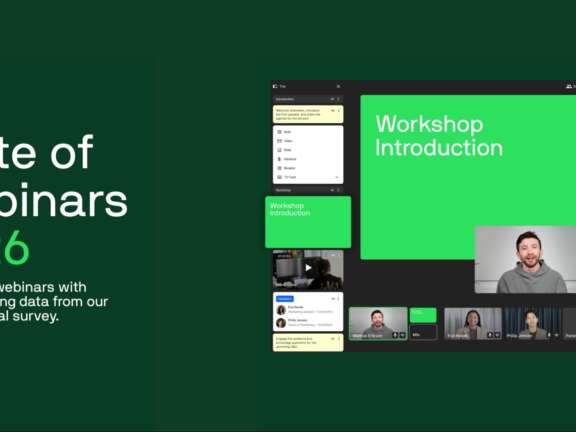
TwentyThree Keynote
Watch the opening keynote of the TwentyThree Summit 2025. Hear from our CEO and co-founder Thomas Madsen-Mygdal, CTO and co-founder Steffen Fagerström Christensen, Head of the Accelerator team Dan Duffett, Melina Shannon-DiPietro (Executive Director at MAD Foundation), Maurice Smits (Internet and Online Marketing Specialist at GEA Group), and Casper Willer (Creative Director & Partner at Kontrapunkt) as they share insights and set the stage for the event.
View transcript
Thank you, Amelia. Wow, what a crowd. Thank you so much for joining. We have a lot of exciting things to show you and a lot of exciting announcements to get going. So are you up for that? Yeah, let's go. Great. The first thing we wanted to talk about today was really something that's, I think, deep to all of our hearts, which is video. And I wanted to introduce a little bit the idea of the paradox of video and the challenge of video where we are just now. Even though we've all worked very hard at TwentyThree, for example, putting all these four components together to this killer app of maturing the video software category up to the level of where it should be, that it all works together. Even though that video keeps growing, we had an 11% year-on-year increase on webinar participants and it just keeps going every year up and up and up. Even though video is above 50% of your overall engagement, it's also often about 50% of the pixels on your website. Video is still this sort of weird thing to figure out at times. And we really have this paradox of video that it's super pervasive, super everywhere in your organization, but at the same time, it's one of the most immature fields in other ways. There's a lot of reasons why some people say it's because we never had this kind of hype cycle where people put a team together and go a little bit crazy for two or three years, kind of what we're seeing in AI just now where every company has an AI strategy, AI team, and they're just going all in for a few years, right? We are on the agency side just getting started. Organizationally, we don't really have a head of video or a chief video officer as a change maker. We're often more production focused. We're spending least on tools, which is not a good idea because it's the tools that maximizes the value of everything you do. And it's also even a MarTech category that we sometimes even still need to sort of talk about, even though it's really maturing. So I want to challenge you to think about the paradox of video, that it's super pervasive in some ways, and in other ways, we're super immature. When we look at the marketing spend, people spend about 26.6% of their overall marketing investment in tools and the rest on advertising. The team and agencies and services. But when we look at video, there's no real data on it. But when we do the numbers with our customers, we see it be one or 2%. So even there, we're also still immature. And that's paradoxical because video is this amazing paradigm, one of the biggest paradigm of our times, together with the computer that you have in your pocket or on your desk, and the great, beautiful internet that connects all of us together. Video is this kind of main thing running on the internet, right? So it's kind of paradoxical that we still have all these kind of paradoxes of video, even though it is such a big thing, right? Perhaps it is so big that it's tough to really box in and get right. So one idea for you as change makers today is that we really need to look at video as being perhaps not only about video at this point, but also about fixing some of the core challenges of digital. The big tech reliance with everything runs video, by the way. How do we start fixing that? By doing our own things, building our web. We've spent about 30 years in digital, removing all the human beings, the greatest innovation ever. I can buy anything at any point in time, effortless transactions in zero time, 30 seconds or a minute or two, right? I can file my taxes. I can do all these things in zero time. But the whole innovation has been to remove the human beings. So the theme of the TwentyThree Summit this year, and also a theme I want you guys to think about, is that we are in this great rebalancing where we removed all the human beings. And it's not that we want to throw away all the great benefits that we got the last 30 years, I guess, but we're really in this kind of great balancing of trying to get the human side back again, right? Get the humans on our websites, get those videos in there, the webinars, all the things that are the things that are outside the box. And we're in this very efficient machine that runs every day. And ultimately, we as video people are perhaps some of the most important changemakers just now in our time. So that's also paradoxical, because for some of you, you've worked on this for a long time. But the world is ready now. So it's also about us as the video community stepping up to the game of being those challengers, those video changemakers in our organizations. So the first thing I want you to think about is the thing I wanted to announce today and talk a little bit about is an all new team at TwentyThree we built to actually solve this very problem. Throughout the years, we've had to invent new terms, new categories, new concepts at TwentyThree. And we've sort of been doing it ad hoc. You know, I think somebody coined in our workshop room, the term personal video at some point, nobody can really guess who I remember. So everything was a little bit sort of something we did on the side. You might remember last year that we announced the video agency model and the idea of really positioning video production companies moving into being video agencies and the competence model and the business model, all these things we did. And that was kind of the start of it. But now we're going to dial it up a notch even more. We've founded a new team in TwentyThree called the video accelerator team. The video accelerator team develops new tools, works together with the industry together with you together with agencies together with customers to move the video field forward. They do it by doing workshops, co-creation, and they do it by open sourcing a lot of tools and methods to move the field forward. The first one today we want to announce is a concept of strategy. So if you look at every other field in digital and more almost every other field in business, there's a strategy. And the last six months, our team has been running around trying to find somebody that had a video strategy. They had digital strategies, they had social media strategies, they had content strategies, some of them even had AI strategies, they had employee advocacy strategies. But we have failed so far to find a single company that had a written down video strategy. I challenge you to connect with one of our teams if you have somebody that has one, because we would love to see it. So this is part of the paradox of video that even the most basic things we do in business, which is to have a strategy, a strategy is a big term, it can also just be a plan that you call a strategy often. But at least we have a shared agreement on where we're moving the next few years in the field. So today, we want to introduce to you the idea of video strategy. We've been working with a great crew of people from across the community video community and industry. And today we're open sourcing an all new video strategy framework to give you the tools to build a video strategy and go back and implement that in your organization. To give you a little sneak peek, please welcome head of our video accelerator, Dan Duffett. Thank you. Thank you very much indeed. It's fantastic to be here. And so to expand on what Thomas has said about the video strategy, over these six months, I've been working with clients and partners and looking at that need for the video strategy. And we distilled it down to these six pillars, which I'm going to be talking about in more detail later in this summit, but also importantly, in due course. And what we felt was using these pillars, we would give change makers all the tools if they workshop it around it, the data and the insights with which they could create great video strategies. But indeed, what's important is frameworks are only as important as the way they're applied. And so I will be through the next half of this year and ongoing, I'll be hosting workshops at our home here in Copenhagen and also across Europe. And I would like all of you change makers to join me at those workshops to really be able to push this forward and refine it and be able to make excellent video strategies that we can take forward and back to businesses and grow this field. And you'll find out more about this within the wider piece of the video accelerator, which I will be heading and head at TwentyThree. So thank you very much indeed. Thanks, Dan. So everything is online on the TwentyThree Video Accelerator page on the web. You can access it now, share it with your team and start using it. As always, this is version one. We encourage feedback. And as you can understand, this is a very early field. So I'm sure we'll make a lot of improvements together to this framework over time. The second thing I wanted to talk about is a topic very dear to our hearts at TwentyThree, and that is Europe. The times, they are changing. And for a long time at TwentyThree, we looked a little bit at the world like this, that we were in a global world competing against our two American competitors. One of them, Vimeo, that has copied our business model, our product strategy, our products. Which is obviously great validation at times. We're having fun with that. But we've come to realize at this point that we are not really anymore living in a global digital world. We're living in a European digital world. And that changes things in the way we look at it, in the way we need to grow as a European community, stand together, not mess around any longer, be self-reliant. And really relate to be strong as independent Europeans. At TwentyThree, we are hosted, built, and owned in Europe. The TwentyThree cloud runs 100% in Europe. And we're checking off all the things you can from ISO 3000, European Accessibility Act, ISO 27001, DORA, and soon the European AI Act also. Which we love as these ways of certifying everything we're doing. But I'm also proud and happy to announce today to you that a few months ago, we started a project to be 100% only using European vendors and European companies in everything we're doing. So that we can be 100% reliant on Europe in any situation. We're a few months away from completing the project 100%. But we are far along on the road to really be a strong Europe. Great. So, let's get to some product and get to show you a lot of exciting things. The first thing we want to talk about is something that I think always has been the TwentyThree DNA, which is the web. Our dear, beautiful web that we love and treasure. That at times are having a little bit of a hard time. Today, we want to announce two breakthroughs on how we can make our websites video-driven. And how we can make them live. So we can get all those human beings back on our website. So we can stop the reliance on big tech as the major platforms for a lot of video deployment. So we can actually act and take responsibility as organizations, as agencies, of not just talking about big tech, but actually doing something about it by building beautiful things on the web. The current digital engagement model is a little bit like this. It's always on and anything is possible at any point in time. But that's not really how us human beings work, right? Life is a series of events. We want orchestration. We want things that are live. We want stories. We want things that change. Because that's what ultimately being human really is about. With TwentyThree, we've for a long time had some incredible ways to build great web elements and build a video-driven website, video sections, landing pages, spots, the huge breakthrough on moving the embed code that we announced at last year's TwentyThree Summit and our video players that always have been around at this point. And a great developer framework to actually build it. So let's talk a little bit more. For some time, we've had webinar spots in the product. But today, we're announcing a world's first, which is live webinar spots. So for a long time, our webinars have been on third-party, vendor-based landing pages. I think I still see them every day from Microsoft, from Zoom, all the video conferencing companies, where you need to sign up to a webinar. Totally segregated from the rest of the experience. And also not live. So imagine that your website had all those webinars on it and that your website went live. And that's what we're doing with live webinar spots. You have your website, and the minute your webinar goes live, it starts running a preview of the video feed. You can do it before, during, after. You can configure it all the way. You can do it all the different ways you want. So suddenly, you can move your website to be live and be active instead of all your webinar activities sort of being somewhere on the side. Make that front page, make that footer really come alive. Just like you have with big tech platforms where everything is live and there's always something new every time you hit it, right? So we need to dial it up on our innovation level here on our dear old web. You can do hero spots. You can do banner spots. You can do grids. You can do lists. You can do all these types of elements. And I think we're just getting started on seeing all the ways people can apply this, the best practice, the methods, what works, what doesn't work for different objectives. So that's live webinar spots in the product available today for you to start innovating and moving your website to be live. Both before, the countdown, the experience, the webinar trailer, during, and after. All the tools to do it, all accessible and ready to go. So that's number one. Number two is really about developers. And at TwentyThree, we love developers. But for a long time, our developer tools were really old. And that's because we actually built it many years ago at a point where the idea of the video-driven website was still very early and hasn't really applied as much. And we did that with a huge effort we worked on the last year to really make it a first-class developer experience to build video-driven websites so that it's not something that you're going to have friction with developers on and also that it's a lot easier to do. It looks a little bit like this. Great developer experience for you with all the tools, both from a design perspective and from a code perspective. And also, we're happy to announce that we also now are running version control and developer sandbox so that when you have 40, TwentyThree accounts running across your global organization and you're developing a new element, you're not sitting doing it in a live environment. So we are doing all the components to really move the developer experience up to what you would expect in 2025. And we can't wait to show it all to you and connect with all your developers. And how we can really drive building video-driven websites. You can deploy everything into the TwentyThree Exchange in your company exchange. So if you have multiple TwentyThree accounts, you can deploy all your templates and all your live webinar spots in there and make them accessible for your whole organization very easy. So that's the web. You can now make the web video-driven. Live. So we can power up and balance up to the user experience you have on all social platforms every day. I challenge all of you as video people to go to your web people and start pushing on getting all your content out there. You can probably also very quickly double the value of your content investment by actually making it accessible in the results. This is going to be a journey to really rebuild the web to be as exciting as everything else. And we hope you'll join on it. But to show it all to you, please welcome Steffen Fagerström Christensen, CTO and co-founder of TwentyThree. Thank you, everyone. It was like a nice walk across the stage with kind of saying hi to you guys. So today I will show you some of the new tools for building video-driven websites with TwentyThree. And for that, I will be the web manager of a demo company, Rangu. So they're imaginatively selling commercial drones. And as a web manager, I've been building the website. So actually, this is a pretty nice website. It tells all the stories of what we want to do as a company, Danish innovation, all that kind of stuff. But it's pretty stale, right? We actually don't get any of the visuals into the page that we want to be showing. We don't have a way of telling our stories. So we've been building a new web page with TwentyThree. With spots and with live spots from TwentyThree. So you can kind of see the same pages, the same stories. But we're actually using all of our assets. So we have an introduction video that I can play directly in the page. And as I move down, you can kind of see all the same components that I would use in a normal page just actually highlighted. So I can actually show the feature roadmap. All of our use cases explained. And I even have a vertical spot here with Cecilia saying hi and welcome to our customers. So this is actually all the things that already exist in my web page. In my pages. And as I move down, I'm basically making sure that all the assets, all the storytelling, all the engagement, all the customer stories that we have as a company actually get to be displayed in the page. So this is a really easy way of getting your content out there. And I can even see that we have a live webinar that went live just as I was talking here. So we're at 1024, I guess. And you can see the live webinar that's actually going on in the page. So this happens either as a countdown before. Or when somebody goes live in a webinar, I can obviously go and I can sign up. I can have the webinar live here for a long time afterwards. So I can keep promoting whatever I want. So I can pick anything that I wanted in this page. I can also see that actually I got a new video from... Wow, that's amazing. That I got a new video from my product team to actually change the videos that are in the page. I'll do another reload here. That's what happens when your computer stands in stage. So I have these videos. I could obviously go in and I can reorganize. But I can say, well, we don't want to be doing solutions for a changing world anymore. We want to be introducing our new drone. So I can put in new content into the page and actually have that live updating across. So all of the changes that you're making go directly out into pages. All the webinars that are going live can actually now be seen by the people. So that kind of combats the fatigue of kind of that webinar that just lives in a corner that needs to be promoted and doesn't actually hit your front page. So as the web manager, I also want to be looking a bit at our video section. We want to be a video-driven company and we have a lot of content to show that. And this is a pretty nice video section, but it's also maybe a bit stale. So to combat that, I will launch a new video section. So this is the new TwentyThree Exchange. It has a lot of content, right? You can go crazy and explore all the integrations that we had to connect to your marketing stack. There are spots, there are players, there are personal video templates, you can even see all the video agencies out there that are helping build new video strategies. So a lot of different opportunities for kind of going there and browsing and finding all the things that TwentyThree provides. But what I'll do is I'll want to install a new video theme. There's a few ones to pick from. I'll want this center stage one. So now I can just go and click install on that one and that will actually create a new sandbox for me as a developer. So instead of having kind of a page that sort of changes changes, I can actually make all the changes happen here as I go along. I can get a new working copy. Well, let's see. I can get a new working copy that shows kind of the theme that I just picked. And it's looking pretty good, right? I can go through the pages and I can say, do I want the categories here? Do I want to move them up? Do I want to hide them? Do I really want to show popular videos? Maybe not, right? I can go in here, I can delete a few things and I can even go in here and edit the code for all the things that are in the pages. I could also go and say, let me actually change the promoter videos. I want to maybe show nine instead of five. And I can see all the changes happening directly in my page. But I can also see that this is an okay design. It sort of looks okay for what I want to be doing. But I might actually want to change a few of the brand options as well. So let's pick a different play icon, for example, something that feels a bit more like the Rangu brand. So I'm uploading this one and I can see the changes happening in the page. I can even go and say, well, we actually changed our brand. So we want to have this blue color be the thing that I'm using in the page. And my designer told me that I can no longer use Georgia. I have actually uploaded my own custom font here. So I can go and sort of change the look and feel of this page to actually make it feel a lot more like Rangu as I go along. So that's basically it. So I've sort of picked the theme, modified it, not really made any changes that anyone can see. So now I want to click the deploy button. And actually what I want to do is I build this live on stage, exclamation mark. And now I'm deploying it. So that's basically it. That's how easy it is to take from something that is a really nice theme from the exchange, but also modifying it, building your sandbox, going into code. You can make all the changes that you need, preview them, work with your developers, your designers. When you're done, you can click deploy. So that's a quick demo of the Web Studio in TwentyThree. Back to you, Thomas. Thank you, Sebastian. So with the new Web Studio, we can really build that video-driven web. Incredible. And a huge effort to really modernize an area of our product that was pioneering way back 15 years ago, 16 years ago. And that's the effort it takes to do it. To show you what it means to actually really have a video-driven website and really be video-driven in your overall strategy, we are working with an incredible organization that we're happy to announce today. The world's best restaurant, Noma, has an incredible think tank to try to lead the way on food culture globally, sustainability. And for the past six months, we've gone on a journey with them to be collaborating on helping them really utilize video across everything they do. Video parts, and there's a lot on the journey. But to tell you a little bit more about it, please welcome to the stage, Milena Shannon DiPetro, Executive Director of MAD. Thanks. Morning, everyone. So, I mean, I think first, a round of appreciation to Thomas and the entire TwentyThree team for bringing us together today. Really. It is special to be in a place where we can be thinking together and thinking about the future. So, MAD is a small organization. We were founded by René Redzepi, as Thomas said, came out of one of the best-known restaurants in the world. We're a team of six, and we're constantly thinking about how we can accelerate our impact. And what we think about doing every day, is working with people in hospitality to dare for a better future, to help us build a better future. How many people have heard that food and climate change are connected? Can I see a show of hands? Yeah. How many people have worked, had a summer job, part-time job in a restaurant or invested in a restaurant? Show of hands. Yeah. So, that was like half the audience the first time. Another half the second time. Restaurants and the people who work in them are important to us. And so, we're working with the barista who pours you your coffee in the morning or the chef owner of a local restaurant to figure out how to accelerate change on the issues that matter most. Climate, culture, food systems, good working conditions. And we do that through educational programs. Those programs are most often in-person, in-person. We have a lot of people who work in restaurants in Copenhagen, sometimes in a major metropolitan city, and now because of the work with TwentyThree on video. So, I probably don't need to tell you that restaurants are not a high-margin business. So, we really do count on the generosity of individual supporters and corporate partners like TwentyThree to increase and accelerate our impact. We come from hospitality. We love the in-person experience. Thomas and the team got us thinking about how video can accelerate change, can accelerate our impact. So, now on our website, you can see 190 videos from some of the best chefs, scientists, artists, academics in the world thinking about the connection between food and the world we want to build to the future. Those are available free to everyone. We have about 3 million views on them already. And I think this is just the beginning of us working together and expanding our impact. I think there can be webinars ahead. I think we're going to be training people across the globe. Now, I love the numbers. I love the scale. It's easy to talk about that. People's eyes get big. I'm American. You hear that. People always ask about scale in the U.S., right? But it's not the scale that moves me. It's good. Great. It's the stories that move me. When I go out into the world, I hear about how Mad Video changes people's lives. I heard from a chef in Los Angeles. He's running Anna Jack, the hottest restaurant in town right now. Can't get in. He was a creative director at Disney, and it was watching Mad Videos that helped change his course in life. To say, no, I'm going to give up this corporate job. I'm going to run the family restaurant. And now he's doing something extraordinary. Or someone at a culinary school, technical school in Aalborg, so northern Jutland for those of you who are not Danes, watching those videos and having their culinary school education augmented, right? To have access to the best chefs in the world through Mad, through this video, when you live in a small town. That's the type of story I love hearing. So we're at the beginning. I invite all of you, many of you are going to have travel time on the way home. You're going to have, I don't know, a break somewhere where you need some quiet time. Instead of going to TikTok or Instagram, go to MAD Video. Check out something good you can hear from some truly amazing world-transforming leaders there. So enjoy your day. Thank you, Melina. And thank you, Melina, for reminding us really about the simple power of video, right? And what a difference it makes. So hit up, I think there are even good videos on how to do your eggs or strudel by some of the best chefs in the world. And we're very proud to be on this journey together with Mad and the Noma team to really use videos like this. The power. The website is equivalent to TED.com and it's built 100% on TwentyThree. So if you put in some hours on design and a bit of code, this is what you could also easily build. So the barrier of entry to building video-driven live websites is zero at this point. Great. Then let's talk a little bit about webinars. Just before the summer, we did the sixth release of our webinar product. In 2018, what feels like a very long time ago, we launched our webinar product as the first second-generation webinar tool, one that didn't require software to produce and one that didn't require people to download software to experience the webinar. And mind you that these might still be very big innovations because most of the products that are used today for webinars are still trying to drive people to download software to experience the webinars, etc. Over the years, we've been hitting it every year. We run the webinar product in what we call telco grade because it really needs to work. So we're not, you know, shipping things every day because we need to really make sure that everything works at all point on all devices and all that is really the toughest product category anyone's have ever worked on. Such an effort. Over the years, the first years we spend on really bringing the product up to par because doing things in a web browser is really, really tough. And then later we've been really working on innovations like the webinar tray called the biggest innovation webinars ever by webinar professionals. All the features to do TV cards and all the different elements of being on camera, raw mode for video producers. So if you didn't catch and you mix the great little bit, then you have all the source files on all the inputs of all this 4K video feed that are running, 12 different video feeds being mixed together in a web browser. And we still love webinars. We know the some of the biggest brands in the world have been built on it. We know it's the big change. And that's also the paradox of video that just webinars alone is such a big field. It's being deployed everywhere in organizations and channels, customer webinars. People are doing relational webinars when an account manager does a webinar and then they do 500 webinars of the same webinar with 500 account managers. Webinars is such a huge field and we love the term webinar because it's web and seminar. AKA it's a wide open field to make it what you want. With TwentyThee Webinars6, we are dialing up a bit more to really move webinars into being up to par with everything in the digital world and not be stuck in a video conferencing webinar world. The first thing we have is action cards. So you can now put actions into the webinar, kind of imagine it as kind of live shopping style. You can put forms in, you can put collectors for feedback, you can drive clicks, with small images and banners linking to something people could buy or something people should be driven to. Where before we've only thought about webinars as engagement. So now you can really drive the results and the performance with your webinars and it's obviously super easy to configure. You can even do it on the spot during the webinar if you're running ad hoc or just came up with a great idea to the audience, feedback, etc. It sits in the chat tab so you can post it anytime. You want and collect and create those results. So we're moving webinars from being only engagement to also start being about creating results. You can obviously also template this so that if you're running a relational webinar where 50 people need to do the same webinar, then it's all in there to begin with and they don't need to do anything. We've also worked very hard on trying to generate content from your webinars. Last year at TwentyThree Summit, we launched all the features to do automatic clips out of your webinars. Immediately after, something we all know we need to do, but we often don't do it because it's a very manual and tiresome process. Then we waited a day or two and then we forgot what the good pieces in the webinar was, right? And obviously, we know we are living in a Gen AI world with a lot of buzz about content generation, but we know that we all want to do it with webinars, but once again, it happens not very often. So now every time you've had your webinar, we will automatically start generating and suggesting content that you can do. You can do images, you can do blog posts, LinkedIn, social articles, different formats, whatever you want. And we're doing with the philosophy of copy to edit, right? We're not trying to automate, we're not trying to make an AI world, but we're trying to inspire you that, wow, out of that webinar, there could be a social media post. Oh, wow, it was actually a somewhat decent blog post there. If I spend 20 minutes or an hour really making it good, then it could be really good. So our philosophy of augmenting human beings here is at play in terms of how we deploy this and how we do copy to edit. We're also, with webinar six, doing live transcriptions, AI driven, so that you can have the live, making everything accessible, also being able to translate it into 27 languages instantly, and obviously also adhere to the European Accessibility Act, and obviously then you already have them searchable after the webinar is done immediately, just as you already had before. We also worked very hard on fixing the production experience because, as any one of you know, sitting, producing a live webinar can be extremely stressful. You're using some software, a webinar product, you have sort of a script often printed out on A4 paper, you probably have some slides and videos you want to run, and then you are going to put this all together live, together with audience participation, a lot of going on. As we often say, there are some personality types that can do this really well. But for most people, this is a lot of things to be doing at one time, and also perhaps communicating and telling a story at the same time. And there are those that are exceptionally good at it. They are called the best webinar and video producers in the world. But obviously, we have a lot of webinars where we want to make it less tiresome to do. Last year, we launched the webinar trade that gives you this outline of everything that's going on in the webinar, relieving you of the stress, having your video, your slides, your notes, all the things accessible at all times. Huge relief, huge breakthrough on how to make it really easy to do webinars and can obviously also be templated. So if you're running the same webinar over and over, all the content is inside the webinar, and you're not stressing about anything. It's natively in there. It's one of those beautiful product design things when something becomes so native that the minute you've tried this, you'll never go back again to using a video conferencing product or an inferior webinar product. But there's obviously more to producing, and that is that when we're producing, we often have a lot of screens around. When we do webinars, I think there are three or four screens with different things the presenter needs to see. And for a long time, we've only been able to really show you the production environment, but there are times where you're doing an interview with somebody, and if the webinar producer is sitting mixing around and showing slides and mix mode and panel, but you just really want to look them in the eyes and have that human connection, it's been really tough to do. So with focus mode, we're making it possible to do a second screen that you can set up the way you want it. You can imagine a little bit like you would set up your slide preview or if you're doing a presentation. It has all kinds of different contexts, so it's a very open application in terms of how you want to apply it. It can run the speaker notes from the webinar tray. It can run video feeds, the video feeds you want that you want on that screen. So that really allows you to configure a screen any way you want with the configuration, and the webinar tray keeps going on as you go along by the mixing and the production. So that's an incredible innovation in really moving and relieving the pressure of doing a webinar production. You can use it when you do big production, but even if you're just doing something yourself, it's actually a quite good thing to have this kind of two-screen setup, and that's now all natively in the product. The last thing we've done with Webinars6 is something that all of you have been talking about for a long time, so I'm really happy to announce that, yes, we are now doing webinar series. We've really been working on this one for a long time to get it right. You can do recurring webinars. You can do episodic webinars. You can do time-limited webinar series. And obviously, the key here is you're building an audience, or you're building evergreen content by making a master class of three webinars that are going to be packaged together, right? All kind of podcast-style, episodic webinars. Or you can set up a recurring webinar on your website that just keeps rolling, right? The introduction to the company product or an introduction to the company product. Actually, one of the very oldest webinar categories that very few people do nowadays that's really powerful, right? Creating the architecture of participation around your website that every week I can get to know your company. All it takes is having somebody spend 40 minutes doing a webinar to actually connect with people around you, drive sign-ups for that. So it's really simple. You just do it as if you were setting up a normal webinar, and you can obviously template them and do all the other elements you can do in the webinar product. We also have an all-new chat where you can engage on the individual items. We've got Mix Mode 2.0 to make mixing easier, and we have an all-new optimized for mobile experience where you, holding the phone one way, have the full participatory experience, and the other way around, have the video experience. Stunning and beautiful. Try it out. So that's Web TwentyThree Webinars6. We're dialing it up a notch more to really empower people to do incredible webinars with very little effort. So let's give it a shot and see it in action. To do that, please welcome Steffen Fagerström Christensen, CTO and co-founder of TwentyThree. All right, here we go. So let me quickly show you how Rangu is starting to use Webinars6 features. Let's click the right thing here. So at Rangu, we've been using webinars for a long time, so that means that videos and webinars are part of our storytelling. But actually being able to orchestrate stuff around webinar series makes a big difference, right? So now when I go and create a webinar, I can create the normal webinar using a template, but I actually get to do time-limited series, episodic series, even recurring webinars to set them on a cadence, something that runs in a calendar. So I can create a webinar series every Monday for the product demo or runs every two months. So you would set this up just as you would for a calendar appointment. It's really powerful because it automatically means that people can sign up for the next upcoming webinar, but still be built into the same audience. And obviously all of that comes with the same kind of built-in pages for launching your new webinar series, right? So we are launching a masterclass here. I can see some of those masterclasses have already run, and I'll be signing up and then I'll get notified for all the upcoming ones as well. Same for running expert series ongoingly week over week. And even as I said, the recurring webinars where I can sign up for the next upcoming webinar and just kind of keep building that audience. Behind the scenes, we can go and explore. So we can find the expert series here. Here I can find all of my webinars and I can kind of do all the staging bits. So I can still add a trailer. I can still manage all of my emails, communicate with my attendees, but I can now see that I'm not just getting the audience from a single webinar, but rather from the entire series. I can see who's engaging, who are the people that tune out for every webinar in my series, who are the people that just signed up and never came out. And now you can start actually exploring that and working with this way of not just having one webinar, but having a series that builds audiences for you. But actually we had a webinar running before from my front page and I'm speaking in that one. So let's see if I can join a webinar room here and show you some of the other webinars. So in here I have a few people that are already somewhat staged, I guess. This is me. I have the perfect hairdo. It's amazing. I can mix and I can do all those fancy things. But what I really wanted to do here is I want to show you action cards. So in a lot of webinars, like people are doing polls and people are downloading handouts and there's a really nice way of engaging and kind of building content together. But in a lot of cases, you also want to drive actions. You want to drive somebody to shop your new drones or even to sign up and get a new whatever drone cleaning kit or sign up for your newsletter. So with action cards, you can drive actions directly in the webinar and even after the webinar by simply setting up cards. And it's really easy to do. It means that you can, well, set up asking for signing up for the newsletter, type in your email address, and that feeds into your marketing automation flow. So all the data that you get from the webinars, you can now stage and actually mold in really, really nice ways as they're driving actions and even going down to say, well, actually, what did you think about my webinar? To collect more unstructured feedback. Well, since I'm speaking in this webinar, I might not want the full-on overview, right? I don't need the trade and the chat and the polls and all that kind of stuff. So let me quickly switch into focus mode. So as Thomas said, this becomes the way of focusing in on the things that matter to me. So I could say, well, let me actually show something for speakers. I can show types. I can show myself. I could show just slides and notes. I don't want timers. I don't want participants. I'll just start the focus mode. So now my entire browser experience goes into the thing that matters to me as a part of running this webinar. And I can control the slides. I can see all of my notes and I can keep talking. I can see that we're live and that we're going. So that's a quick sneak peek at some of the webinar six features. And with that, I'll hand it back to Thomas. Thank you, Steffen. So at TwentyThree, we love when we build new things, when we have the aha moment that, okay, we can see this can really provide value. But ultimately, for us, what means the most is when we hear the stories about how people are actually using it out in the real world. To give you a little sneak peek on how webinar six is making a big difference, please welcome from the global food company, GEA, Maurice Smits. Yes. Thank you. I'll be hugging. Yeah. Awesome. Thanks for hugging. Thanks for having me. Yeah. Webinars. We started working with TwentyThree. The earliest email we could find was 2013. So there might have been content before that, but 12 years in the making. Yeah. We started off with internal video workspace. Then we added the external video workspace and then COVID hit and everybody went on board for webinars as did we. So we started training, training, training, training people, getting people on board for the system, which was a challenge by itself. In a company with 18,000 people, there's a lot of people who think other systems are better. And so we need to. And that's why I like your story because yeah, most of the systems store stuff in the US and we are not doing that. We are German company and yeah, we have to be strict. So it's safe. And it was good to get it via legal and security, et cetera, et cetera. So that was an easy process. So webinars hit off. We couldn't go to our 1100 square trade fair booths anymore. So how to reach our customers? Webinars. And we, I have always the feeling that we grew together in all the leases you did me coming up with features, you coming up with IDs I never thought of. And I think it's great. And with webinar six, we have, we are on the stock market in Germany and we have our town halls and it's big feeds, which we do in English and in German. So we have two feeds running at the same time, one in the English, which is done in and one with a voiceover in Germany. So imagine my happiness with the transcript. One feed, English spoken, German subtitles. I can't wait. So yeah, thanks for that. Saves me a lot of trouble. And also in terms of offices who might not have the best connection to get all those feeds in because everybody's watching from the laptops on a big Gaia network, which we have. Yeah, it's stressing out. So a really good thing. Then the action cards. Beautiful. So what we do now is we make a survey, put a link at the, in the end room and then hopefully people will fill it out. Now we can, how do you say that? Feel the water during the webinar with action cards. Are we on the right track? Do we have the right content? It's a little questionnaire. It's not only for highlighting. Look what we're selling. Of course you can use it for that, but I see a bigger opportunities there. And the last one is the, I forgot the name, but can you help me? The, oh yeah, the focus, the hocus focus, I call it. We mostly run our webinars with two hosts. So, but we try to watch at everything. And with this focus second screen, I think we really can now start focusing on the job at hand. So one looking at chat and what's actually broadcasted. And the other one is involved with the speakers and make sure that everything runs on time, right slides are up, et cetera. So it's a really good thing. And, uh, our CEO loves to have all the Q&A in front of him. So, um, I think we gonna have a separate, uh, separate account for, uh, getting the focus with the Q&A on a separate screen, uh, which now makes it possible that we don't have to use systems like slide out to get the Q&A in, especially with the live feeds, because with the small Q&A, which we have now on the right side, it's kind of small, or you only have one question if you enlarge it. So I think that's a definite, uh, definite solution for that. So yeah, all in all, we're, we're always happy and, um, I'm sure I'm going to find some bugs, but, um, we'll get there as always, as always. Thank you. So even product development is a human process at the end of the day. We love working with Maurice and, uh, and, uh, connecting. I have been doing that for many years. Good. The last thing we wanted to talk about is, uh, something we called the video brand, uh, and all new concept you're hearing here for the first time about. So for a long time, if video is 50% of the engagement, it means that 50% of the brand experience is a little bit like this. If you're somebody that cares for your brain cares for standing out, cares for building beautiful things, then to see it be thrown into these environments and that being the experience of your company and your brand is obviously not something we should be accepting. So today we're introducing an all new concept, which is the video brand, you know, branding from the existing elements, classic kind of branding. Video brand is all the other parts that are about video, uh, all the touch points, all the end elements, the whole experience of the webinar room of a video player, uh, and all the creative components to also make your video brand at the end of the day. So when we launched the product originally back then that it was branded was a big part of the value prop. And I think we need as video people to start not accepting that as, uh, that half the brand engagement is not branded. And every brand person you talk to when they realize this, they're like, wow, we need to fix this. And obviously we're now stepping up to the game product wise to do it. So the video brand is all your elements that you can brand any way you want. Colors, feel, motion, slides, templates, intros, webinar hub, all the different elements means you can do it. And today we're also introducing an all new product element, which is the Brand Studio. So within the TwentyThree Exchange, you now have the capability to define your video brand and all the elements, uh, build a brain book for your, for your video brand, connect all the elements and also easily deploy them across your organization when you make updates to it. So the video brand we think is an important part. Once again, of maturing video as a category of not accepting peculiar things, just because oh, that's how video works. Why would we accept that when we can do something that's much more beautiful, much more on brand and a much better experience that stands out for people instead of just being a common denominator that we accept as being the video world to go along on the journey on the video brain. We're inviting everyone in this room and everyone around the world to join in brand agencies, digital agencies, brand managers and companies. You might want to look up the org chart and see where they are. Somewhere you'll find them, um, to connect with them, but to develop the idea of the, of the video brands, we've been working with an incredible pioneering brand agency. One of the first brand agencies in the world. They have offices in Tokyo, uh, New York and Copenhagen. So to give you a little bit of a story on the journey so far, please welcome Casper Villa partner and creative director of Kontrapunkt. Thank you so much Thomas. And thanks for a fantastic intro to us. Um, there's no doubt about the fact that, um, video and motion are absolutely essential to the brand systems that we create and also the sort of ever growing, uh, need for a branded content that we experience. And that is why we are super excited to, um, to dub, duck our feet in this, uh, experience that Thomas explained the whole notion of having the brand identity embed every pixel of the video experience. And that is something we have just started the collaboration on. And we are looking very much forward to work with both the TwentyThree team as well as our client on this journey. And, um, we're looking forward to what that can be in the future. And then I, I just have a short service announcement because tomorrow my esteemed, uh, colleague, Bo Linnemann, the founder of Kontrapunkt is going to be here, uh, talking a little bit about, uh, the sort of the essentials of brand design and, and, um, and just, um, the roots of everything. And, um, so I hope you look forward to that. Uh, I'm sure he can bring a little bit of his, his, all his experience to your, um, your brands. So thank you. Thank you, Casper. So go find that brand person and company and, uh, tell them there's something called the video brands and you should start talking about it. We're looking forward to working with a lot more brand agencies to really develop this idea, develop this craft. We wanted to finish off a little bit on AI, uh, because we love AI and all of you love AI. We also love the idea that technology is about augmenting and empowering people. Our great hero, Douglas Engelbart up here, uh, and also the responsibility for us as tool makers, because first we create the tools, then the tools creates us. Last year, we launched our manifesto, our principles for operating with AI in TwentyThree. Uh, we encourage all of you to, uh, sign it like you did last year. Also, uh, if you're into it and what we're all about is making sure that, that AI is becoming about building a more human world, a world that's not about fake video or fake human beings on screens, but about building an even better digital world than that. We already have a lot of AI features, AI transcription, AI translation, AI webinar, content generation, AI live transcription in the product. And today we want to give you a sneak peek of something that's going into preview today, uh, which is all about generating more content. So we already can generate content out of your webinars. So on every video and every webinar, you can do it, you copy it to edit. But today we're also introducing a content studio, which is your platform. So new ideas for webinars based on all the other, because you have all this data already sitting in there. So, uh, hit the preview and start exploring what you can generate out of your content. If you already are super advanced on AI, we also have a model context protocol support MCP for genetic AI already deployed. So if you have a very advanced environment, we can feed all the data in TwentyThree into, uh, content creation to your standards or your, uh, feel, et cetera. So that's it really. Um, but we have one more thing, uh, which is really about apps. Uh, last year at TwentyThee Summit, we launched the TwentyThree app. That's all about enabling and video enabling your team, taking bidding and putting all the videos into the hands of your team members. If you've got a thousand team members, they should have your videos. You should be able to have them updated constantly, uh, find them, um, share them, download them, use them in presentation, put them on social platforms, et cetera. But over the last year, we realized that there's a little bit more to this app thing than just us having a great mobile companion app that makes it part of enabling your company. Because if we look at how we experience video, it's probably a little bit something that looks like this. Most of you spending your time, 90% of mobile is used through apps and not through the mobile web. So today we're happy to announce an all new video app framework to make it as easy to build video apps as it is to build all the web elements. Until now, it's been for the few, the big platforms that can build video apps. But now everyone with a little, uh, developer love and a little bit of a design can easily build a video app. It could be for all your customers. It can be for a partner channel. You can start imagining all kinds of different contexts. The video app has both your video and your webinars. So you get a push notification when you have a webinar and you one click in the app to experience it driving higher participation. It can be a standalone as a all new app. If you have a lot of content, then a big content strategy. This is probably where you want to be going. If you already have an app with a lot of users, you can put the videos as a section into the existing app you already have. And it's available both for Android and iOS, making it accessible to everyone. So that's the TwentyThree video app framework. It's available today in preview. Uh, so you and your organization can start building your own video app as easy as you're building everything else in 24 hours. We see this as part of a journey of really leveling up. Also again, the reliance on those few platforms that you have an app for. Now you can also have an app with somewhere between 10 and 20 hours of effort, or probably even more if you really want to make it amazing, but you can really quickly get a prototype together to also start thinking in your organization, what your strategy should be for this. So that was the TwentyThree keynote in 2025. We have a new team with the video accelerator team to drive the craft and the practice and the methods forward with the video strategy framework. We are doing a big push on the video driven website, making it live and video driven. The video brand allows you to brain that other half of your engagement that currently isn't branded webinar six, the content studio and the video app on behalf of the whole team at TwentyThree, a heartfelt thank to everyone that's on this journey to build together with us and all the incredible hard work that goes into it. So please let's finish off with giving a big shout out to everyone that are contributing customers, partners, and to the TwentyThree team. Thank you.


