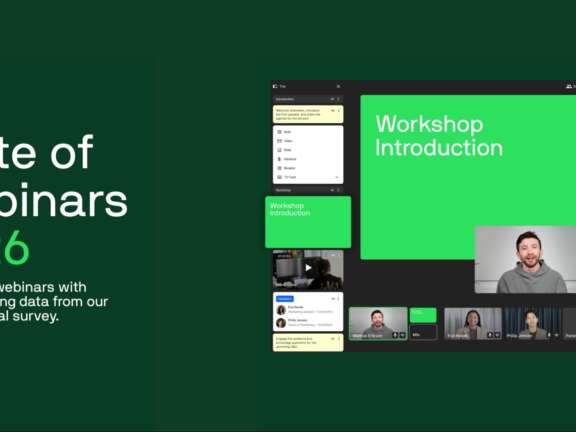
Spice Up Your HubSpot Data With Webinars
Are you using webinars as part of your marketing strategy today? Do you measure the success of your webinars effectively?
Category
Partnership videosTags
View transcript
I'd like to introduce Mete at TwentyThree. And just in preparation for that, we've been working with TwentyThree for some considerable time now. If anybody's heard me talk before, you know I'm passionate about producing what I call authority content, remarkable content, content that is worth remarking, content that gets shared on social media, content that gets talked about. And one of the most effective ways of doing that is with video. And the platform that TwentyThree have enables that. It gives you the analytics. It gives you the data. It gives you the engagement. And it's something that's core to the whole inbound methodology. And we are committed to it as a company and for our clients. We work very, very closely using this particular technology. But actually, this is not what we're talking about today, or it's one element of it. We're going to be talking about webinars. And from my perspective, webinars are a great facility or a great way to create authority content. You can interview people. You can put up a Q&A. You can find experts from your own company. You can find experts in the industry at wide. And you can run these webinars. And literally, it doesn't matter if nobody turns up. You can run it, and then it becomes part of your content strategy. You can reuse that content. And if you get good at it, people will then start to follow you. You can build a following. And the value is huge. You can transcribe those videos. You can turn them into e-books. You can turn them into a million tweets. So that's just a taste. We're heavily committed to this and really strongly partnered with TwentyThree. So having said that, let me hand over to Meta, because again, she's better at it than I am. Thank you. Thank you very much. Super excited to be here today. It's not the first time that we've been so fortunate to share the stage with you. I'm here to talk about webinars in particular. I'll also talk a little bit about video marketing, because I do think that they are tied in together quite a lot. But I did also promise Nick in the back to tell a little story about why we actually call TwentyThree. I'm sure a lot of you sat there with the question of why a number spelled out. And the story is that TwentyThree is the birthday paradox. And the birthday paradox is something you can all go in and Google. Or at least this is one of the stories why the company name is called TwentyThree. But TwentyThree is the birthday paradox. And the birthday paradox means that at least if you have 23 people in a room, there's at least a 50% chance that two of them share the same birthday. I also want to say thanks to Kara for highlighting. Both our competitors and us, of course. No, really, actually, I do mean it. I think we're all part of contributing to a space that's grown a lot in the past. And I think using video in any presentation or in any channel of your business is a way to drive growth. So it's important to focus on that, of course. There we go. So about TwentyThree, besides the name, we're a company that's existed for about 10 years. We have more than 2 million videos on our platform today, which is a combination from all our 300 customers. We're based in Copenhagen. And then we also have a video studio in San Francisco, because we do have a lot of clients in America as well. So this is one of the ways that we can really connect with them. I want to start off playing a little video. And before I press Play, if the Play button actually works, I want to tell you why I want to play a little video, besides the obvious, that I'm talking about video marketing today. But when I arrived in London yesterday evening, I live in Copenhagen today. But when I arrived in London yesterday evening, I got a message in my family chat on WhatsApp from my dad, who's the granddad of two incredible kids, my sister's not mine. And he sent this video. And I've watched it a couple of times yesterday evening when I received it. And I watched it today. And I'm really happy to keep this memory with me. And it's one of the things that I keep watching again and again. So I think just on a whole personal basis, I think video is a great tool that you keep watching again and again. Whereas if that was a text message, I might not have read it twice. Right? But now I'm just going to play it. You play, mommy. They're very naughty. They're saying, now we're going to drive away. And my granddad is saying, no, no, no. I'm going to use the club. I will see some of the things. They have a lot of good ideas. Just a short clip. But with this in mind, I wanted to ask you how many of you actually have shot or have seen a video this week? OK, that was 100%. Wow. You're really engaged in answering. I'm really happy about that. How many of you have shot a video this week? It could be any video. For business or for pleasure? Business? Pleasure? And how many of you have shared it on social media? Yes. Cool. It paints a picture that I think none of us are really surprised to see. But it's quite fun to set the scene and understand who you guys are. So thanks for that. I also want to set the scene with this quote from Rand Fisken, who talks about video marketing as well. And that the branding and stickiness value of video means that every viewer is worth at least 10 times more than a reader of text context. So that also sets the scene a little bit. Do I need to speak into these ones? Yeah, OK, cool. I'll do it. So today in video marketing and in 23, we see the video space in two different worlds. We have the whole qualitative side, which is with the focus on how we communicate, humanize content, and actually engage people. And then we have this other side, which is the quantitative side. And today there's kind of a disconnect between these areas, meaning that people are not actually using videos through the funnel. They're not measuring the data that they get from the videos. And they're not collecting and converting leads. So we'd much rather see this view, actually, where there's less of a disconnect between the two, but there's an equal focus. And I'll come back to that a little bit later. But I want to talk a little bit about the state of video marketing just before I kick off the whole webinar subject. Because I want to remind you all what the state is of video marketing. So we have these two waves that we see with technology. The first wave is a new technology and old behavior. And when I'm talking about this, I'm talking about video. Way, way back when video was introduced, I think we're old enough in this room maybe to remember when TV and video was very new. We might be too young to remember when video was first introduced in the entertainment industry many, many, many years ago. But back then, we had the scenario that we had a new technology trying to fit into a very old behavior. So how are we handling this? We use it for entertainment. And then today, we have the second wave of video in general, which is we actually have a quite old technology in the video. But we have a new behavior. We're starting to use video a lot more in marketing. And we're also starting to use video for more than just creating awareness on social media. We're also using it to actually attracting people, understanding how people engage in the video and use those insights to improve and optimize. And there's a reason for that. And one of the biggest reasons is that we see 50% higher engagement when you have video on your page. How many people in here has got videos on their pages, websites? Quite a lot. And I'm sure a lot of you have got videos on your web page. You also know that maybe this is a driver to keep people a little bit longer. Or you've chosen to have video on your pages, because at least this is what you believe. But what we see is also that people actually don't measure when they have videos on their pages. Spend a lot of resources on creating video. But then we never really track them. Or we don't really understand how they're performing. We might, if we're really good, we try to understand the click rate, at least. How many have clicked the video that we have on our landing page? Or for this, we actually only see 55% of people with video on their pages measuring how many clicks the videos have had. That's only 55%. And that should obviously be 100%, right? If you spend resources on putting video on your pages, you should probably also be at least measuring how many are playing the videos. But it goes much further than that. There's so much more data to collect, much more data than we can get with e-books. We can also get engagement data for how much of the video are people watching. When do they drop off? When do they come back in again? Then we have conversions. We should also be using video to measure how many people convert in videos. And how many leads do we generate with the videos? With this video, with another video. And we see, based on these numbers, that only 24% actually measures conversions. 18% measures how many leads they've generated. And then we have a whole 27% that hasn't even defined what success for their video marketing actually means. And it's okay, you're not alone out there. There's a lot of people that aren't doing this, so don't worry. But that's just what we see today. And it's an area where there probably is a lot of room for improvement. The reason why it's so important is that if we don't measure our data, if we don't know how our videos are performing, we probably also don't know how to score our leads. And our attribution data will also be off. And that's, for most people, a quite high criteria to understand who they've got in their databases. How many people in here are using lead scoring today? Not a lot, actually, but interesting. We also see, that I also talked about a little bit in the beginning, that people are usually only using video at the top of the funnel. People use it on their social media pages, which is not wrong, but there's lots more to it. How about also using videos to convert your leads? Once they're converted, once they're won, also retain your leads, delight them. So with that in mind, how many people in here would like to grow and retain their database? Mostly everyone, right? Using video? Cool. Good, good. So what we're seeing today is that people are stuck on one or two platforms, and we see a lot of people stuck on YouTube, that sounds so negative. It's actually not all bad that you're on YouTube, but if you're only using YouTube or Vimeo, it also means that you probably don't have the overview of the data that you could extract from your videos. And you probably don't understand the differences in where you find, where you engage your audience the most. We did a little research and we found out that on Facebook, people only tend to stay up until six seconds, which is not a lot, so if you wanna have a webinar, that's probably not the platform to do it at. YouTube as well, we see that people stay actually a little bit longer, one minute and 14 seconds. That's great, but if you get them in and you wheel them in with your attraction stages on social media and you actually get them to your inbound pages, then you have the chance to actually engage them for up to five minutes. So that's a lot, right? And with this in mind, think about if people are on your own pages, that also means that they're staying, they're sending traffic to your pages, staying for five minutes. That's gold, this is where the gold is. So instead of being stuck on one platform or two, YouTube or Vimeo, that's great, always be there, but remember also the rest of your channels that you've got, you've got all your social media channels, Twitter, LinkedIn, Facebook, and then you have your inbound pages. I actually have another slide where the Chrome icon is huge as well, just because I wanna emphasize that this is one of the best platforms that you can entertain and engage your leads, because this is where you will have the full overview of how your content is performing. So the main driver for having video on your pages should be to convert leads and generate traffic. Converting lead doesn't just happen by itself in a YouTube video, of course you also need forms in there or collectors as we call it in our 23 world. You need to have some forms where people can actually pay for knowledge with their data. And in some cases you would use it as a gate, but that doesn't have to be the case. So this is actually an example from one of our clients called Universal Robots, they produce robotic arms, which sounds really, really nerdy and it probably is, but they have a lead value of 1.4 million because if they do have a lead converting, this also pays off, right? And they chose not to gate their content. They didn't know if people were ready to actually fill out a form in the beginning of the video, so they chose to embed videos with a 23 player on all their websites and in the video they'd wait all the way until the video was done and at the end ask people, you seem interested, do you wanna know more? And that actually led to a 50% increase of their database in the first three weeks, and having a lead value of 1.4 million, you can imagine that this was quite successful for their business. So there's lots of ways to do it, but remember that the key thing about using video, that's another way that you can actually get people to convert and grow your database. If you're not tracking your videos, you also probably don't know what the length of your video should be, and what we see today is that people produce videos that are usually between zero to two minutes long, which you see 54% of people producing very, very, very short videos, and that is interesting because we've also found that the videos that are driving more engagement, they're not two minutes long, they're a lot longer, they're either between 15 to 45 minutes or longer than 45 minutes, and this is where webinars really fit in, right? If you know what you wanna talk about, if you've got strong content, then you can engage your audience a lot more using longer videos. So don't stick, well, actually, I don't know if two-minute videos are working for you. That's not up to me to decide. You all have different businesses. It might differ in B2C, it might be in a different world in B2B as well, but the important thing is that you measure it and find out what is it that my audience wants. So having talked a little bit about the state video marketing, and also here, lastly, with great questions, we know that webinars are also videos, so I wanna talk a little bit about webinars now, and webinars are humanized content. We have a live version, that's a pretty picture of myself, and then we have an on-demand version, and this is key because we might get the chance to actually engage with people live in a webinar for 45 minutes, but once the webinar is over, we can use this content again and again. It's been around for about 15 years. What we've seen out there, I've worked a lot with producing webinars myself, and I've also talked a few of it today, but driving or using webinars as a channel today is challenging, and, but it has been around, and I think that's the key here, and it's actually used by more than 60% of marketeers in their content marketing. That's quite a lot, and especially if we compare this to how many people are using a video marketing platform, that we're down to like 2%. Of course, those 2% are the ones that really, really, really wants to use a video marketing strategy and knows this is what's gonna increase their database, but webinars is a lot more accessible, it's a lot more easy to use and to understand, so it's something that most marketeers actually use in their marketing today. You should be planning your webinars exactly like you would with a video. You spend a lot of resources producing a video. You might not have to hire an actor to stand in front of a camera when it's a webinar. You'd probably wanna have someone like a thought leader or someone who really knows your product, depending on, of course, what level of the funnel you're at, but you wanna make sure that you plan out your webinar just like you would when you're producing a video. So you need to test and prepare everything, and testing and preparing pays off. I'm sorry, dark side, we have Marketto here. I'm so sorry, I can also keep you all calm and say this is a very old table. I'm not sure if that helps anything, but I spoke to Marketto and this is a very old table, but it's still interesting. Even if this was 10 years old, it's very interesting to see that planning and testing out and running webinars actually really pays off. We see here, what we've highlighted is a field event that costs $1.7 million, gives us a pipeline of around $11 million, that's pretty good, but if we look at webinars, you have a $0 investment and you have almost a $40 million pipe. Obviously, because you can reach everyone. You can go global with webinars. You're not tied to a specific location. You're not tied to a specific time or a specific audience. You can target everyone and everyone can tune in. And then of course, you can use it again and again and again and again, which is my point today. So, coming to the highlight of today, I wanna talk a little bit about marketing automation and webinars. Did I ask how many are running webinars today? No, there's a few. Yeah? Good, good. Well, you should all be running. You should be part of the 60% step. But yes, why it's important, obviously, I actually shouldn't be telling you that because you know your audience is a lot better than I do. So, ignore that, but come talk to me if you wanna know more. Marketing automation and webinars. Let's have a little look at that and see how you can integrate webinars in your marketing automation strategy. So, first off, I wanna say webinar data is much more than just attendance rate. That's kinda how we measure it today. Okay, let's build a webinar and then find out how is it performing and we measure the performance in how many people attended my webinar, which in my opinion is completely off. Because again, as I mentioned before, we only have a certain time and place, no, sorry, we only have a certain time to do our live performance and we shouldn't only be measuring or creating goals around that live, one live performance, right? First of all, when you're preparing for a webinar, you wanna make sure that people sign up to your webinar. So, it's all about converting people, getting people to register. And this is for new leads that's never heard about your business before, but also for people that are returning to your websites, finding out about this webinar, might even receive an email with an invite to the webinar. And for these people as well, you will accumulate the data and the insights that you have about them. So, there's no right or wrong. It's not just new leads, it's not just returning leads, but they're all as interesting to you as a business. So, coming back to this slide, webinar data is much more than attendance rate. So, we have engagement data. How long did they stay in the live webinar? How long did they stay on demand? The attendance rate, yes, it is quite interesting to see. Who actually attended your webinar? Who did you have that human connection with? Who knows your face? You're not just sending an email. They know your face, you're talking. They even have had the opportunity to ask you questions. Who has watched the on-demand version? What demographic data have you received from people giving their data to you? Did you have anyone asking questions or chatting with other people? Was there a communication going on? All these things are key to your sales team, of course. It's also key for your marketing, so you can keep nurturing people. But once they get to the sales stages, I'm sure there's a lot of salespeople that would love to know if people actually ask questions or who has engaged a lot in your webinars. Without or with all this data, you'll be able to score your leads, rank them the highest, find out who should your sales team contact. And with this data as well, you'll be able to segment and nurture your data. With the two-way sync we've got with HubSpot, we're also partnering with HubSpot, of course. So with the two-way sync that we've set up with HubSpot, that actually enables all the data that we have in our webinar platform to be synced straight into HubSpot. And we'll get data on who's watched a webinar on demand, who's watched it live, who's attended, who were no-shows, what emails did they open in the ones that we sent out to promote the event, and what else do we have in here, yes. Who viewed pages, all these things are quite key to understand exactly what their activities were around the webinar, and other activities, of course. And with the two-way sync, you make sure that if you have leads already in HubSpot, they won't be asked to fill out a form twice in using a 23 platform or some other provider. Yes, data is key. I think with webinars, data is what you can learn more from, and it's also what your sales team can use to finally win them over in the end. So video marketing and webinars in general shouldn't just be a little part of your marketing strategy. It should be something that you invest time and resources in, exactly like you do with any other tool in your tech stack. So to finish off, I want to talk about the state of webinars today, because we've also run a survey to find out, okay, what are the pain points out there in the market today? We found out that 45% of marketeers are running 11 or more webinars per year. That's quite a lot, which is really good to hear, and we have 19% that are running more than 50 webinars per year. That's crazy in my opinion, and it's also super cool. So we know that a lot of people are running webinars. We also found out that 68% of these marketeers are measuring their data manually, or they're not measuring at all. And in my opinion, if you're not measuring, if you're not using the data that you're actually getting through your videos, your blog posts, e-books, or webinars, then how can you improve and how can you know that your efforts are actually spent correctly? Then we also saw that 59% of marketeers host their on-demand webinars on either YouTube or Vimeo, again, or Dropbox even worse. Like, I'll send you a link to my Dropbox because the file is so heavy. That's quite bad, in my opinion. Or Google Drive, and that obviously also eliminates all the insights that you could be getting around your webinars. Again, putting efforts into something should also be having the right outcome so you're able to measure and optimize and understand your audience. Overall, we found that webinar tools today actually have a negative 28 NPS score. So we also tried to understand why is this, and when we called around to clients and partners asking, oh, do you wanna up your game in webinars? They're like, no, it's so bad. We hate our webinar tool, we hate producing them, it's horrible, it's bad. So we obviously wanted to find out why is this the case? And again, I know I've mentioned it, but I've also created a lot of webinars, and I had to agree. And I think this is very much true in my case. I found it very tiring to create a webinar because we were using so many different tools just to create a single webinar. It should be a low-cost channel. It should be, like Marketo said, it should cost zero dollars. But instead, it ended up being like two or five or even more tools to run these webinars. So that's also what we found out. 68% of marketeers use two to five tools, and 9% use more than five tools. I'll come back to what these tools could be. But anyways, now I'm just gonna let 23 shine a little bit, I'm so sorry. But we have created a webinar tool that you can finally love. That's our tagline, and I really love it. And there are four particular reasons why you're gonna love this tool. And the first one is there's no downloads required. So you don't have to, so it's basically browser-based. I don't know if you've ever entered a webinar. It also depends what business you're in. Sometimes some businesses has blockers that's placed by the IT teams. My knowledge doesn't go that much further than that, but that means that sometimes if you're producing a webinar, some people in the audience won't actually be able to attend because they have a little blocker, a security blocker, saying you cannot download this plugin from GoToWebinar or whatever tool it might be. We have created a tool where it's a click away, it's browser-based, so it means that we're not violating any securities, but we will not ever have any blockers because this will not be a security installment by your company. Not just to you, but also imagine all your audiences in the webinar, so you're creating what horrible, how horrible it would be if you're creating a webinar and they actually can't enter the webinar. So that would never be the case for us. The second thing is that there's no need for multiple tools. Yes, my favorite one. So this just paints the picture a little bit. WordPress, MailChimp, HubSpot, we do love HubSpot. GoToWebinar and then an editor tool. In the 23 tool, the webinar platform that we've created, we actually have all these things in one. You'll be able to create your landing pages for registrations, which are all in your brand. You'll be able to create all your reminder emails where you're sending out and saying, hey, you've signed up for a webinar, join this date. That is also something that you and your brand can create from the 23 platform. You have the webinar tool itself to host a live version. You have the video marketing platform. So your on-demand version is straight away sent in to your video library that you have in your video marketing platform. And from there, you can shoot it out as on-demand on any social media channel, schedule it, send it out to your 27 Facebook pages or how many you've got and all your inbound pages. And then the video editing is also in our video marketing platform. So the end of a million different tools. Then we have the third thing, which is also super interesting, is a customizable interface. It means that you can customize everything. We've created some super, super simple templates that you can shine up a little bit with your brand, but we will have no 23 logos anywhere. It will be sent from your domains. It will be your brand colors, your funds, your pictures, your everything. It also means that when you're, not only when you're creating your registrations page, the wait page before the webinar starts and the actual webinar page, it also means the follow-up emails or the reminder emails. And I was just talking to a couple of you before I was actually receiving a reminder email from a webinar and I can't recognize which webinar, who's the host, because it's from GoToWebinar and it looks a little bit like this one. So it's a long email full of numbers, full of writing, everything. There's no brand. The from says customer care at GoToWebinar and because in their title, they didn't put the name of the company hosting the webinar. So I have no idea what webinar I signed up for last week. I guess I'll have to find out when I actually attend the webinar, if I do, if I choose to do, but I have no idea who's hosted this webinar. So our follow-up emails are obviously branded to make sure that the engagement stays throughout with a full branded experience. They're optimized for attendance, even though attendance is not everything in a webinar. The emails are optimized for attendance. So it will come with a picture. It will look like the registrations page and again, your brand. It will come with one button to save to calendar or maybe two buttons and another one to say, go find your webinar and enter the page. So super simple and it works. The fourth thing is the measurement and integration. Of course, integrating with HubSpot is key, but what I really wanna talk about is the data that we get from the webinar, which is even more key. It's important that you have a full on picture, not just how your live version performed, but also how your on-demand version is performing because your on-demand is on your pages forever and ever if the webinar is good enough to attract people and also convert leads. So that's a little bit about what I had to talk about today, but I'm super curious to understand for those who are driving webinars or plan to drive webinars, how you're doing it today and what you find troubling. Maybe we can help.


