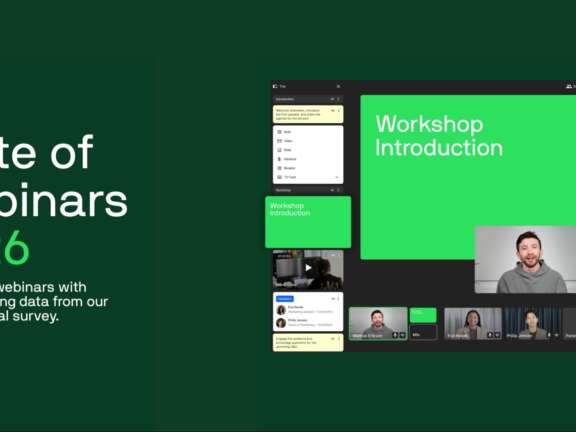
6 P’s to Simplify Your Webinars in 2019
Are you using webinars as part of your marketing strategy today? Do you measure the success of your webinars effectively?
Webinars remain one of the most important channels for any marketing team looking to engage their audience, increase leads, and educate their customers.
Research shows that while 45% of marketers run 11+ webinars per year, only 32% of marketers measure success manually or are not measuring webinar success at all.
Join us along with our partner TwentyThree, The Video Marketing Platform for this on-demand webinar for dialogue around Scaling Your Video Marketing Strategy Using Webinars.
In the webinar, we’ll learn:
-How we’ve incorporated webinars into our clients’ marketing strategies
-The best practices for weaving webinars into your marketing automation
-The brand new TwentyThree Webinar tool
About the speaker
George B. Thomas is an Inbound Marketing Marketer and HubSpot Certified Trainer with more than 25 years of sales and marketing experience. He leads the Impulse Creative crew in HubSpot certifications with 19 including Inbound, Email, Contextual and Content Marketing.
Remington Begg is the Chief Remarkable Officer at Impulse Creative. Remington is a dynamic and experienced speaker, entrepreneur and an agency growth consultant with a true passion about helping business owners succeed in leveraging the power of internet marketing.
Category
WebinarsTags
View transcript
questions like are you currently using webinars in your sales and marketing strategy? They'd ask you to actually leverage the chat pane and put in their yes or no and then you'd wait. Maybe there'd be music but we're not going to do that. We're just going to actually get started and as we get started, you can put in the chat pane yes or no if you're using webinars for your sales and marketing strategy. I do want to start to welcome some of the folks that are on here. One thing that you're going to notice is this is a different type of webinar because you're going to see faces. Human faces, you're going to see us talking to you, you're going to see some slides but this is one point that we're going to make through the entire presentation is we're not talking about your grandpappy's webinars. We're talking about the webinars that can be more human, more engaging, more of a conversation. We're going to have more of that to come in a hot minute. Let's go ahead and get going with some slides for a second. Now what I want to do is let you know that this is a webinar on six P's to simplify your webinars. I know it's a little bit meta here but we are going to be talking with 23. Todd, he's amazing. You're going to see him, meet him in a minute. We've got Impulse Creative, that is myself as well as the one, the only, the man, the myth, the legend. Remington Begg is with us today as well. Remington, make sure you're kind of keeping an eye on the chat pane and the question pane as we go through this. By the way, going back to that we want this to be conversational, there is a question pane. You can ask us questions. We're going to try to engage with those questions as much as possible. You can chat amongst yourself or chatty chat with us as well. We're totally down with that. Todd Patton, I hope I said that right. He's the head of comms and story at 23, a video marketing platform. Hopefully, for all that is holy, hopefully you know what 23 is. Todd, instead of me reading this because it is about being more human, why don't you kind of talk to the people on the webinar about who you are, what you do and of course a little bit about 23. Yeah, absolutely. Thank you, George. As you mentioned, I'm the head of communications here at 23. I am American, but I live in Copenhagen, so that's why it's dark here right now. As you can see out the window, it's not sunny North Carolina or Florida like those other two. Yeah, I moved here a little less than two years ago to be the head of communications. Before that, I was the content marketing manager branch metrics, which is in San Francisco. But originally, I was a journalist. I worked for NPR in Salt Lake City where I'm from. And about six years ago, I made the jump into marketing. So here I am. I'm excited to be here to talk about webinars. We've done some cool research. 23 is a video marketing platform. So we post manage, give you analytics on all of your videos on your websites, on social. But then we recently launched a webinar tool as well. So that's why we're talking about it. So I'm super excited and I can't wait to get into it. Yeah, they did a webinar tool that we're using and you're watching right now. We're super excited. I love that you can switch back from video to slides. I'm going to show you this slide just because this guy has a handsome smile and these are great glasses. He's the chief remarkable officer at impulse creative Remington. Say hi to the audience. It is officially your video right now. Yeah. So hello, everybody. I have less hair than in that photo. So that's why I like that photo. But you know, we've got to do what you got to do. I'm real excited about this. You know, we're making a big effort for webinars ourselves in twenty nineteen. And, you know, it's really great to be partnered on this. I think this we're going to drop some really great content today. Yes, we are. Yes, we are. Hey, I have a lot of hair. That's why I wear a lot of hats and not in my job, but although also in my job, but in photos as well. While I'm growing the Mohawk frohawk back, you'll see a lot of GVT and hats. I'm the inbound evangelist for impulse creative. I do all things nerdy with video and with HubSpot and sales and marketing. And most of you probably know who I am, what I do. But today, what I'm going to do is I'm going to help this go along in a journey where we're going to talk about webinars, the historical state of webinars, the future state of webinars, some things that you can do to make your webinars better. Man, this is going to be exciting. But we're going to start with actually the historical state of webinars. So, Todd, why don't you kick us off with some of the actual stats that we may be talking about here? Yeah. So we a few months back, we wanted to understand a little bit better how marketers not only view their market, their webinars, but how they run them and what they measure and things like that. So we put together a pretty cool research infographic about the state of webinars right in 2018. So the next few stats that I'm going to share just kind of break down the why, the how and why they're so important. Everybody knows the webinars are important. They've been marketers have been running them for what, two decades now. I think the first webinar was ran 20 years ago. Essentially, it's a seminar on the Internet, right? Kind of like what we're doing now. It's a great way for marketers to engage and to educate their audience in a super granular way and to communicate their messaging. Right. So webinars have been a big part of a lot of marketers strategies for a number of years. And that's why we wanted to understand the space better. Not only because we were launching our own tool, but we run our own webinars, too. We wanted to understand it on a whole new level. So the first stat that I have is about the frequency of webinars. Right. So marketers run a lot of webinars, to put it frankly. So we found that 45 percent of marketers run at least 11 webinars in a year. So at least one a month and then 19 percent run over 50 webinars a year, which is almost a webinar every single week. Right. So I think this just sets us up that webinars are super important. Right. And they're super prevalent and marketers need to need to use them. I've even seen recently B2C brands getting in on webinars. Right. It's a great way to educate and build your brand. Actually, the example that I have is a company out of Detroit called StockX and they run this there. There are this website that allows you to see the value of like Jordan shoes or Gucci handbags or whatever. It's kind of a stock market for luxury items like that. And their CEO runs a webinar every week to make sure that their audience is up on the latest trends and everything like that. So it can go both B2B and B2C, which I think is super important to know. And so we just kind of want to understand how many webinars are marketers running. And we saw that they're running a lot. Right. And that's why we wanted to build a tool. We wanted to get more research about how they're doing it. While that's encouraging, it's super encouraging that marketers are running a lot of webinars. This next step, we found that they're kind of falling behind in other ways. Right. So this says that 68 percent of marketers measure webinars manually. We're not measuring webinars at all, which is absolutely crazy to me. Actually, I was talking to someone. I know I was talking to someone about the stats the other day, actually. And they were like, what's the craziest stat that you got? And I'd have to say that this is probably the craziest stat that we got, because if you look at all the other marketing tools that we use, whether it's, you know, to build a landing page or Google Analytics on our website, sending an email, you would never just measure the click through rate or just have it in a spreadsheet of how your email performed. You would measure the revenue, how many people went to your website, how long they stayed there. But webinars are kind of lacking behind a little bit, kind of an afterthought, even though they're super good for driving revenue. We talked to a pretty big tech company. It was actually Marketo. I know this is very HubSpot centric, but we talked to Marketo about their webinar strategy and they shared some interesting insight with us that webinars drove the second amount of revenue as far as content goes for their entire company. Right. And their investment in it was zero dollars. All I had to do was create content. And so I think it's super important to measure webinars, how they're meant to be measured. Right. Just like with a landing page, you would measure how many people not only landed there, but filled out the form where they went on the customer journey. Webinars need to be a part of that. They need to be integrated into a tool that's going to be a tool that's going to a tool like HubSpot so that you can lead score based on them. And you're not looking at spreadsheets and seeing like, OK, is this is that where did this person go afterwards? There's tools out there that can allow you to be data driven with webinars. The next step focuses a little bit on the other side of webinars. Right. So we have a live webinar like we're running right now, but there's a whole other side that can be just as valuable. And that's the on demand side. I was talking to George and he mentioned that webinars are so valuable because you can cut them up into different pieces. They're the number one thing that can be like repurposed. You can turn it into a blog post. You can take a 30 second clip and throw it onto social media to engage your audience to go watch the rest of the webinar. And so this statistic that we have, the 59 percent of marketers are hosting their on demand webinars on YouTube, Vimeo, Dropbox or Google Drive. It's a little concerning, right, because there's so much data that can come from a video after you produce it. Right. And essentially, we're producing a video right now with this webinar. And we want to be able to see if people come afterwards, if the audience that attended reengaged and watched it again, if new people are coming to watch it. And by putting it only on YouTube or Dropbox or Google Drive, you lose out on an insane amount of video data that you could be using to lead score, to nurture, to put people in different workflows and everything like that. So this was this that stood out to me as well, along with the manually measuring that there's a big opportunity here for marketers to get more data, to get more out of their webinars. And I and I want to clarify that by no means do I think that we shouldn't put it on YouTube. Right. It's great for SEO. One tactic that I've seen is Rand Fishkins Whiteboard Fridays. He was the founder of Moz. Right. He used to, which essentially was kind of like a weekly webinar. It was just him in front of the camera talking, but he used to put it on his website. And then 90 days later, he would put it on YouTube to get that SEO value. So there are value from those channels, but ultimately you need to take them for what they are that they're top of the funnel. Right. And if someone on YouTube is watching, they have so many other distractions, they're probably not as likely to visit your website or to engage. And you don't get nearly as much data from that. But I always like to say that caveat that that doesn't necessarily mean you shouldn't use YouTube or Vimeo or whatever it might be, because they can be good for top of the funnel. But ultimately, you want someone on your website where they can watch the full on demand webinar and you can get all that valuable data. You can capture lead information. You can see if they watch 50 percent or maybe 2 percent and you can go back and reevaluate the content that you produce. And so that's the the fourth step. And then this that also kind of jumps out at you because 68 percent of marketers use two to five tools to run their webinars. And that's kind of what our philosophy at 23 with our new tool was, is that. It shouldn't be that hard, right? It should be a lot easier to run a webinar that you can run it live and automatically uploads to your website afterwards on demand. You have that hosted video, you can cut, edit it. But before you used to have to build a landing page in your CMS or whatever it might be, you used to have to go back and tie the webinar to it after the webinar was done, you'd have to download the webinar and upload it to another third party video hosting service. So there's so many different steps that we want to find out kind of what the process is for marketers when they're actually building a webinar from scratch. And it needs to all be integrated right so that the information you get from webinar seamlessly goes into your tech stack and where that data needs to be. So that's all I got for now. I want to hand it over to you guys. But yeah, and I'll happy to answer any questions at the end as well. And I know we have another little section. Yeah, definitely, definitely. So make sure you are chatting it up. Make sure you're putting any questions that you have as we go through these next pieces. This is the six piece. But before we get into the six piece, Remington, you know, we talked about this as we were getting ready and really doing our own six piece that we're about to tell everybody. We started to talk about why webinars in 2019. And do you want to share kind of some of the things that we started to talk about as far as like conversation and a different method and things like that? Yeah. So some of the stuff that I thought was pretty cool as we've looked over the years is webinars were one of those things that were, I'll just say, trendy a couple of years back because, you know, when video started to be something you could stream, like it jumped back in for a while. But then people still went to the traditional slideshows because they don't want to be on screen. But there's a whole human element to it. At Impulse, we've had a lot of success with sharing like these micro pieces of content via video. And last year, it served us really well for what Todd was kind of mentioning, like top of the funnel. But when you start to think about what the next step in the journey is, it's going to be more in-depth content. And I think we're in-dated right now with e-books, white papers and stuff like that. Not to say that they're not, that they don't work or that, you know, they're not effective. But there's a huge opportunity for measuring engagement in a webinar. There's a huge opportunity in driving some more engagement from a sales call to a qualified point of view. And then really the conversion allows for people to get some more in-depth information, get to know you and your company and kind of what you stand for. So I think that webinars can come really big into the mix, as the example of Marketo, you know, kind of proves that now we're able to start sharing some more long-form content. And it can be a really great way and relatively low impact way of testing content and campaigns, because in a lot of cases, it's easier to jump on a webinar and have a conversation about things. But when you start thinking about all the rest of the resources that would go into designing an e-book or creating a step-by-step campaign, a piece in that could be key in the future for all the rest of that content. Yeah, without a doubt. Hey, when I think of webinars, I go right to the fact that it is video content, even though historically the way people have done it, because it's just been a deck and audio kind of laid over it, even if it's live or pre-recorded, the fact that you can use video now, like I can't be a goofball in an e-book, Remington or Todd, I can't be a goofball, you know, in something that people can't see it. Like, I want people to realize that in 2019 and beyond, the reason that video is so hot is because the people that are focusing on brands want to see the people in the brands, they want to see a humanized brand. They want to be able to gauge the BS meter of like, is this some real junk or not? And so webinars and doing a style like this where you're actually able to present yourself, present your ideas, be a thought leader, build your brand and again, humanize that brand is highly, highly important. So with that said, can I get a drum roll from the audience? I said I was going to be a goofball. Number one we need to talk about is actually plan it. Now, there's going to be different sections that we talk about when it comes to planning your webinar. But before we even get into that, Remington, I, when I look at this go, this is probably the hugest part of a hurdle is that people will say, hey, we should do webinars. Hey, we should do webinars. By the way, has anybody mentioned that we should do webinars? And then they never plan any. So kind of kick us off with your thoughts on like just planning them and getting them going. Yeah. So it's funny, like people start to think about webinars, especially people who are kind of scared about like how big the audience is on the other side. I think that we tend to stay near things that are a little bit more familiar. The planning side, like we really want to think about think about how it fits in your current content calendar, your current or your current lead generation strategy. But you likely are going to have segments of business that you want to grow in your business in the next upcoming months. And then you're also going to have other areas where you may have you know, you may want to enrich some of the relationships that you currently have with your customers. So as you're thinking about planning at a high level, you know, just drop webinars into your current content calendar and give yourself the ramp, if you will, in order to get them done. But it doesn't have to get super complicated. Yeah, without a doubt. And here's the thing, too, because Remington mentioned calendar. What I would also beg you, implore you to think about when you're doing this is the length of in which the webinar should be that you're going to produce. Look, again, this is historical versus moving forward. A lot of people thought that a webinar needed to be an hour or 45 minutes. Look, a webinar could be 15 minutes. It could be a micro byte size of information during somebody's lunch. Or whatever. And here's the thing. I also want you to think about this time frame from just not the perspective of a webinar historically, but that you're creating a video, because if this is a webinar that then is also a video, it could also then be turned into something that could be shared as a podcast or audio because, you know, repurposing or recycling or as my friend Brian Fanzo says, upcycling your content, starting with, OK, we're going to create 45 minutes of content. It's going to be video based and we're going to be able to do because of that length, chop it up like Todd was talking a little bit ago about the YouTube and all that strategy. Like, look, right now we're about to do six peas. We can have this as you can watch the whole thing as a lead conversion like Remington talked about, or we can split each pea up into a section. We're going to talk about 23, by the way, and how you can do that in platform kind of towards the end of this webinar. Stick around for that. But then have those pieces that we can do individually as a YouTube strategy over time and on social over time anyway. So we've got calendar, we've got webinar length Remington. Anything else as far as like the time invested that we should be paying attention to? Yeah, so so really, it's more so thinking about that prep time that you need. So remembering that it's beyond just the hosting and doing the webinar itself. You know, you've also got some of the other peasers we're going to talk about. But but when you're starting the overall plan, you're really going to want to make sure that from a from a time perspective, you're giving yourself that adequate ramp. Yeah, without a doubt, without a doubt, let's go ahead and look at this. By the way, we are showing you that we're going to talk about in this section, time, style, research, host, storyboard and script and location. Look, when it comes to style of the webinar, we need to start not only thinking of the style of the deck that you're going to present, but the style in which the webinar you're going to create. And what I mean is, look, you're watching more video today than you are slides. That's a style choice. You're also watching a webinar that has three hosts instead of just one or two. This is a piece of should it be combined? Should it be live? Should it be recorded? Like those are choices that you should make. And there's really a matrix of, well, it's going to be 50 percent deck, 100 percent deck, you know, 90 percent video, just people talking. It's going to be a panel. It's going to be an interview style. So what style do you want your webinar to be? I want you guys to start thinking about that. Remington, anything you want to add on style or just want to dive into the research portion of this? Yeah. So when we're thinking style, you know, you get your this whole kind of thing combined and also the library recorded. Remember, like you don't have to have like it doesn't have to only be a live webinar if you've got the right tools. It can also be a recorded version later. So you can have that on demand concept at the same time that you're also focusing on a live one where you can get the guest interaction like we have today. Without a doubt, by the way, since Remington just mentioned interaction questions, chat pane, hit it, let us know something. Remington, as far as research, when we think of research and webinars and planning these out, where does your mind go? Yeah. So this kind of rolls right into like content strategy in general. So I always like to when we're dealing with clients and we're talking about what we're going to do a webinar about is like the first people to talk to a sales team. Right. Figure out like what are some objections in the sales process that they're currently having? What are the things that they wish that the salespeople or wish that the prospects knew rather? And then for the air to foster that, a digging words, you dig into some things that are happening in the industry, for instance, and then also digging further into just the overall content strategy that you can support. Yeah, what I don't want you to do is just pick up some topics, throw them on a dartboard and throw darts at it like there should be a strategy. There should be, hey, let's do some keyword research. Like Remington said, let's see what's a popular content or industry news. Like you have to have a method to your madness, a plan to move forward. And also when you're thinking about this research, know that it doesn't have to be really, really in depth all the time. Sometimes that makes sense. But you could do some surface level research just to get the conversation started and then dig deeper as you go. So the next thing that I really want to talk about Remington, because we want to have kind of some examples, is impulse creative, right? Not being salesy here. But we have a great example that you were telling me about before the webinar, and that was the ebook and kind of the brand plan. So kind of explain how that worked a little bit. Yeah. So when you look at some examples of successful content, you can start to kind of dig into some things that are working in your current marketing that you want to try and dial up. And so when we're thinking about when we're thinking about tying that research in, we have a brand plan ebook that is performing incredibly well. Well, that's a that's a rather than creating a whole new campaign or a whole new concept. We could bring that to life. And in fact, we'll talk about that a little bit later, but we can bring that to life into an actual webinar and start having some more engaging content. And through the questions, you can start to get a lot more information in regards to campaign ideas or blog topics and stuff based on the live audience. Yep. One thing that I want you all to think about when you're doing this research, when you're thinking about the style is pay a lot of attention to who do you want to have be the host. And what I mean by that is even the co-host or the people that you want to bring in, you're going to want to think about who are thought leaders in the space, who internally are thought leaders, who externally could we get to bring in? And remember, again, it's almost like breaking a mindset of what historically a webinar was a couple of people inside a company that would present a deck and talk about the things and then they would do a sales pitch about a product or service that they offer at the end. That was always exciting. But now it's really about creating video content in a webinar format and being able to say, hey, Todd, after this webinar, are you going to share it to your community? Why, yes, George, I am going to share it to my community. Awesome. That's going to be great because going back to building brand and thought leadership, if you're bringing people in that have an audience to be thought leaders on your webinars, it's going to reach a broader audience. And because you're not doing the old style of kind of selling, slam selling, but you're doing adding value inbound, if you will, might I say, then it's going to come around to the hey, I know this person, let me figure out what else they do. Oh, look, they've got these videos. Oh, these videos lead to this workshop or these videos lead to this agency. Oh, let me see if they can help me with this problem I have. That's how it should be. And it all starts with picking the right host to build the right community and get the larger audience around Remington. We like to do things free form around here at Impulse Creative with our webinars and things like that. But some people might need to storyboard or script. So talk us through a little bit about actually storyboarding or scripting webinars versus having the ability to have some of this be free form information coming through. For sure. So, you know, obviously, if we've got people that know that know the content inside and out, you're not going to need as much as scripts as you were as you're going to need some talking points. But when you start to know when you're starting to plan this process out, storyboarding the webinar to try and figure out how much content you want or need sounds like you can get super complicated. But it's as simple as having a stack of post-it notes or it's even it's as easy as, you know, dropping in some bullet points in an Evernote. The the fruition of that campaign or that webinar, rather, can be very specific and very easy. It's not until you have some of the direction and the general content that you can start to really start building that on slides. And I think the reason for that is if you start with slides, then all of a sudden you're trying to stuff all this information into visuals and then people are stuck reading versus actually listening. Yeah, the last thing we worry about is the visuals. We just get it down and we know what we want to talk about, you know, thinking of knowing what we want to talk about. One thing that we're going to keep short and sweet so we can move on to the second P is always think about your location, people. Don't be on a noisy street. Don't use a 1985 computer. Were there computers in 1985? I'm sure there were, but they weren't having any webinars. And make sure that you're in a space that's flexible, meaning do you need lights? Can you use sunlight? Think about the location in which you are holding this webinar. It is definitely something that you want to pay attention to. So drum roll, please. Number two, and that is being able to prepare. Prepare. Good, great. Yeah, Remington, there's a ton that we're going to talk about in this prepare section. Folks, get ready again. Chat pane and question pane. We're going to talk about pages, call to actions, the actual deck, social media video, taking time to actually practice during the prepare part. And might I just say you'll hear the word test a couple of times throughout the rest of this webinar, just a couple of times, just a couple of times. All right. So let's go ahead and get into the first section, which is the pages that you need to start to pay attention to. And so on this, when we think of pages and creating pages for webinars and again, we're staying very platform agnostic. We're not specifically talking about 23 or any other webinar platform. We're just saying in general, these are things that you need to think about and create and have. And so one is obviously your registration form. Right. And with this form, you want to pay attention to the questions that you're asking and only ask the questions that you truly need, because you need to realize that you're aligning to have a conversation with people in the webinar. Literally, why do I need to know what their job title is when the webinar starts? My opening question could be, hey, what's your job title at your company? Why are we waiting for this webinar to start? Hit me up. Or I could be like, hey, where are you calling in from? By the way, I can map all of that data, job title and where they're calling in from into the actual contacts that came along for the webinar. I don't have to ask it all. So keep those forms where they're actually optimized. The graphics that help sell the point of the webinar. I am really not sure why it was a picture of me and my frohawk for this webinar. But hey, that's what was chosen. That's what we use. But use graphics that sell the idea of what you're going to talk about. So Remington, when you think of pages, anything that you think about here. Yeah, I think, you know, to your point, like the graphics, the consistency of the brand, you know, and then also making sure that the visuals kind of tie into the topic. You know, luckily, you were a host on this webinar, otherwise that those CTAs, you know, wouldn't have been very topically relevant to the webinar itself. True that. You know, but as you start as you start digging into that, just making sure that you've got the pages built out and you've got the forms you need and the graphics to support it. So Remington, talk us through call to actions. Like, what do you think about when you think about webinar call to actions? Yep. So there's going to be a variety of calls to action that you need. You're going to need to have a website, you know, calls to action that can go on your website. You're going to if you've got enough ramp time for promotion, you're going to be able to have some calls to action via ads. You're obviously going to be sending to your list, you know, via email. So you want to have some graphics that are catered to the email. And I think one that people tend to forget is the potential for putting webinar promotions into personal signatures, right? So we could literally promote this webinar with every single email that gets sent out with our normal exchange of emails on a day to day from everyone in the org. That's going to increase the amount of people who are showing interest. So that's that's a real big thing. And then another another point of that with your ads, we got a great question from Matt about, you know, how the topics should feed into the bottom of the funnel sale. There's going to be different reasons that people are going to be coming to these. So when you're creating those calls to action, you know, if you've got some people that you have relationships with or you want to test out some ads that might speak more to the bottom of the funnel, those kinds of things are a great way to kind of feed in. And there's other topics we'll talk about with regarding the bottom funnel later, too. Absolutely. The next thing that I want to talk about is the deck. You have to pay attention to it. You're going to use it while you might not use it a lot. You'll use it a little. It should be honestly, in my opinion, the salt and pepper to the information that you're providing to the video that you're creating in webinar format. Some things that you want to pay attention to this is you don't have to do it alone, meaning it doesn't have to be all of your mind or all of your information or all of your internal information, your shared knowledge as a company. You should leverage things like quotes. You should leverage things like stats. Look, this webinar started with Todd talking about stats that they had found from talking to companies, how they are using webinars. We didn't do that. Even though this is a 23 and impulse creative, we got a great host or cohost to be on. They leverage some stats. We could pull some quotes in here about webinars if we wanted to. We can leverage graphics that we might make or not have to make because there's graphics you can buy or there's graphics that you can use from free places. But the idea is don't get hung up on how am I going to create this deck and all of this information by myself. And might I also say that it should be when you're creating this deck, like we said earlier, just main points. And hopefully if you have a designer in house, you can push that over to them. Let them finesse it, tweak it. Our boy Jeff at impulse creative made this one look beautiful. But if you don't have somebody, maybe that's part of where you offload to a third party and actually have it look visually stimulating. Because while you could look at my face the entire time, you might find this more pleasing to just look at a nice deck that actually looks good and all that good stuff. So Remington, with that said, social media is something that people are going to need to pay attention to. So what are your thoughts on webinars and social? Yeah, so when we when we start talking about social, what you want to do is create some assets specific to the platform. So that means that, you know, you could you could change out the cover photo on your Facebook page for promotion. You could have square shaped graphics that are designed for Facebook and Instagram. You could have short form videos that you can publish into Twitter. They have to be shorted in two minutes. You could do that on LinkedIn as well. And you could use a lot of those things as you're creating the promotions, the, you know, the ability to kind of go in and have some of these video promotions about why the webinar is going to be awesome or, you know, getting some of that social proof out there in regards to some stats to kind of get people teased. Think of those assets and how you can start creating a curiosity and then driving the value from there. Oh, I love that you mentioned video because that's what I want to talk about. Like video from a point of where we're at now and we're going to talk about video in these other steps as well. But look, you need to create a teaser that is video based. We created one. We launched it out on social. It was me talking about what we were going to talk about on this webinar and it gets people excited. And there's some certain things that you're going to want in that teaser. Right. Hey, sign up while you can. Here's what we're going to talk about. Who's going to be on with you like present those thought leaders at that point in time. And then, you know, you can go deep or high level with this video. But the idea is to use it maybe at the top of a blog post, use it in social, like get as much traffic or use out of it as you can. But again, because we're creating video, because we're leveraging video for our webinars, we're showing most of our face. We want to just use that to even promote it to the audience that is going to want to engage with the content. Remington, you know, one of the things that most people get hung up on and that they not really sure how to do is actually practicing for the webinar, because sometimes we talk about table reads, it gets a little awkward and there's nobody there. So you're kind of presenting to yourself. Give the webinar viewers and maybe at this point listeners some some thoughts on actually practicing for the webinar before you actually launch and go live. Sure. So these get easier as you start to go moving forward, just like doing videos and being on video the first time. But, you know, the table reads are great going through the actual webinar. And I think a lot of times that's a great test, even in the planning stages when you're just writing these out and on sticky notes and that kind of thing. But dry running with a deck the day of the webinar, I think is a great a great thing to do. And like, for instance, George and I ran through this this morning first thing right before we jumped in. And it's one of those things where we just kind of talk about how you're going to do it. And it's getting familiar with what's next. So, you know, what the next slide is going to look like. But, you know, in general, just try and keep it so that you kind of know where you're going. And in some cases, maybe even kind of time box and understand what your time was if you do a full run. Yeah. And that's the thing. Understanding what does really fill 45 minutes, what does fill an hour. If you don't practice it, you don't know. And so you definitely need to pay attention that I'm also going to say, did I mention that you should test everything? By the way, practicing is testing everything you should when you're practicing, if you're going to use presenter mode, use presenter mode. Don't just sit there and look at the deck like it's just laid out and you're creating it like use the technology in the way that you're going to use it. Even go into your platform. A lot of webinar platforms will let you do like a practice run. If they don't probably shouldn't use that platform. Just going to throw that out there because you want to do a practice run, a dry run. You want to use the technology. You want to test, test, test, test. Like I said, you're going to hear test a lot of times through this. Now, number three, number three is that we need to obviously promote this. We need to promote the webinar. So Remington, when you think about promoting it, where does your mind go? Yeah, so so really, you know, you got to get this out in front of people. And I think sometimes if you don't have that right ramp, then it starts to affect things. But, you know, the but when you're when you're thinking about all the different ways you're going to promote and you've got all of those assets and everything we talked about in the preparing stage, it allows for you to really kind of go into battle, if you will, and be ready, be ready to get everything going. Yep, sure does. Sure does. And so with that said, getting everything going, going into battle, you know, the first thing that you might need to do is actually do something with some emails. I know that some people may not think that they're effective. They're highly effective. Well, if you do them right, if you focus on adding value, but you're going to have a couple of different emails that you're going to want to focus on right here. We always pay attention to that. There's a main sign up email. We always want to have a reminder of the sign up. And of course, people love to be thanked. So make sure that you are focused on a thank you email going out there. Now, we all get busy. You're busy. I'm busy. Hey, everybody is busy. We got a lot of things that we got to do. So the thing that I love is reminder emails and we can remind them the day of we can remind them the hour before. And you might even do like a 10 minute before email. And I know that you want to be careful because you don't want to be annoying, but you do want to be helpful. And I will say if you're focused on those emails just being a helpful part of this, nobody will ever look at you and say, hey, you helped me too much. Nobody will ever say that to you. It just it just doesn't happen. Now, after the fact, we want to send two emails. One is, hey, thanks for attending. By the way, if you want to go rewatch that great video, that great webinar, listen to that great information. Here's how you can get to the recorded version and watch it again. And then for those people who got busy or their car broke down or their dog ate the cable of their computer and so it didn't turn on that morning, you can send them the link to the actual video that they can then convert on or just watch without converting. That's your strategy. I'll leave it to you. You can figure that out. But those are really the main emails that you want to pay attention to when you're creating this. So again, I kind of gave you social before Remington. But when you think about social in this aspect of the promotion, go ahead and talk us through that a little bit. Maybe not. Oh, there he is. Can you talk to us about social? Sorry about that. Something's going on over here. Internet connectivity over here is being spotted. But the yes. So on a social perspective, it's real similar to the email cadence. It's like letting people know what's going on, that you've got something coming up, promoting it a few times, remembering all your different platforms, getting your employees internally to share that information. And then and then also during the day of reminders, the previous day reminders and then and then remembering the promotion, you know, as well of getting people signed up even during the webinar if you want. Now, that may get people so that they sign up and halfway through, but it just depends on the nature of your content. Yeah, without a doubt. One thing I will say just before I get into the next piece, I'm going to talk about with social, if you share it once, that's probably not enough, especially if you're willing to have anybody around the world watch your webinar, because if you posted it one time at 12 o'clock Eastern Standard, well, then the people in, I don't know, Denmark or Sweden or Hawaii probably didn't see it. And so think about having a cadence where it's multiple times over multiple weeks that you're actually promoting this. And then also, because a lot of this needs to go to the bottom of the funnel. It needs to go to driving revenue. It needs to go to sales. It needs to go to person to person type promotion. And so when you see this on the screen that says signature, we're literally talking about email signatures. All employees across the business, across your company should have some type of link, some type of CTA, some type of promotion in their email that is pushing out, hey, this webinar is coming up. Or if you're in between webinars, watch this webinar and learn about XYZ. And that pushes them to the pre-recorded email signature should always have some type of educational webinar content that is being promoted for them. Remington, anything that you want to add to this signature section? No, man, you just covered it all. All right. So then Remington is going to talk about in platform resources. Yeah, so when we think in platform resources, you know, there's a lot of websites, especially if you've had a conversation with an inbound agency like impulse creative, like we're going to talk to you about one and a half, like all of your content in one in one repository or in one area and available to your prospects. So when you start thinking about in platform, there's there's all these opportunities for you to be able to present this information and these calls to actions and leave the content. And so in the resource center on your site, there's people going there. Let them know you've got fresh content coming, you know, whether it's a resource or a learning center. The other thing is category specific. So when you think of when you think of getting into things that are relevant on a category by category basis, you can even go as far as, you know, digging into certain blog topics and making sure that there's CTAs that kind of fit that. So think think about it in that regard. Yep. And last but not least, personal invites. Look, you're sitting at the board, you're talking about the Cubs, the Bears, the whoever. You say, hey, Bobby, I like you. I want to add some value to your life. I've got a webinar coming. I don't know if you would ever do that. But what you would do is you would have an email template that your team could leverage. And if there were individual people that you were trying to target that you wanted to do business with, you would send them out that personal, you know, I'm saying template because you can do 80 percent written, 20 percent customizable, that you can then spin around rather quickly in a platform like HubSpot or another one like HubSpot or another one. I don't know. There's other ones out there, but you can use templates and you can do personal invites. By the way, did I mentioned at any point in time in this webinar that you should really test everything? I may have said that test everything. Just saying. OK, Remington, when we talk about presenting the webinar, when we're at the literally the stage that we're at right now, there are some things that I think about with presenting. One is that you should always ask people to use the chat pane and the question pane so that we can get engagement. It's about a conversation to you should always ramp up your energy just a little bit. That's just because you're an energetic person. That's because you're trying to keep people's attention. That's because you've drank too much coffee in the morning. I don't know. But you should you should present it in a way that people actually want to pay attention. You may even want to use a little bit of humor as you're doing this. I mean, obviously, I started this webinar out saying that I I'll be a goofball. I will be a goofball. I love humor. I love when people have fun. I love when people have fun and get educated. So and you've heard me say it's not your grandpappy's webinar. Make it engaging. Think about it as a video. Think about it as communication. Think about it as, man, that was the funnest 30 minutes, 45 minutes hour of my day, because the host was X, Y, Z, ABC, 123, passionate, whatever. You get the idea. But let's go ahead and look at some of the micros of this Remington. When we're talking about presenting it, talk us through the actual connection part of this. I love that you got this as as the dude who has had a little bit, not a lot. Knock on wood, a little bit of technical difficulty. Talk us through connection. I'm kidding right now. Yeah. So high speed possible is, you know, is obviously really important. Make sure that, you know, people aren't watching Netflix in the office while you're doing this. We're doing this work from home Wednesday today, and I'm actually at the office. So usually it's pretty good. But obviously there's some connectivity issues. But understand, and I would say have a plan B for that, too, in case things go down. Multiple hosts is mine. Make sure you turn off all the other apps. You turn off all your notifications so that you can be like present and accountable to these. I love that Remington said multiple hosts, meaning if all of a sudden he just disappeared, he'd be like, Adios, have fun. So again, with this, we want to focus in on location and equipment. You do want a quiet area when you're presenting. If you're a person like me and you work from home, this is when you tell your kids who are at home to be quiet for the next hour. You'll pay them 20 bucks or you'll get them a lollipop, depending on their age. But you also want to make sure that maybe the air conditions are off. There's no fans running. You don't have any background music. You really need the audience to be able to pay attention to you, to be able to pay attention to what you're educating them on. And then, you know, like, listen, the tech, you got to know your tech. You got to know like what camera you're going to use. You got to know if you're going to have a decent mic. You are putting on a presentation that should have great video quality, should have great audio quality. The deck should look nice. Just don't think that because I'm talking about conversational and I'm talking about a new type of webinar, that I'm saying that you just get on and you start riffing because that's not really it. You have to pay attention to, again, a nice camera, nice mic, paying attention. Some lights. I have some lights going here. So we've got good quality and just understanding. One last thing, I got to say this. I, you know. Don't keep this rolling. I know. Don't ever, don't ever, don't ever just do a webinar without video. Like, I really would like to do a hashtag death to non video webinars. That's too long of a hashtag. Nobody would ever use that. But really, I always want to see webinars moving forward where it's a mix of the deck and mix of faces of human. All that good stuff. All that good stuff. Remington audio. Audio is what we want to talk about. Our audience. I'm sorry. I read that wrong. But audience, give me your thoughts. Yeah. So so the big thing is, you know, go slower than you think and make sure especially it's tough when you're if you're speaking to an audience and you can see like a direct audience response, like you can start to feel that the room. But when you're working on a webinar, sometimes it feels like you're just speaking into a room. So make sure you also embrace the pause. Right. So take a second. Ask people for, you know, some questions or some feedback and just kind of just kind of pause there. But when you when you're asking the audience questions about their thoughts and stuff like that, make sure to also engage with them. So that's a that's a big piece. So I am going to run through a couple of these a little bit quicker. One of them is some hot tips here. Have some offline, actually offline tools. Have a notepad, have a pencil, have water, some type of beverage so that if you have a thought that you want to bring back at the end of the webinar, you can jot it down. If somebody asks a question, but you want to get back to it, you can mark it. If you feel like you're not going to be able to talk anymore, you can hydrate. But then also pay attention to the fact that you don't need things like gum or candy. Think about things you do need, like a bathroom break before you start the webinar, because that would be awkward if all of a sudden I just jetted and was like, hey, I'll be back. And then, by the way, did I mention that you should test everything? I think I might have mentioned that already. So publish it. Remington, let's talk about publishing the actual webinar that we've created, which, by the way, in several minutes, that's the step that we're going to be on. In several minutes, we're going to publish it. No, I think I think publishing is probably one of the most self-explanatory pieces of the webinar, is actually getting it out and publishing the actual webinar. But making sure that that's an essential part of your process, you got to make sure that it's out there and available for people to get to. Yes, you do. You should also click on the person who's talking instead of the guy who's not talking when you're doing this. That would be a good thing. You know, just saying, just throwing that out there real quick. So when it comes to publishing, let's go ahead and look at these things real quick. We definitely want to and Todd mentioned this at the very beginning. We want to take the webinar, convert it into a video. Hopefully, you got a platform that already does that. And you want to be able to measure the success of the actual live recording and the success of the recorded now as people convert or watch it later. We also want to pay attention to kind of updating things. And when we think about updating, we're talking about copy on the landing page. We're talking about turning it to an on-demand. That means changing to on-demand CTAs for the site, for the blog, different maybe featured images because you can take snippets or screenshots out of the actual webinar you did. Updating the email signatures that we had talked about instead of promoting that we have a webinar coming, that now we have a webinar that you can watch. And so we definitely want to pay attention to updating all of those things. We want to talk about conversion points, adding video, adding thank you pages, making the pages better or enhancing them and maybe even thinking about, is there a way that we don't have to historically or use historically what was used before, which it's a landing page to then a thank you page. Is there a way that there can just be one page where it sells the actual webinar? Maybe there's a form inside the video that is the conversion tool for those on-demands, things like that. Start thinking about them differently. But Remington, when we talk about create kind of and disable, what are your thoughts on those sections of this? Sure. So the big thing was like the create and disable. Don't forget for people who sign up for the webinar not to be announcing, you know, that it's at a certain date, because it'd be really funny if you change just your landing page and you update the copy on the landing page, but get all the workflow emails and everything that are following are misleading people to think that the webinar has passed. So make sure you go in and you create that new on-demand workflow. Maybe it's some reminders saying, hey, it looks like you didn't watch the webinar and then following up rather than, hey, this webinar is about to start in a day and then, you know, the time the time basis is all set up. And then most importantly, make sure you turn off the date specific stuff. If you have specific emails or you have a specific workflow that's reminding people in your database, that's a really important piece. Turn off that so that if people so people don't realize that they're in an automated loop. Yeah, without a doubt. And did I say, by the way, that you should test, test, test? No, I already said that. I did say that. I'm pretty sure that I said that you should test everything. Remington, the sixth P, we made it. And by the way, we still have five minutes, people, because we started five minutes late. That's our fault, not yours. But hopefully you'll hang around with us while we do this promote and plan section. So, you know, look, you're creating video. We've talked about this a couple of times. You are creating a video. Once you're done, you should be promoting that. You should take some clips out of that. We're going to do this. We're going to take clips out of this webinar. We're going to use that to promote it. So sound bites is really what you want to be paying attention to here. And when I say sound bites, I literally mean it can be audio or it can be video clips that you're using. You definitely want to reach out to the guest or the thought leader, let them know that the webinar is in the place that it's going to be, that they can promote it. Obviously, you can work out some scenario of if people convert on the one moving forward, what does that look like as far as some type of partnership and the content and what you're creating? And then Remington, I want you to talk about this part right here. And I feel like we I may have messed up a little bit on this deck. I feel like this might be the first thing that one should do after you finish a webinar. So talk us through that. Sure, sure. So sales professionals, salespeople, the people that are trying to get the new business for your organization are starving for content that can help them close deals. And so in a lot of cases, you've got this new webinar and resource that's available. And if you put it on the right platform, you've got a way to measure someone's engagement in a specific topic. You're going to be able to give some really great information for the sales professionals. But it all starts with them knowing what it is that the webinar is about, why it matters to them and like what the signals would be. So it could almost do like an internal memo out to the sales team. Hey, here's a new resource that's available. You can track it by doing X and then you can deploy it as one of the snippets or resources if you're using HubSpot, for instance, and share that in your content as you're going forward. Yeah, without a doubt. One of the things that frustrates me the most historically about webinars is everybody kind of viewed them as a one and done. Or most people, I should say, don't talk in absolutes. Most people would look at them as a one and done. I want everybody to realize once it gets to your sales professionals hands, the mindset of this is that it is evergreen content. We should be using it again and again and again in the sales process, in the marketing process, in the social process, in anything that you can. You now have this juicy content that is around forever that you can leverage and use. And by the way, you're going to see here in a hot minute that you rinse and repeat, meaning you just finished one. You should have already planned for the next one. You should probably already be promoting the next one. Hmm. Hashtag last slide of the stack. But anyway, with that said, we'll just let that go. And Todd, we want to give you a couple minutes to talk about because we have been platform agnostic this entire time. We want to give you a couple minutes to talk about 23. We're also going to kind of throw some ideas and some imagery out there real quick as we start to close up. But Todd, give us your give us your thoughts. Give the audience your thoughts. By the way, hit questions or chat panes in there. If you stick around, we will try to hit those before we close this off. Yeah, thanks, guys. That was honestly incredible. I mean, all of those tips perfectly aligned with what we try to preach at 23. So, yeah, I know we don't have much time left. So I just want to quickly cover kind of what 23 does in an effort not to be not too salesy. And so I'll quickly go through it. We have four core pillars of our platform. They all revolve around video, right? We're a video marketing platform. We help marketers run video across the funnel, across their website and across social. The first one is to run your video everywhere. Right. So social video. We have integrations with Facebook, YouTube, Twitter, LinkedIn. We think these channels are super important. But of course, we think video goes a little bit beyond that, too. Right. So you need to power video on your website where you can convert people. You can have a video hub, your own little YouTube channel on your website where you can get much better data. You can collect leads. You can customize landing pages, things like that. Then, of course, video data is super important as well. We even have this tagline, stop ignoring video engagement, because it is so important. We estimate that half of all website data now comes from video. You're not lead scoring. If you're not setting up attribution for that, you're missing out on a ton of information that could help you nurture your prospects. And of course, you want to integrate this data with your tech stack. We have a really sweet integration with HubSpot, custom cards, things like that, that you can see actually in the contact card inside of HubSpot. And then the last one is a tool we're using right now. It's our new webinar tool based on the research that we had. The webinar tools typically leave some to be desired. We came up with the tagline, a webinar tool you'll finally love, because we think it brings together all the best parts of webinars and makes it seamless to run one. You get a lot of data from it and you're able to build your webinars and run your webinars without having to worry about the technology. So that's just the few slides I had about 23. And I know we're pretty short on time, so I'll turn it back to you guys. Love it. Love it. And here's the thing. I'm going to throw this out real quick. I pretty much fanboyed on 23 before there was even a webinar tool inside of there. And so what we're going to do is we're going to take a hot second and just give impulse creative thoughts on 23 and show you a little bit under the hood. And so when we're talking about this information, what is what is super great is 23, the webinar tool is easy to use. There's not a lot of buttons. There's not a lot of confusion. You can easily set up landing pages right inside the tool. You can create emails right inside the tool. You get your analytics inside the tool. You get your audience inside the tool. By the way, had we mentioned that you should measure everything and in 23, you can measure pretty much everything that you want to measure right here. One place, by the way, you're just seeing the webinar tool right now. But this is how your emails look. It's literally a timeline that you can go through and you can edit. And it's simple templates that you can either use the default ones or they even have an editor. Where you can go over and edit what you want your templates to look like. So for us, we're all about being more human. Of course, what did we do? We added an email signature with a face of a guy that you might know into those emails. Well, you know him now for sure. He's a goofball. Anyway, we added the email signature in there because we wanted the human element. We added a you know, there was a call to action button that you could click on. And so being able to create your emails, create the landing page right here inside. And here's what they look like. Right. Nice image. Nice headline. Copy. Super simple. Super easy editor. Again, we don't want there to be any hurdles when we're creating webinars at Impulse Creative. 23 allows us to remove hurdles and just simply create the content that needs to be created so that we can again build that audience, add value, be helpful to a community that needs help. And then look, going past the webinar tool, we mentioned in platform earlier, you can literally create your video hosting solution that has dope video SEO. Trust me on this. We've released videos and they've been the first in like search results within like less than a day sometimes. But also you'll see on the right hand side of this slide, six P's to simplify your webinar. It automatically allows you to promote your webinar in your gallery of other videos. And this can be in a sidebar of like a gallery view or what you're looking at is an individual video and it presenting it there. So we talk about promotion and in-app promotion. It's already happening here on 23. And then you can see this. This is just a ton of video tools that you can use. Live video webinars. You can use the editor to do your little video snippets. You've got the analytics. You can optimize your video if you're missing titles, descriptions or tags. Guys, guys, literally this is the all in one tool that you could use for video. I know that Todd said he wasn't going to be salesy. Look, I don't work for 23. So I'm just gushing. I'm just telling you why I love the tool. We're not even paid by 23. Well, Todd, we should talk about that. I'm just kidding. I'm just kidding. Here's the deal. We're wrapping it up, folks. We're wrapping it up. You should really check out 23. If you do have questions, you can reach out to us at Impulse Creative or you can reach out to their team as well. Goodness, guys, six P's to simplify your webinar in 2019 and beyond. We're only missing one thing, Remington. What is the one thing we're missing? Yes. So the next webinar we got is going to be February 20th at 2 p.m. Eastern time. So we're going to be talking about brand and the importance of it and how to create a brand manual blueprint that covers everything from voice to visuals. So Todd, you'll probably love this one too. But there's going to be a lot of opportunity here. This is that high converting ebook that we've got. And what we're going to do is disseminate some of that information to some visuals and everything for you as well. So you'll get an email with the link to this as a follow up once this recording is distributed and you can sign up there. And also, Todd, we want to thank you for being a cohost on the webinar with us. We will let you know when this goes live so you can share it to your community. Just kidding. However, it automatically recorded and I'm automatically going to be able to push a button and it's going to be live within minutes because we're using 23. I'll stop. I really will stop. But here's the deal. Remington, first of all, let's just say adios to any audience members that need to go back to work. But if there are questions, if you asked a question, Remington or Todd, did you see any questions or conversations that we want to just kind of go into or talk about before we close this out? So Matt had a question about the bottom of the funnel sale. And from a webinar point of view, how do you go about topics that would fit more bottom of the funnel? Yeah, I mean, I think I have an answer to that, actually. I mean, webinars can be key for bottom of the funnel, right? If somebody's requested a demo or they're talking to a salesperson or whatever it might be, webinars can be super engaging. At Branch when I was in San Francisco, we actually used to run a webinar series from our salespeople every two weeks, I believe, and they would just go over the platform. They'd go over tips for mobile marketing, which is what we focused on at Branch. And I think there's a lot of opportunity. Even customer case studies, right? Like having a customer onto a webinar could be bottom of the funnel to talk about how they use your product or whatever it might be. So I think there's a lot of options at the bottom of the funnel to try and engage people who are already engaged, right? Yeah, I'm going to add in here, by the way, you guys just did a webinar last night at 930 with Marcus Sheridan. I may know him, actually. Pretty intimate for five years, repels. Great webinar, by the way. Hey, webinars all over the place. My goodness. So this is not a new concept, but when I think of bottom of the funnel, when I think of getting the ROI on these webinars, and I think about it being online, I think about the searcher. And because I'm thinking about the searcher, I think about keywords. And therefore combinations of keywords that people use when they're searching for things at the bottom of the funnel is going to be highly important. So if you're not doing webinars on cost of the product or service, if you're not doing webinars on problems, on pros or cons of the product or services, like using those terms, massive reviews of the products, those are things that people are going to search right before they're ready to hit the buy button. And so while you're writing those articles right now, right? I hope if you're not, oh, but you should be creating videos. You should be creating webinars using those. The big five is what my buddy Marcus Sheridan calls it. The rest of the world, actually, whoever has read his book, calls it that as well. But anyway, you get the idea. Use those big five terms along with the product, the service, or the keyword that you're targeting as your titles in your webinars, and you will be focused in the right direction. Remington, anything else? Nope, that's it. I think we can button it up. And thank you, everybody, for hanging out a little bit longer. I think we got some good value out of here. Absolutely. If you have any questions, make sure you hit up Todd at 23, hit up Remington or myself at Impulse Creative. Until next time, until the next webinar on February 20th at 2 PM, I'm George B. Thomas saying be happy, be helpful, and be human. See ya! Bye, everybody.


![Video: Video [Inbound] Marketing: How to Drive Real Business Results With Video](/49543329/54734284/3fec6dd4dd4c30a28493f12d1da9f009/standard/video-inbound-marketing-how-to-1-thumbnail.jpg)


