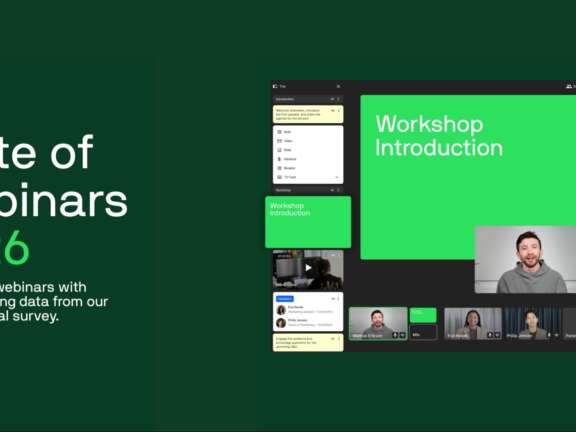
Webinar: Playbook For An On-Brand Webinar
This webinar will take you through the steps of making an On-Brand webinar in a single Workflow, with,
1. No Downloads required
2. Everything handled in one workflow from the TwentyThree Video Marketing Platform
3. On-Brand Invitations, landing pages, and registrations
4. Full engagement and performance data that can be integrated into Automation and CRM.
The playbook will take you through the full flow and show you how you can convert your webinar leads into actual sales/Business Value.
Category
WebinarsView transcript
Good afternoon guys, thank you for joining the webinar for an on-brand webinar. I'm so happy that you're here. And before we get started, I just want to quickly introduce myself. I'm Casper from TwentyThree Enterprise. And the agenda for today, and actually the goal for today, is to provide you with some ideas of actions that you can go ahead and use to make sure that your entire webinar flow is on-brand and creating the results that you want. So before going into three ways you can win with on-brand webinars, I want to just set the scene quickly. So let me move to this. And webinars is definitely not a new thing. It's been around for some time and what we actually see is that most marketers are using webinars today as part of their content strategy. Marketo shared some numbers showing that webinars is actually one of the main lead generators in their entire setup, which is really interesting and which is also actually part of the flow that we are seeing today. Where we have a rapid change from a textual to a visual paradigm. This paradigm change means that actually most would rather watch video than read text. We see that 59% of senior executives would rather watch a video than read a text. So this creates a huge potential in the way that we brand ourselves as companies. And it makes a huge potential in how we can actually personalize our brand because instead of reading text, we have actual people doing videos for the video. Every year we conduct a survey showing or taking the temperature of how marketers are using video. Last year's survey showed that the saying of you shouldn't do videos more than two minutes are actually still being used. So 54% of the videos that we had in the survey were shorter than two minutes. So the reason why this is so important in relation to webinars is that actually, now here's a lot of numbers, right? Videos longer than 15 minutes account for only 10% of the videos produced, but they account for more than 50% of the engagement driven by these videos. Whereas 54% is shorter than two minutes, only account for 10% of the engagement. So this means that we need to know the numbers of what visual content we are producing. And we can use it all the way through the funnel. So we can easily use shorter videos, but if our audiences are connecting more with longer videos, we should definitely account this in our plan as well. But doing longer videos and doing webinars also has a huge challenge today. So there's a big disconnect in the results that we're seeing in the webinars and the actual enjoyment that marketers have of doing this. Because 70% would not recommend the webinar tool that they're actually using today, which is a huge challenge. What we see is that most won't do this due to like off-brand downloads. So why do we need to download things when we're conducting a webinar or watching a webinar? This is a huge challenge for most larger corporations because we have these security policies, security setups. So we won't actually be able to download things. Hence, go into the webinar. So doing B2B marketing, this is obviously a big deal for you. Furthermore, we see that 68% of marketers conducting webinars are using up to five tools to conduct these webinars. So it makes the workflows almost impossible. And if you're not started yet, this can also be a big, great barrier of doing it actually. Lastly, it can be very hard to keep things on brand. Now, this is a percolate invite, and I don't know how this makes you feel, but it makes me want to disappear from the surface of Earth. If I signed up for a webinar and received this, I would much rather have a good experience with the brand. I'd much rather have something that I can connect to, that I can relate to. So this is why we decided that it was time to change this entire setup. That it was time that webinars was part of a video marketing platform. So we just released our webinar part to complete our video marketing platform. And now I'm going to share with you three ways that you can use these thoughts to create wins with on-brand webinars. So let's jump right to it, because the first one is actually in the invites. So when we send out these invites that we just talked about, why don't we make them on-brand? Why don't we make sure that we include some things that people want to engage with, such as a video? So when we include this video before the webinar, if this is a lead that we don't know, we already have engagement minutes. So we can drive two or three mails maybe with greetings from the speaker, just as I sent out to you guys who signed up for this. So we have the engagement, and we'll actually be able to connect this to the webinar. And we'll be able to connect this to the person that signed up to the webinar as well. Because using a video marketing platform will make sure that we have all of the engagement collected to the user. So in this case, this is me. You see which videos I engage with. You see that I signed up for the webinar. I actually clicked the video and watched it as well that was sent out. And I can include this in my full engagement scoring. Everything on-brand and everything tracked for engagement. So we create a great user experience. Which is really important. Second step and moving to the great user experience for of course still the audience. But even more so for the one conducting the webinar. Being such a huge challenge with many marketeers. So what we decided to do at 23 is introduce a tool that would have no downloads required. So everyone's speakers and attendees can log on without having to download anything. We need to provide a service where you can control every aspect of your brand and your webinars. So in this case for Rangoo, both the signup page, the signup forms and the on-demand page is on-brand. Furthermore, everything from emails to the webinar tool to the platform that you're distributing to. And the editing of the video afterwards can be done. Everything on-brand with your own play buttons. With your own logos. With your entire flow. So it's very easy to handle. And most importantly, everything is handled in one tool. So as we talked about, as I told you before, like many marketeers are using up to five tools in creating this. But now we gathered it all in the 23 tool. And we made sure that all the data could as well be integrated. So we have a full understanding of the webinar performance. Both before, during and after. Going into details in this, we'll see that we know like which are new leads signing up. Which are existing leads signing up. Where, how do they move in the funnel in terms of signing up. In terms of registrations and in terms of conversion rates that we see on our page visits. Furthermore, we have all the on-demand engagement because we put it on our own 23 platform afterwards. So we have the full funnel view. We have full integrated data that will go directly into our lead score. Or a marketing automation. Whatever stack we're using today. For the experience, let me just jump back to the production window. Which I'm actually looking into right now as well. This is from the test rehearsal I did yesterday. Just to see if everything was up and running. And what you'll see here is I have my own picture. I have my presentation. And I have a second cam. I can just push any one of these and I will change the view. So when I'm sitting doing this. I can obviously change the view to, in this case, myself. Hello. And I can change it very easily back to my presentation. Furthermore, what I can do is I can control all speakers going in. So I can see everyone. Now it's only me speaking. I'm sorry about that. But you can see all speakers coming in here. You can see all audiences. And you can see all chats and questions being put in by audience. All this data will, of course, also from the questions be put into your marketing automation. And your lead scoring. What I can do more is I can play videos from my video library. So in this case, I can just go in. And I can choose any video that I have uploaded on the platform. And do intros, pre-rolls, exit rolls. I can do even pre-recorded webinars in this way. I can, of course, share my screen as I just showed you. But I can also add the second cam very easily. I just press second cam. I go to 23.net slash cam. And I put in the six-digit code. And I'm online with my mobile phone or whatever extra cam I want to use. If I want to have more cams or a fully professional production in this, I can very easily add these setups as well. So I have everything integrated in one flow. I have all the production things I need integrated in one flow. And it's very easy to conduct these webinars suddenly. Once we conducted the webinar. It's very important. Like how do we make sure that our webinar, that our engagement minutes are transformed into actual business. And there are multiple ways of doing this. Of course, the obvious one, which is so effective, is putting it on demand. So you have your own video hub integrated part of your website. Or you use embeds from your video marketing platform to set these on demand. Like Hint is doing here. It can be done very easily. By putting up the videos. And once I press play, in this case, I'll be met by a collector on brand. I can put in every consent, everything I want people to acknowledge before going into the video. And furthermore, I will afterwards, the webinar, keep collecting leads. I'll keep upgrading their engagement score. And I can see exactly how they interact with my brand and the videos that I'm creating. But how can I actually turn this into business? It's a question that we get a lot. And it's very relevant. And I think it's one of the key takeaways that you can use very easily after this. So I did this, sorry, childish drawing of how we can conduct a flow. So once we have our on brand webinar done, why is it that so many companies don't use the relation that we created? So when I've been speaking to you for 10, 15, 20, maybe an hour, and you've been listening, why don't we use this relation? Because we're trying to do it. We created a relation somehow. We created a branded trust. And in many cases, people are using webinars as education. So why don't we use this educational stuff, this relation, to transform it into company value for your viewers and for your company itself? This can be done, for instance, by setting up a flow with everyone participating in a webinar, sending four personalized videos from the speaker. Just as I did in the signup flow. You can do this. You can say, hey, thank you so much for being part of the webinar. I'd love to show you how we can help you with this going ahead. Or I have some ideas that I just quickly wanted to show you. So once we have the speaker and we see this guy or girl, it's very easy to create this relation, to use it, to say, hey, now we've done this. Would it be interesting for you to know how this could look in your context? Or I have this case that I want to show you. And once we send out four of these, it will be actually like taking the gap between marketing and sales down because we will start creating engaged leads that are actually interacting. So once someone replies to these emails going out, we have an SQL book or the SQL or whatever you call it in your organization. So we have an actual meeting booked. But as long as we're using a video marketing platform, we can track the engagement. So now we know if someone just engaged but didn't reply to this, and we can send them out a personalized video. Sorry. So we have the SQL here and we have the engagement down here. So we can send out a personalized video. So what would happen if I engaged in, like, invites, if I watched an on-brand webinar, if I saw some case stories, and then suddenly the speaker comes up saying, hey, I have this thing that I need to show you. I'm on your website here. I'm just going to give you a few examples of how this could create value in your business. How would that make you react to a webinar? How would that actually create value in your business flow as well? We're doing this a lot, and we see a huge effect on this. So one of the things that is very important when we talk about this is actually when we start using emails or GIFs, sorry, videos or GIFs in our emails. So both in news and in the web. So we see that in the newsletters, in this case, we see that they started exchanging the pictures in the newsletters with GIFs, and they actually saw their click-through rate go up with 62%. Red Cross just did a similar test, and they have even more people in the videos and saw an increase of CTR of 80%. That's insane. Eighty percent just by using, like, live pictures, small GIFs that's animated. So people want to watch the video that you're sending out. People want to engage with this. We can do the same in this follow-up flow. We can put in, like, the sales video here. We can do whatever. So it doesn't have to be only for a follow-up or for newsletters. It can also be for the entire webinar flow. What is very important in this when we're talking about generating business is that we actually are able to transform this engagement to our own sites. So the conversion won't go to, like many does today, sending GIFs. Today, sending videos and people to YouTube. This is great when we talk brand awareness. But in the case that we talk conversions like this, we need people to go on our own sites. We need to go on our own user journeys, on our own personalized flow to make sure that we, like, maintain this relation we have to our leads and our customers. As well, we need to make sure that every engagement is tracked. So all this data, both from the CTRs and the video views, are tracked back to the user profile. As I showed you before. And in the case of the webinar, we already know this person because they signed up for the webinar. So we have the data and it's very easy to integrate this into our entire leads or automation flow. So three takeaways today would be that video is a unique way to personalize your brand. It can be used in every part of your business, not only in webinars and sales and marketing, but also in your business. But also in customer service and customer success for management, reporting, all these things. And we can use video both as an internal and an external thing. So we can create these sites. We can create these embeds. That's always tracked so we know how users are engaging. Furthermore, we should own the experience. When we're doing webinars, we should own the experience. It shouldn't be these off-brand invites. It shouldn't be these off-brand webinars with downloads, with quotes. It should be totally on top of our brand. It should be a great experience because we want to create this personalized content. It should be an on-brand experience all the way. And we should collect all the data. And as a third, to do this, it's a very easy solution is to use a video marketing platform. Use any. As long as you use one, you'll know how your videos are engaging. You'll know how your content is performing. And it will be very easy for you to create the right content. In terms of what people visually want to engage with. And it will be very easy to integrate this in your entire lead scoring. So obviously, we have the full platform. Now we talk about webinars today. But the other parts and the other interactions is just as important. So that we can run our videos everywhere. When we do webinars or videos, that we can distribute them to all social channels. And use this brand awareness. So we put it on YouTube. We put it on Facebook. We put it on LinkedIn directly from the platform. So we get native reach. Furthermore, we need to power our videos. So once people are on our websites, no matter if it's a hub or an embed, we need to track everything. We need to stop sending people to YouTube or embedding YouTube clips when our objective is conversion. Because we need to know this engagement. We need to create relevant user journeys. So we need to collect all the engagement. And we need to figure out which videos. Which visual content we're producing. Or at least seeing how our videos perform all over the floor. But where this becomes like a huge, huge effect in most businesses is when we start to integrate this. So video is not the only thing for many companies that people engage with. But it is a crucial part of it. So we need to engage this in our full lead scoring. We need to engage this data in whatever we're doing. In our entire business. Marketing, sales, customer success. Whatever it is. Because people are not doing business with silos anymore. People are doing business with actual businesses. And they want to be treated this way. They expect it just as we do ourselves. So these were the words for today. I hope that you found it valuable. And that you now have some actions that you can go ahead and use. If you have any questions to whatever I told you today. Or anything else in this relation. Please let me know. Reach out. Put it in as a question in this webinar. And I'll be sure to answer all the questions coming back to you. Furthermore, if you want to see how a video marketing platform performs in your own context. Reach out to me and I'll be happy to use the time to take you through it. Those were the words. Thank you so much for your time. And I hope to see you soon again. Bye.


