TwentyThree Summit 2025 Keynote Summary
Watch the highlights from the opening keynote of the TwentyThree Summit 2025 in this condensed summary. Hear from our CEO and co-founder Thomas Madsen-Mygdal, CTO and co-founder Steffen Fagerström Christensen, Head of the Accelerator team Dan Duffett, Melina Shannon-DiPietro (Executive Director at MAD Foundation), Maurice Smits (Internet and Online Marketing Specialist at GEA Group), and Casper Willer (Creative Director & Partner at Kontrapunkt) as they share insights and set the stage for the event.
Category
TwentyThree Summit 2025View transcript
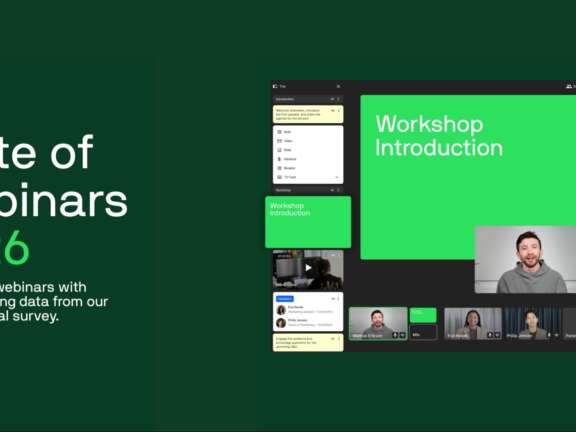
I wanted to introduce a little bit the idea of the paradox of video and the challenge of video where we are just now. When we look at the marketing spend, people spend about 26.6% of their overall marketing investment in tools and the rest on advertising, the team and agencies and services. But when we look at video, we see it be 1 or 2%. And that's paradoxical because video is this amazing paradigm, one of the biggest paradigm of our times. So one idea for you as change makers today is that we really need to look at video as being perhaps not only about video at this point, but also about fixing some of the core challenges of digital. We've spent about 30 years in digital, removing all the human beings. I can buy anything at any point in time, effortless, transactional. So the theme of the TwentyThree Summit this year and also a theme I want you guys to think about is that we are in this great rebalancing where we removed all the human beings. And it's not that we want to throw away all the great benefits that we got the last 30 years, I guess. But we're really in this kind of great balancing of trying to get the human side back again, right? The first one today we want to announce is a concept of strategy. So if you look at every other field in digital, and almost every other field in business, there's a strategy. And the last six months, our team has been running around trying to find somebody that had a video strategy. They had digital strategies, they had social media strategies, they had content strategies, some of them even had AI strategies. But we have failed so far to find a single company that had a written down video strategy. Today we are open sourcing an all new video strategy framework to give you the tools, tools to build a video strategy and go back and implement that in your organization. To expand on what Thomas has said about the video strategy, over these six months I've been working with clients and partners and looking at that need for the video strategy. And we distilled it down to these six pillars. And what we felt was using these pillars, we would give change makers all the tools if they workshop it around it, the data and the insights with which they could create great video strategies. The second thing I want to talk about is a topic very dear to our hearts at TwentyThree. And that is Europe. At TwentyThree, we are hosted, built and owned in Europe. The TwentyThree cloud runs 100% in Europe. And we're checking off all the things you can from ISAE 3000, European Accessibility Act, ISO 27001, DORA, and soon the European AI Act also. But I'm also proud and happy to announce today to you that a few months ago, we started a project to be 100% only using European vendors. We're far along on the road to really be a strong Europe. Today we're announcing a world's first, which is live webinar spots. So for a long time, our webinars have been on third party vendor based landing pages, totally segregated from the rest of the experience. So imagine that your website had all those webinars on it, you have your website, and the minute your webinar goes live, it starts running a preview of the video feed. So suddenly, you can move your website to be live and be active instead of all your webinar activities sort of being somewhere on the side. That's number one. Number two is really about developers. And at TwentyThree, we love developers. But for a long time, our developer tools were really old. And that's because we actually built it many years ago, with a huge effort we worked on the last year to really make it first class developer experience to build video driven websites with all the tools, both from a design perspective and from a code perspective. And also we have it to announce that we also now are running version control and developer sandbox so that when you have 40, TwentyThree accounts, running across your global organization, and you're you're developing a new element, you're not sitting doing it in a live environment. So we are doing all the components to really move the developer experience up to what you would expect in 2025. So we've been building a new web page with with spots and with live spots from TwentyThree. So you can kind of see the same pages, the same stories, but we actually using all of our assets, I'm basically making sure that all the assets, all the selling all the engagement, all the customer stories that we have as a company actually get to be displayed in the page. So this is a really easy way of getting getting your content out there. So I can put in new content into the page and actually have that live updating across. So all of the changes that you're making go directly out into pages, all the webinars that are going live can actually now be seen by the people. So that kind of combats the fatigue of kind of that webinar that just lives in a corner that needs to be promoted and doesn't actually hit your front page. So that's a quick demo of the web studio in TwentyThree. To show you what it means to actually really have a video video driven website and really be video driven in your overall strategy. We are working with an incredible organization that we're happy to announce today. The world's best restaurant Noma has an incredible think tank to try to lead the way on food culture globally sustainability. And what we think about doing every day is working with people in hospitality to dare for a better future. Thomas and the team got us thinking about how video can accelerate change can accelerate our impact. So now on our website, you can see 190 videos from some of the best chefs, scientists, artists, academics in the world, thinking about the connection between food and the world we want to build to the future. Let's talk a little bit about webinars just before the summer. We did the sixth release of our webinar product in 2018. What feels like a very long time ago, we launched our webinar product as the first second generation webinar tool, one that didn't require software to produce and one that didn't require people to download software to experience it, the webinar. And mind you that these might still be very big innovations because most of the products that are used today for webinars are still trying to drive people to download software. And we still love webinars. We know some of the biggest brands in the world have been built on it. We know it's the big change. And that's also the paradox of video that just webinars alone is such a big field. With TwentyThree Webinars6, we are dialing up a bit more to really move webinars into being up to par with everything in the digital world and not be stuck in a video conferencing webinar world. The first thing we have is action cards. So you can now put action into the webinar, kind of imagine it as kind of live shopping style. You can put forms in, you can put collectors for feedback. You can drive clicks with small images and banners linking to something people could buy or something people should be driven to. Where before we've only thought about webinars as engagement. So now you can really drive the results. We've also worked very hard on trying to generate content from your webinars. Last year at TwentyThree Summit, we launched all the features to do automatic clips out of your webinars immediately after. Something we all know we need to do, but we often don't do it because it's a very manual and tiresome process. Then we waited a day or two and then we forgot what the good pieces in the webinar was, right? So now every time you've had your webinar, we will automatically start generating a suggesting content that you can do. You can do a blog post, LinkedIn, social articles, different formats, whatever you want. We're also with Webinar6 doing live transcriptions. We've also got a lot of solutions, AI driven so that you can have the live making everything accessible. Also being able to translate it into 27 languages instantly. We also worked very hard on fixing the production experience because as any one of you know, sitting, producing a live webinar can be extremely stressful. You're using some software, a webinar product. You have sort of a script often printed out on A4 paper. You probably have some slides and videos you want to run. And then you're going to put this all together live together with audience participation, a lot of going on. So with focus mode, we're making it possible to do a second screen that you can set up the way you want it. You can imagine a little bit like you would set up your slide preview or if you're doing a presentation. So I'm really happy to announce that yes, we are now doing webinar series. You can do recurring webinars. You can do episodic webinars. You can do time-limited webinar series. And obviously the key here is you're building an audience or you're building evergreen content by making a masterclass of three webinars that are going to be packaged together, right? All kind of podcast style, episodic webinars, or you can set up a recurring webinar on your website that just keeps rolling, right? The introduction to the company product. So it's really simple. You just do it as if you were setting up a normal webinar and you can obviously template them and do all the other elements you can do in the webinar product. Action cards, it's beautiful. Now we can, how do you say that? Feel the water during the webinar with action cards. The hocus focus, I call it. We mostly run our webinars with two hosts. And with this focus second screen, I think we really can now start focusing on the job at hand. So one looking at chat and what's actually broadcasted. And the other one is involved with the speakers and make sure that everything runs on time, right slides are up, etc. So, it's a really good thing. The last thing we want to talk about is something we call the video brand If video is 50% of your engagement it means that 50% of the brand experience is is a little bit like this if you are somebody that cares for your brand cares for standing out cares for building beautiful things then to see it be thrown into these environments and that being the experience of your company and your brand is obviously not something that we should be accepting And the video brand is really not something we should be accepting. You know, branding from the existing elements, classic kind of branding. Video brand is all the other parts that are about video. All the touch points, all the end elements, the whole experience of the webinar room of a video player and all the creative components to also make your video brand at the end of the day. So the video brand is all your elements that you can brand any way you want. Colors, feel, motion. Today, we're also introducing another all new product element, which is the brand studio. So within the TwentyThree Exchange, you now have the capability to define your video brand and all the elements. Build a brand book for your video brand, connect all the elements and also easily deploy them across your organization when you make updates to it. There's no doubt about the fact that video and motion are absolutely essential to the brand systems that we create. And that is why we are super excited to to duck our feet in this experience that Thomas explained. The whole notion of having the brand identity embed every pixel of the video experience. We wanted to finish off a little bit on AI because we love AI and all of you love AI. We already have a lot of AI features, AI transcription, AI translation, AI webinar content generation, AI live transcription in the product. We're also introducing a content studio, which is your playful, explorative environment to start thinking about what those 500 or 1000 video and webinar elements in your TwentyThree account can be used for. You can select a selection of videos and webinars, one or many, and you can then explore what types of content it can create. Articles, LinkedIn images, blog posts, etc. Because you have all this data already sitting in there. Today, we're happy to announce an all new video app framework to make it as easy to build video apps as it is to build all the web elements. Until now, it's been for the few, the big platforms that can build video apps. But now everyone with a little developer love and a little bit of design can easily build a video app. It could be for all your customers, it can be for a partner channel, you can start imagining all kinds of different contexts. The video app has both your video and your webinars. So you get a push notification when you have a webinar and you one click in the app to experience it driving higher participation. It can be a standalone as an all new app. If you have a lot of content and a big content strategy, this is probably where you want to be going. If you already have an app with a lot of users, you can put the videos as a section into the existing app you already have. That was the TwentyThree keynote in 2025. We're building an all new team with the video accelerator team to drive the craft and the practice and the methods forward with the video strategy framework. We're doing a big push on the video driven website, making it live and video driven. The video brand allows you to brand that other half of your engagement that currently isn't branded. Webinar6, the content studio and the video app. Thank you.


