With webinars and live events being a big part of the new era of digital working, a lot of us have had to face the new reality and step in front of the camera to run online events.
With over 15 years of experience in hosting, moderating, facilitating, co-founder of Boom Chicago, Pep Rosenfeld, has discovered the power of improv as a useful tool when it comes to stepping in front of an audience - whether online or offline.
Join us for this episode of Webinar Wednesdays to learn:
- How improv can help you become a stellar host (online & offline)
- 3 improv techniques to get you started
- How to claim control over the conversation to assure an engaging interview
So whether you are getting started with hosting webinars or want to learn how to become a better event host, tune into this episode and learn everything from the expert!
What is Webinar Wednesdays?
We have set out to change the global mindset surrounding the webinar landscape. In the series 'Webinar Wednesdays' we'll share our journey of how we are creating a webinar program from start to end. We promise you full transparency and include both our success stories and failures along the way. Our aim is to inspire marketers to develop and create more engaging webinar programs and formats. You’ll be hearing from world-class experts, people who have been paving the road of webinars as we see them today.
If there is a certain subject that you would like us to cover, please reach out!
Unlock the webinar
Thank you for signing up.

You are signed up for this event.
Speakers
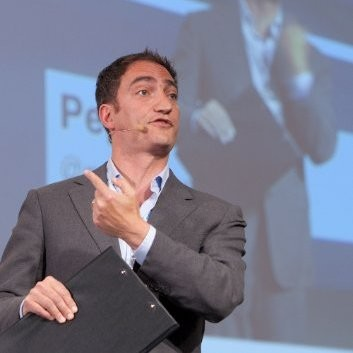
Pep Rosenfeld
Pep Rosenfeld is Boom Chicago's creative multi-tasker: Writer, performer, director, trainer, stand-up comedian, public speaker, host and facilitator.
This creative American loves to make comedy about current events and politics, and is a passionate user of technology. He hosts a lot of technology related events like The Next Web and the Accenture Innovation Awards. His writing on America's long-running television show, Saturday Night Live, was nominated for an Emmy.
Unlock the webinar
Thank you for signing up.
You are signed up for this event.
View transcript
Hi guys and welcome to Webinar Wednesdays. My name is Vilhelmiina. I'm the Webinar Program Manager here at TwentyThree and also the host of this webinar series. For those of you who have not joined Webinar Wednesdays before, welcome. This is a webinar series where we talk everything related to webinars. And for those of you who have joined us before, welcome back. So in today's episode, we are talking about how to leverage webinars, sorry, improve to become a great webinar host. And that can be whether you're hosting online events or actual physical events. And to tell us more about the topic, we have founder and CEO of Boom Chicago, Pep Rosenfeld, joining us today. Welcome, Pep. Thank you. Thank you very much. It's Webinar Wednesdays? Yes. I thought it was Taco Tuesdays. I really prepared my famous taco recipe. I was ready to go. Perfect. We can hear about that later then. And before I give the floor to Pep to introduce him more. And to tell us what we're going to be hearing today, just a few words about what we have on the agenda today. So today we'll get to hear from Pep. We're going to do a bit of housekeeping so that you guys know exactly how to engage with us, how to cast in your votes, how to ask your questions. Then we're going to deep dive in the interview that we have kind of, we have had some thoughts with Pep. And we'll have a lot of polls also because we want to hear from you guys. What is it that you are or how are you relating to the webinar? How are you relating to the topic of the day? Then you get to hear the wonder of the week, which is a new segment that I'm introducing to Webinar Wednesdays. And you'll get the 99 second tip of the week from Pep. And then we'll be finishing off by talking about what is up for next week's episode. But to get started, Pep, welcome. Thank you so much for joining. And maybe you can kind of tell us a bit about yourself and yeah, what is it that you do? Sure. Sure. I'd be happy to. I'm Pep Rosenfeld. I'm the founder, one of the founders of Boom Chicago, which is a comedy theater here in Amsterdam. I'm saying here because I'm in Amsterdam, wherever you are. If it's Amsterdam, then here. And we're a theater that I don't know if you've heard of us or not, but we started about just over 25 years ago when a buddy of mine and I were doing this very American thing that we Americans do, where we went to Europe and we went to all the cool cities in Europe for like two days each. And then, you know, then we were like, we've done Europe. And then we moved back to America. And usually, you know, you stay in America, you rip up your passport, you never leave again. But we did something kind of un-American. We fell in love with Amsterdam. I mean, not for the reason you think. It was for the drugs. So we moved here, decided to set up a comedy theater. And then just sort of little by little, it grew to be one of the longest running comedy shows in the Netherlands. And, you know, I get to, you know, travel around. I used to travel around. I used to sit comfortably in this chair and Zoom teams and Cisco WebEx around. But one of the big things I do is host events. And I was hosting them face to face in person until they stopped. And, you know, in March, I had such a full calendar of stuff to do. And then it just literally ended. But now we've found a new sort of pivot. I hate to say pivot because it makes me sound like that guy who says pivot. But we've sort of pivoted to digital. That's even worse. That was worse. But so we're doing a lot of digital events now. And, you know, something else that I do is I work on teams, leadership teams or groups of people working together, whatever. We use improvisation techniques to help people work together better and communicate better. Used to do that face to face. But now we do that digitally as well. So it's been a real learning process. But I guess at some level, that's what improvisation is all about. It's working together with folks and making something new out of a good idea and your willingness to try it. Perfect. I also want to say I'm not the CEO of Boom Chicago. Sorry. No, we don't trust me with the CEO title. I'm the director of content. So everything that we do that's funny is my responsibility. And everything that we do that's not funny is someone else's fault. That's a big responsibility there as well. Yeah. Perfect. So I'm very excited to hear more about how can we actually start leveraging improv because I think a lot of people have had that kind of happening now of having to step in front of the camera. We've seen a huge increase in the events or online events happening. So how do you become better at hosting events? But before we dive into the topic, just a few housekeeping points. So on your right hand side in the upper corner, you have the questions tab where you can send all of your questions to us. We are going to be answering them as we go. So make sure to send them. And this is a great opportunity to ask anything you want from Pep. I mean, with reason. Come on. With reason. Yeah. And then also on your right hand side, but in the lower corner, we have the chat function, which I see that some of you have already kind of taken over. So feel free to use the chat to exchange ideas, say hello. And I thought that maybe we could just try it now. So if you can tell us where is it that you're joining us today from where in the world? So I'm just going to go ahead and say hello from Copenhagen here. And Pep already said that he's actually joining from Amsterdam. So let us know. Some weeks we've had extremely international crowd here on Webinar Wednesday. And as always, we want this live session to be as interactive as possible. So we have prepared some polls for you. And I want you to go in your right hand side and cast in the votes when I tell you that a poll is live. Because we want to hear how are you guys thinking about the topic? What are your struggles? What are your thoughts? So make sure to go there and vote. It's great to see we have Jennifer from Amsterdam saying hello. Matt from Aarhus. Lucas is joining from Lithuania. Christian from Copenhagen as well. So from all around. And the last question is always will I get the recording of this? I want to mention it straight away that yes, you will. So do take notes. But don't worry if there's something that you want to rewatch. You're going to get the recording after the webinar today. Yeah. Make sure you take accurate notes. Wait, do I see somebody from Iowa? Bridget, I was born in Iowa. Iowa City, Iowa. Lived there for six months. Okay, nice. And we have Aykan from Turkey and Brian from Ohio. So very international crowd today. And actually I want to get started by asking all of you a poll to kind of understand if you have actually hosted any events before. So we kind of get an understanding of what is your relation to the topic that we're talking about today. So question is have you hosted a webinar, online event, virtual conference? Doesn't matter which one. It's something that is happening online. Just take a few seconds to cast in your votes. We have options A and B. We have options A, yes. Option B, no. And option C, you're not sure. If you have a bit of a blurry mind. So go ahead, cast in your votes. If you put not sure, then there's something weird going on. Then you need some help with your drinking problem. Perhaps, yeah. But I thought that it's still important to have it there just in case. All right. I'm a little suspicious though. While we wait for everyone to cast in their votes, Pep, I'm curious to hear how long has your hosting career actually been, both in the online and offline world? Interesting question. I think it's about 10 years now. I think that what happened is we're doing comedy shows here and we're doing work with companies. And there was an event here called Picnic. And it was sort of a fun tech slash business event. And the host was sick. And so they called me like at the last minute, like, I don't know, five days beforehand. Hey, could you come in and do this? And, you know, with a mix of being a quick study and a willingness to improvise, I was like, yeah, yeah, I'm sure I can. So I did it and it was super fun and it went pretty well. And then the like a month later, the host of TEDx Amsterdam was sick. And they called me like four days beforehand. And this is such a high stakes event for the TED people who, and I don't want this to come out wrong, take themselves very, very seriously. And so they were, it was a super high stakes for them. But for me, it was like a fun, cool thing to do. And that went well. So for like a month and a half, I was the go-to guy if the guy got sick. It turned out I was pretty good at it. And I've just done more and more hosting gigs along the way and it's become something I'm pretty good at. Perfect. I guess you have to start somewhere. And that B option is always a good start as well. You got to take what you can get. Exactly. Remember when you got the big break in the, hey, can I ask a question? But when you keep telling people to do stuff on the right side of the screen, you're using your left hand, right? Yes, exactly. Because it's mirrored. That's pretty good. I'm impressed. I've learned that. But I've closed the poll now. So let's look at the results. 75% are saying that yes, they have hosted something before. So that's good. That's great to see. We have 22% saying no, maybe you're here to learn because you want to get started. So that's a great place. And then we do have the 3% who have actually, they're unsure if they've done it or not. So interesting to see who those people are. If you have any thoughts or if you are part of the 75% who have hosted events online and you have any struggles, this is your chance to really ask your questions and get some amazing knowledge and feedback from Pep. So do chat and do send us your questions this way. But I think otherwise now it's really time to get started. And I wanted to tell you that maybe like a month ago or so, Pep, when we called you and we talked about the topic, you actually mentioned that you hadn't done online events hosting back then. But then you said that, okay, if you call me a month later, it will be very different. You would have already kind of dozens of people. You would have already kind of dozens of events under your belt. And I feel like that really symbolizes the explosion of the online events that we've seen. What's your take on all of this? Well, I mean, I think you just said it actually, which is I think in mid-March, everything dropped out and nobody knew. Is this going to be a month? Is it going to be two months? Is it going to be forever? So nobody knew what to do. And I remember in our company here, we had an internal conversation about should we be trying to do this? Is market be already doing this? Or there's some risk associated to do this yet. So, yeah, you're right. I mean, I think people have realized this is what it's going to be like for a while and have jumped on it. So so we've gone from zero to, you know, 100 kilometers per hour in a very short period of time of realizing digital events can work. Yeah, absolutely. Before we continue, we have a second poll here for the audience. But in terms of when you are hosting webinars, what is actually your role in those to kind of get an understanding of? Are you in front of the camera? Are you behind the camera? So just go ahead in your right hand tab in the engagement tab. You can find the poll and you can cast in your vote. So now let's just be clear. If you're one of the 25 percent that said you either have never hosted one or you don't know if you've hosted one. This question is not for you. It's not your dream journal where you tell us what you want to do. You just sit back. You sit this one out. Very, very good point. So we have a few different options there. Is it that you're doing the hosting of it? Are you the producer? Maybe you're behind the camera making sure that everything is happening smoothly. Is it option C that you're a speaker? So perhaps you are doing some collaborative webinars where you're just in the speaker role. Are you in the moderator role? I have my colleague Steena today who's helping me as a moderator. So if there's any kind of questions, she can she can be chatting in the chat so that I can just concentrate on having this great conversation with Pep and you guys in the audience. Or maybe it's a mix of all of the above, because that's also very much what we see being the case that people are taking many roles. Same same goes for me as well. So go ahead and cast in your votes. Maybe Pep, you can say, are you mostly the moderator? Are you the speaker? Or what is the role that you feel maybe the most comfortable in? Well, I tend to do one of two roles. One of them is hosting the event and then, you know, it's a bit of introduction. It's a bit of making sure the speakers work well, if it's being ready in case something goes wrong. And then occasionally I'll come in and just give a keynote. And I'm not going to lie. I mean, coming in and giving a keynote is a lot less stressful than running the whole day and being on call. In case something goes wrong. So I'm not going to I'm not going to look you in the webcam eye and say, oh, no, they're both the same. No, no, no. It's it's you know, right today I can I can put my hand any direction I want. But you you've got to use your left hand to just you know what I mean? Absolutely. It is it is juggling. And I remember at the beginning, it felt like a lot of things to do at the same time. Maybe in the same way when you're learning to drive a car, it feels overwhelming to do everything. But then it becomes so automated. Now I kind of know it's the left hand that rises. Even though you want to be fighting the right. Yeah. But the poll is now closed. So let's look at the results we have. The majority is actually saying that they're doing a mix of the above. And to be honest, that does not surprise me. I think that's usually the case when it when you're working organizations, you have to kind of wear many hats at the same time. But 14 percent are saying hosting and whichever is your role. I think you can still gain a lot from this, whether it's for yourself. Or for your team or for a specific colleague that you're here to tune in to to learn from. But in terms of talking about improv and hosting today, we're talking about how can you actually leverage improv? Maybe you can tell us a bit more about the world of improv for those of those in the audience who don't know that much about it. What why is that? Why does it go together with the hosting? Well, sure. So I think a lot of times when people think of a comedy club. They think of stand up comedy and stand up comedy is great. But stand up comedy is, you know, sort of one person on a microphone and they're telling jokes and that's and they've written it down. And if they're real good, they say it as if it's off the top of their head. But it's a it's a well rehearsed every pause. Every gesture is preplanned if they're a good stand up. So and that's what people think of mostly when they think of a comedy theater. But improvisation comedy, which is a type of theater that they really got its style. It started in Chicago, which is why we call it theater boom Chicago. Improvisation comedy is the art of making up new comedy on stage based on either ideas from the audience or ideas from each other. But usually it's a team of improvisers between two and eight people and they're working together. And when one person gives an idea, the other person will build on it. You build scenes and characters and songs. And it's it's really all about being in the moment. It's about focusing on each other. And I'm what's going on. And it is about being willing to listen to what you've heard. Say yes to that idea and then build on that idea. So one of the core rules of improvising we say is yes. And you have to say yes to the idea and add to that idea. I think that's great for hosting because, you know, if if if if you're a good host, you're not just making sure everything goes according to plan. But you're responding to things as they come up. You're responding to things. The speaker says you're responding to things. The audience says you are. You are taking the information on the table and sort of weaving it together in a way that makes sense and hopefully is more entertaining than if nothing happened. There's something else I'll say about a lot of events is that, you know, the best speaker in the world is the best speaker in the world. But not every event has only the best speaker in the world. Sometimes you get those speakers that are a little slower and the energy goes down. It's a lot of charts. And then and then it's great if your host is not just an energetic improviser. But but it's someone who can move things forward. Take what was just said. Tie it again. Tie it up with something that that was said earlier and just sort of make it more fun. Give it a through line. Improvise based on what's happening. Perfect. We have in the chat always saying, can we speed up, please? I feel like everyone's eager to get to the very concrete point. So next question is that we promised the audience kind of very three concrete tips and tricks of improv that they can start leveraging. So we can dive straight into those. What are your suggestions of the tips that you can start leveraging from improv? Sure. I'm going to tell you, though, that I think the first the first tip I would give any host of an event is it's not an improv. It's not an improv role, though it kind of is. And that is to to be prepared. You've got to know the topic. You've got to know what's happening. You know, you're improvising along the way based on what happens. But you're not making the whole day up as you go along. Typically, if you're hosting an event, it's got a tight schedule. And, you know, look at you. You keep looking down at your notes and you're making sure we're on track. Like it's a lot of juggling specific details. So you've got to be able to take like one part of your brain and focus on that and let the other part go free to make stuff up. So the best thing you can do to set yourself up is be prepared. Figure out what the best system is that works for you. Is it a clipboard with notes? Is it I use my tablet. But you know what? The shows we do at Boom Chicago, they're not all improvised. We have like something that's written and then improv and something that's written and then improv. And I always consider what's written are those tent poles that hold up the tent. Now, sometimes the improv is a beautiful tent, but, you know, you have to be ready for it to sag and then build it back up with another tent pole. So tip number one, I think, is is is be prepared, is is know the information better than anybody else at the event knows the information. They should know the information. They should be coming to you for questions. You shouldn't be going to them. Number two, I would say, are the key rules of improvisation. And one of them I said, which is yes and, you know, always be willing to build on what's what comes before. But the other one is active listening. You can't you can't not listen when you're hosting and you have to listen with the goal of taking in the information as hungrily as you can so that you've got it and you can use it. Active listening. It's it's it's the best thing you can do as a host. It's the best thing you can do as a conversationalist or, you know, like I always say that the improv tricks also are great if you're hitting on people at a party. Because the best thing you can do if you're talking to people at a party is listen to what they say and then use that information later in the conversation. That's that's improvising. It's just we call it a conversation, but that's improv. It's using the listening, hearing it, taking it in and then using it later in a sort of funny, fun way. That would be that would be tip number two. Tip number three is you got to be engaging. You can't you can't just be reading stuff as a list. You've got to do your best to have a conversation with the camera the same you would have way you would have a conversation with an audience. And that's not always easy to do, you know, because you don't want to look at the camera. You want to look at your notes. You want to look at the chat. You want to look everywhere else but the camera. And the thing you've got to train yourself to do if you're hosting a webinar, I believe, is train yourself to look at the camera, speak at the camera and be engaged with it. And the other thing and this is still part of tip three. So it's technically still a third tip is is part of being engaged, I think, is being willing to show your emotion. You know, you can't you can't just be a robot. You can't do your human version of A.I. You've got to be willing to show your emotion. And I've got a. I've got to try later, but about being emotional into the camera, we do that whenever whenever you want to. Yeah, I think we can we can just continue with that. I think it's a I actually asked to have some kind of exercise that we could try out here. And you mentioned that usually you would kind of split people up into some breakout rooms. But let's try as all in together. I'm ready for your exercise. All right. Well, that's great. Well, then then then the thing I would I would I would ask people to do if if if if this was a more interactive format is to turn on your mics and turn on your cameras. I obviously can't do that. So what I need you to do is promise to play along. You've got to do this with me. Otherwise, it's just some poor guy looking like an idiot. But if you all do this with me, well, then we'll have some fun together. So so here's we're going to do. We are going to count to twenty one and we're going to count out loud and kind of slowly. But you're going to count sort of loud and yes, slowly and bold and proudly. And it should be loud enough that if the people in the next room think it's weird what's going on. All right. Thank you, Jane. All right. So we're going to count to twenty one. But then every three numbers, I'm going to ask you to stop and we're going to continue the different emotion. So first, we'll just do neutral. First, we'll just do neutral. OK, so we're going to go one, two, three, but neutral and one, two, three. And Vilamina, if you're representative, then they're doing great. You've nailed neutral. Next time you have to host an event, a webinar for all robots in the audience. You know what to do. Go neutral. All right. Now. Now we're going to goose it up to happy. All right. So so four, five, six happy. But look, I can't I can't judge you because I can't see you. But wherever you are, really be happy. Put the happy in your face. Put it in your upper body. Put it in your voice. I really want you to give off happy as we count four, five, six. Vilamina, you're going to represent us all. All right. So here we go. And four, five, six. That's good. That building that was that was that was drug test. Good. That was really good. That was pretty happy. I'm impressed. We're going to go seven, eight, nine. I want us all to go angry, angry. The favorite emotion of nobody's favorite host. But we're going to do it everywhere. Anyway, we're going to go seven, eight, nine. Angry again. Everywhere that we can see you're angry. Your feet can be fine, but upstairs you're angry. And here we go. And starting at seven. Seven, eight, nine. Oh, that's good. That's pretty good. I was angry. That was angry. It seems unnatural for you seem like a naturally not angry person. Yeah, that one needed some work. That's all right. But I want to say now. So here's some I did. And I don't know if you all did it at home. But sometimes when I'm angry, I kind of lean into the camera. And I just want to say that when you're hosting a web thing, you don't have much of a stage. I mean, this is the stage. But you do have a little bit of this. I mean, don't you know, it's not a rap video. Don't do this. But but but you can definitely lean in to help make a point. Oh, see, that was seven, eight, nine, ten, eleven, twelve will be afraid. Now, usually you don't like to show fear. Right. But I think sometimes if you can show, you know, you empathize with a speaker or you empathize with the audience. Sometimes fear goes a long way. So it's going to be 13, 14, 15. No, I don't know what number I'm on anymore. I've totally lost count. Me too. Chat. Are we on? Are we on 13, 14, 15? Or are we on 10, 11, 12? I think 10, 11, 12. Yeah. Yeah. I need that. I want the chat to answer. Come on, chat. Help me out. Chat. Where are you, chat? Come on, chat. Where are you, chat? Or is everyone lost? I guess 10, 11, 12 is. 10, 11, 12. We're going to do. There you go. Thanks, Brian. Thanks, everybody. I feel better. I feel better already. That might just be the natural delay in the chat. Yes. All right. 10, 11, 12. We're scared. And here we go. And 10, 11, 12. 10, 11, 12. That's terrifying. It's just like I was scared when I lost count. And now we're back on track. 13, 14, 15 is going to be you've got a secret and you want to tell the secret, but you can't tell the secret. It's like if you won the lottery, but if you tell, you don't get the money. Okay. So it's going to be like you won the lottery. You can't. You want to tell. You can't tell for 13, 14, 15 and 13, 14, 15. Now, I'm not going to lie. That one feels weird to do when you're all alone in your room. But I hope you're doing. I hope you're playing ball. That's 13, 14, 15. 16, 17. And I quickly interrupt to say that Jane says that her colleagues must think she's going crazy right now. That's part of the goal. 16, 17, 18. We're going to do in love. That's what I'm just going to turn away from the camera. And Vilamina, would you turn away from the camera? Because I don't want this to be a creepy thing. So be in your own private in love world, everybody. For 16, 17, 18. And 16, 17, 18. Oh, Vilamina, have you ever been in love? I have, yes. Trying to dig into those emotions. And finally. And finally. 19, 20, 21. I want you to do it like you're giving your TED talk. And by TED talk, I mean you should be extra, you know, like pompous and proud. And also put a pause at the end for no reason whatsoever. So 19, 20, 21 is your TED talk. And here we go. And 19, 20, 21. Add a little theatrical flair there. So look, there's, we just counted to 21. And I just want to walk through what we did. First of all, I asked you to show your emotions. And we don't usually show emotions. Frequently not in the workplace. And sometimes we think, oh, I'm on camera. I can't be emotional. I've got to be very calm and cool. But I think that's not true. I think that human beings bond with emotions. And in what can seem like a very impersonal, you know, this is how the robots talk to each other in the matrix kind of a language of video. Emotions bond. And I think that's how emotions really help you connect. Something else about emotions is that I didn't tell you how to do it. I didn't tell you how to do happy. I didn't tell you how to do scared. But you know how emotions look. You know how they feel when you show them. You know what they look like. So you know how to be emotional. And the last thing I'll say about this, and this is the end of tip number three, is that I think it's great if you can read emotions of the guests that you have on your webinar. Because sometimes what they say is not really what they're feeling and what they mean. But if you can read their emotions, you can probe a little deeper, get to the truth. And, of course, in a work environment, that is going to help you with your colleagues. But in a webinar environment, it helps you deal with guests. Three tips. Be prepared. Listen and say yes and. And be engaged. That means eye contact and emotion. Amazing. Thank you so much, Pep. That was a very interesting exercise. Patricia is also saying my uni kids came to check if I was okay. Eileen is saying, I'm sorry. Eileen is saying, so funny. Is that actually something that you would do before going on stage to kind of warm up or just more as an improv class technique? Well, it's two things. I actually do that activity with folks when I'm giving them workshops on engaged storytelling. Because that's something that people, a lot of people want to be able to do better. Give presentations better. Talk to clients better. Hosts talk to their audience better. Or guests, you know, talk to the audience better as well. And everybody needs to be more engaged. Now, that's true on a stage, face to face. But it's super duper extra true, you know, in this situation. I think some speakers, they're like, oh, I'm so relieved because I don't have to, you know, face my fear of public speaking because the camera, I'm all alone. I got no pants on. But the fact is, in this format, people are more likely to disengage, right? I mean, you know, I don't know if everybody's got only this window open. Maybe people also have Instagram open and they're writing an email. And they're, you know, Photoshopping my face onto their dog's butt. I don't know what you guys are doing on your screen. All I know is I'm competing for your attention. And being engaged is more important than ever. Please don't put me on your dog's butt. Please. You're the one who's giving some questionable ideas to the audience. That's what I would do. Yes. So when actually talking about the audience, I think when we talk about physical events, usually whether it's, you know, a show, a podcast, you know, a podcast, you know, a podcast. Whether it's like a concert or any other kind of happening where you step on stage, you would get a lot of energy from the crowd. And you can really kind of sense them, whether they're engaging with you, whether they're happy or they may be kind of pulling off. And then you need to do something to regain them. But how does it work when you're doing these events in the online world? Because you don't have that same kind of chemistry and connection other than through the chat, of course. Well, I do want to say the chat helps. Like when people respond in the chat, it's super helpful. So like when you get because I've got it open. When you all say like so funny, I kind of go, thank goodness. You know what I mean? Like it is. I mean, look, here's the truth. You know, when you do when you're hosting, when you're talking to the camera and I do a lot of jokes into the camera, you know, even if I have the screen, I'm not looking at the screen. I'm looking at the camera. It's not just I can't hear the laughter. I can't even see if people are laughing. I mean, I guess there's an upside to that. I can't see them not laughing either. So at some level, that's that's nice. But but, you know, I mean, I got to say, I think there's there's no substitute for being confident in what you're doing and having and just knowing I am doing a good job because until the chat gets to you, you're the only person you've got to let you know. Yeah. And maybe I'm thinking on the one hand can be even easier stepping in front of the camera because you don't need to face everyone in the crowd looking at you. But you can just kind of be staring. You can just be staring at the camera alone in the dark room. Again, I think that's I think a lot of people who have a fear of public speaking would agree with you. But the danger is that you're like, oh, I can just chill out now. Oh, it's fine. So tell me about the first time you did whatever. I'm cool. Like, you know, it's it's it's easy for you to be so relaxed that you chill out. And if you chill out, then the audience might just tune out. You know, I mean, yeah, yeah, absolutely. So very often we talk about kind of the upside of the camera. I mean, I guess there's a couple of obvious ones, right? Like this event that I did yesterday, it was supposed to take place in Oslo. And it was an event for people all over Europe and all over the Baltics, which is Europe. And all these folks who are as far as South America and all these folks are going to fly into Oslo. They're all going to stay in hotels. They're all going to eat at restaurants. And then that costs a lot of money. And it's, you know, and if you do it digitally, it's doesn't cost a lot of money. That means you can meet more often. That means you can have more speakers from diverse places. There's just a lot more is possible when you don't have to get everybody in the same place. Yesterday, I did this event that was supposed to be in Oslo. Then an hour later, I did a session for a Dutch company here in Amsterdam. Now, if I was in Oslo, I wouldn't have been able to do the thing for my good friends at other company that I'm not supposed to name. The upside is that if you don't have to fly places, you can do more. It's easy to scale if you're a host. I will say your brain can go crazy. The fact that you can do several things in one day does not always mean a human being was made to do several things in one day. There's one other thing which I'll say, not so much about webinars where you don't ever see people's faces, but when you host a session with, say, 40 people or 80 people, and you can actually see folks' faces, that instead of just the front row of an audience being visible, anytime you see someone or someone that raises their hand, and has a question, you're getting a close-up of their face. I think that's pretty cool. I think it's pretty nice to really see people's faces. It's also kind of neat seeing their houses. I did a session for folks, and everybody was in their house. I just thought, oh, usually I see you all dressed the same in some generic corporate building, and now I kind of see you as a real person. I think it uncorporates business a little bit, which I think is healthy. We have a motto here at Boom Chicago, which is, humor makes business better. We think that humor makes everything go down better. Some people are like, well, no, it's work. That means we all have a stick up our ass and can't possibly tell jokes. I don't know who told them that. I think this is doing a good job of peeling that away a little bit. Perfect. We've had a lot of questions coming in, so I thought this would be a good moment. Let's just start with, Eileen is asking, how do you manage non-engagers? Any top tips? Top tips. Thanks. Gosh, Eileen. In the digital world, that's tricky. I don't know who the non-engagers are because they're not engaged. I honestly think that in a webinar situation like this, the best thing you can do is just deliver an energetic content and accept the feedback of the chat. If they say, you're boring, stop this, you got to do something a little different. With non-engagers, in this format, there's nothing you can do. There's 100% nothing you can do except for, You can come up with stuff like polls and questions and kahoot quizzes and things that will grab people back and engage with them. At the end of the day, if someone has decided not to engage and they're not engaged, don't know. You don't know who they are. Now, again, in a smaller format where it's not so one way, but you can get feedback from people, you can literally see when people are not smiling or when people are not looking at the screen. People whose cameras are off is a little bit of a giveaway. Then I think the classic, ask them a question. Get them involved by talking to them. You can engage with them in a way that they can't possibly remain unengaged. Yeah. We had a very similar question also coming in from a Christian saying that he has a hard time getting viewers involved in the dialogue with the speakers, that they just seem passive and want to listen. Of course, in the online... In the online world, there's one thing, like you're saying, there's not much to do. But then any tips on if we talk about physical events for just a second, what would be your action there? Would you actually do something different? Well, I mean, first of all, physical events sounds a little creepy, so I think we need a new terminology. I mean, the classic answer would be ask a question of that person. I've been known to, if somebody's tuning me out, walk right over to them. Yeah. Yeah. If you too. If you're talking to 100 people, and three of them are on their phones, I don't know what to say. They're on their phones. Maybe they don't want to be there. Maybe they got something going on. Maybe their dog's in the hospital. At the end of the day, if you can't get 100% engagement, your job is to give content and energy and stuff that's involving. Again, questions and polls. and all that stuff is great. You've got to keep people involved. Tell a joke. When you laugh, when the whole audience laughs and those three people on their phones realize, hey, I missed something funny, they're going to listen to you for a minute. But sometimes people aren't listening to you and they're right. Somebody tuned in right now and realized, hang on, I don't host events and I don't like improv and this guy's a jerk. And then thank you for staying tuned in, but I don't blame you for not being engaged. So I think sometimes people are disengaged and they're right. They shouldn't be there. Sometimes it's a business event and everybody has to be there for this meeting, but that doesn't mean they like it or are interested. So you can't take it personally if people are engaged. Do be engaging, ask questions, use polls. I mean, not tedious and over the top. Don't do it too much. I do think jokes and things that are unexpected. And the last thing I'll say, well, we'll see if it's actually the last thing, but if you don't vary up your, your energy, then people, you're going to lose people. If you speak in a monotone or everything that you say, sounds like a list. And here I have my three tips for you. Tip number one is you should do this. And tip number two is you should do this. Like the human brain is trained to tune out when the same stimulus happens over and over. If you do this and then you do this and then you do this, the human brain is trained to go. That was different. That was different. That was different. It almost can't help, but tune in you're cheating and forcing people to listen. If you change up the way you speak. Yeah. That's, that's a good, good tip. We have Jane asking the next question. Have you ever panicked during hosting? Did someone help you out? So I've been making fun of Ted talks for a bit, but, but, but I'm a big fan of Ted and I've hosted a couple of Ted things, but I gave a Ted talk once and this, I hadn't been hosting events for that long. It was about a year and a half into my like hosting career, but they had me give a talk and I was freaking out. Like I was really backstage freaking out. And there was a woman there whose name is Anna and she was an intern at the time for Ted. And now she's a professional. And, uh, but, but, but she saved my life. Like I was gibbering and, and she was just a, an audience. She called me down. And, uh, and, and then the next time I saw her, I couldn't remember her name and felt terrible. So Anna, if you're listening and I suspect you're not, I, I, as I've told you, I will never forget your name again. You saved my life. I'll be forever grateful for you that day. Having said that, I think your best, uh, your, your, your best advocate before you host something, if you're nervous is yourself. Um, I hosted an event where a fellow by the name of Steve Kotler, who does research in what they call flow, which is when people are at their best in a work environment, um, or in a sports environment, like athletes are in flow and they're, you know, playing their sport and doing their thing. And you're in flow in those moments when you're writing and suddenly realize an hour's passed. You didn't even notice the time had gone, but you've got six new pages in front of you. Flow, is when you're at your best, but the, your body's, uh, being in flow is very similar to the way your body is when you're nervous. And so if you're nervous, you can convert it to flow. And it sounds so stupid, but it's true by just simply reminding yourself like five times, you're good at this. Again, it sounds super dumb, but if you're freaking out and nervous, remind yourself, I'm good at this. I'm here for a reason. I'm good at this. And then not only can you calm yourself down, but that nervous energy can become flow energy and you'll do even better. Yeah. Um, uh, personally, I like to do before, uh, stepping in front of the camera, the power pose, like in front of a mirror, Amy Cuddy's famous power poses. Yes. The famous, if you like, it actually makes a difference or then it's just mental and you kind of, you feel more confident with it. Uh, but talking about surprises, Matt, I want to back up. Cause that's, that's like, that's a great thing. Cause, cause you talk about the power poses. So yeah, if, if again, see, I make fun of Ted, but then I quote it all the time. Amy Cuddy, fantastic Ted talk. And, uh, but she wrote a book about power poses, right? And the whole idea is that if you take up a pose that takes up space, then it's you, you, your body thinks, I mean, your, your body fools, your brain, your brain is like, Oh, if we're taking up that much space, we must be confident. And you can literally fool your own brain by doing, by doing these poses. Now you do them privately, right? You do, you don't do them on camera or in the elevator. You do them in your secret room, right? Okay. Janet wants to see your power pose. Now I have a feeling that Jeanette was talking to you. You're talking about your power pose, Vilamina. I think there's a few different ones, but the basic that I do would just be like standing with, with the proper, a few, maybe 20 centimeters between your feet and then like good posture. And then with the hands on the hips. Um, and if, especially if you do it in front of the mirror, just looking at yourself, uh, and it feels so awkward at the beginning because you really want to kind of look away or look down, but staring yourself for those few minutes, I feel like that's that, that's, that's what brings the extra confidence. Um, so now, interestingly, while you were talking, I was looking at the chat and I want to say a couple of things. First of all, that is indeed a heart behind me. Uh, that was a, that was a wedding present to my two business partners from an old friend of ours. And he's, he's a sculptor and he made them that beautiful heart. So it is indeed a heart. Good. I, um, someone, it was Bridget wrote, I have no control of others behavior. And I just want to say that you, you absolutely don't have control of others behavior. But you do have control of the stimulus that they're taking in. So you can do what you can to try and get them involved. But yeah, I agree with you. You can't control the behavior. If they're not in it to win it, look at the people that are, you know, focus on them, focus on the people giving you something back. Um, Mads asked, can you prepare for surprises? What do you do if the webinar needs to change pace? Um, the first question, can you prepare for surprises? I mean, if you could, you know, I'm sure that, you know, the, the, the, the United States military, he tries to prepare for every surprise by thinking through every possible scenario that could happen and having a plan for it. But I don't think that's what, what you can do in an event. What you can do in an event is know the schedule well enough that if things go wrong or things go right, you can be flexible and go with the flow. So, so that's what I meant about being prepared. Like if you're prepared, then you're prepared for surprises. The other thing is if you're confident and if you know what you're doing, then if something goes wrong to you, it's not going wrong to you. It's just something fun to say, yes, and two, you know, we, we, we had a talk, a speaker two days ago and she, you know, was doing, she was a sort of an older speaker and that's me talking. So, I mean, she must've been pretty old, but she was, she was an older speaker and she had to share her screen on zoom and, you know, she just wasn't used to it. And she kind of lost what slide she was on. And I sort of went, do you want me to just chat for a minute while you can sort your slides? And she was like, yes. Well, I had been listening to her and she said something that reminded me of something else. And in that way, I was prepared for the surprise. Um, and, uh, and you know, then I got to sound very clever as well. Um, the only other thing I would say is what do you do if the webinar needs to change pace? I have a feeling that the answer to that question is contained in the question. The answer being, you better change the pace. I mean, if stuff's going slow and you feel it, you better speed things up. You better like, I got an idea. Let's do something else. You know, I was going to do this poll at the end, but I'm gonna do it now to get people more involved. Again, the more familiar with you are, what you are with everything you're about to do, the more you can flip it and change it and do whatever you, what you want. Yeah, absolutely. Uh, we still have a few questions, but time's running out. So I, I want to just, uh, take a few other points before that. Um, um, introducing for the first time, a wonder of the week, which is what is my learning from running these webinars? Because it's also one of the parts why we're doing Wednesday webinars is to learn together. And the learning that I've had this week was, I don't know if you guys have had that feeling, but when you kind of get started with the webinar and you click that live button, there's always a few seconds of delay and you're never really sure like, am I live now or should I wait two seconds? And then it ends up feeling like you're just like staring with big eyes, looking into the camera, like a deer in headlights. So instead, what I, um, started doing this week, uh, maybe some of you already noticed at the beginning was simply to start with the slide, giving myself a few more seconds and actually maybe feeling more in control as well. So putting the slide, uh, clicking, go live, then taking just a few breaths, and then switching on, um, and actually starting the webinar when, uh, when I felt cool and collected. Uh, so definitely something that I'm going to be sticking to, uh, going forward. And, uh, also the same applies for the end of the webinar. So I don't know if this is something that you guys already are doing, uh, or maybe you think that it's completely nonsense and makes no sense. Um, but let me know in the chat where you think about it. And, um, and maybe you want to try it as well. And then we can talk about it next week. But, that was my tip of the week. And now, uh, Pep, I always ask my speakers of webinar Wednesdays to share their one tip because we've been talking about so many things today. So if people had to remember kind of one thing, uh, what is your 99 second, uh, tip of the week? Uh, it's going to be a partial repeat of what I said before, but I think the best, uh, advice I can give people that are going to host anything, uh, or just be human beings walking through the world. What a pretentious sounding thing. To say, um, is to listen, to listen as if you wanted to take in that information and teach it to somebody else, because that's the only way you know what someone's saying. That's the only way you can come up with good questions to ask. And that's the only way you can improvise and make up something new and interesting and clever based on what's actually going on. Don't do that thing where someone's talking and you're thinking of your response while they're talking. It's, it's, it's rude, but more importantly, well, maybe less importantly, um, it's, it's no way to, to talk to someone because you, you're responding to something that they didn't say. You're just using your, you know, off the top of your, you're responding with like an off the shelf comment instead of actually responding to what they're saying. It'll make you better host and a better person. And if you do need to have your responses planned, write them on a piece of paper and tape them right next to the camera. So after you're done listening, then you can take a look at your list of questions, but don't think of it while people are talking. Yeah, I think that's a good tip. And it's something that maybe happens very automatically in us somehow, because we want to prepare, but it's a bit like when you introduce yourself to a new person, you're so concentrated on saying your name correctly that you don't actually listen to what is their name. Yeah. It's inconvenient that the first thing you do in a social interaction is meet, is introduce yourself because I find that's what I'm least able to remember their name. I wish that the social thing was you talk for five minutes and then you go, Hey, by the way, let's exchange names. But that's not how it typically works. That's true. Um, let's take a few more questions. Uh, Jennifer is asking, how have you worked around major technical failures, especially with online webinar formats? For example, issues with demos. Uh, do you have a humorous reply or preplanned step to overcome the issue? Um, I mean, there's a couple of, of, of, of preplanned jokes I could make if something's going to, if something's frozen or whatever. Um, but, um, but I'm not going to tell them to you because those, those jokes are mine, but, but, but, but, but I do think it's a good, to know what you're going to say. Like be, be ready in case that happens. Now, you know, the other thing is be able to stall. You know, if, if, if you're not the type of person that can sort of talk about whatever, uh, because you've got 30 seconds to fill, then you're going to find it difficult to be a host because that happens constantly. So, I mean, if I'm honest, we haven't had major technical failures, but we've had some minor technical failures. Um, and the only thing to do in the, minor technical failure is talk, you know, Oh, I guess, uh, I guess Marietta decided to, uh, she, she must've been angry at us and she decided to put her camera on, uh, off and freeze her audio as well to teach us a lesson. If we behave ourselves, I'm sure she'll be back in a minute. That's not one of my go-to jokes, but it will be next time. Cause I think that's, that's actually pretty good, but you can have that one. Uh, I think a big part of it is actually also acknowledging that it's happening, like putting, uh, seeing that there's an elephant in the room and not just trying to, to avoid and not say anything. I couldn't agree more. And, and, and nervous business event organizers are always like, Oh no, let's not admit, admit there's a problem. And I'm like, why do you think no one noticed? They all noticed. Let's own it and make a joke about it. Exactly. Absolutely. Um, thank you so much for sharing all of your knowledge with us today, Pep. Uh, it's been, I didn't share it all. Not all, just a part. Can we maybe have you back another time to share even more of it? Yeah. Pleasure. Perfect. Uh, we have the last poll running, uh, which is as always asking for your feedback. How did you find this episode? Uh, was it useful just so that we know what are the topics, uh, that interest you and are actually relevant to you so that you want to tune in and come and come and learn with us, uh, all together. So testing your votes in the right hand side. And if you have any ideas for topics that you want to hear about that you're struggling with, uh, in terms of doing your webinars or other online events, let me know, or if you just have any other speakers, um, that you really want to hear from, and I'll do my best to reach out to them. But right now I want to say thank you for joining. Uh, we are going to be back next week, uh, with the live episode of webinar Wednesdays, and we're going to be hearing the case from Yusuke bank, which is one of the biggest Nordic banks, um, and how they build an in-house studio. And for the very first time, uh, actually webinar Wednesdays will be on the road and we're going to be screaming, the episode from their studio. So you're going to get a sneak peek behind the scenes, look live at how their studio looks like. So definitely one that you don't want to miss. So if you want to sign up for that one, you're going to be redirected when this webinar ends. So make sure to sign up there. And otherwise I say, thank you for everyone who joined today. Thank you for your chat comments, your questions, your poll votes. And, uh, most importantly, thank you for sharing some of your knowledge with us today. It was a pleasure. Thank you. It was great. Hey, can I ask how long will the chat be going? Cause I'll, I'll respond to folks if I can for a little bit. Uh, I can leave the chat going for a little bit and, uh, then you can, uh, put some chatting going there. All right. Well, well, well, thanks for having me on and, uh, thanks everybody for, for, for participating unless you didn't do the counting thing and then shame on you. Perfect. Thank you guys. See you next week. Okay. Bye. Bye. Bye. Bye. Bye. Thank you. Thank you.


